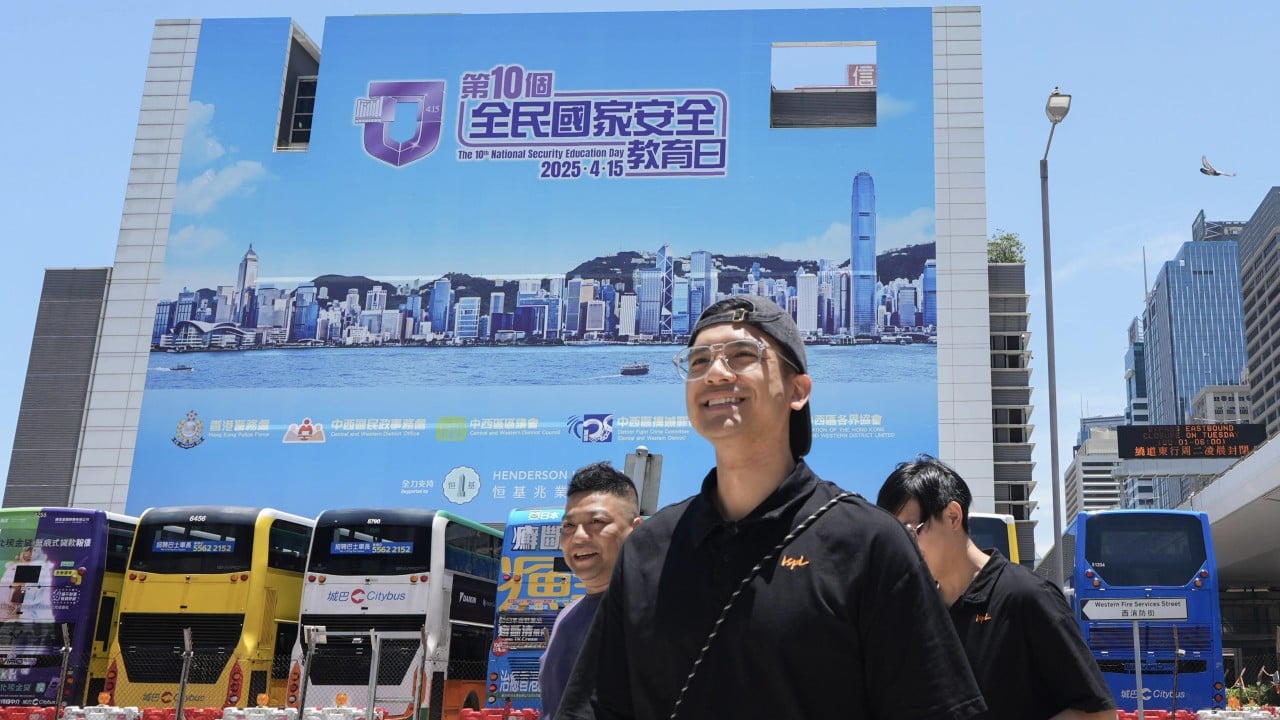
Hong Kong just shifted the goalposts on how it handles criminal trials. If you think the legal landscape settled down after the dramatic passage of the 2020 National Security Law or the 2024 Article 23 ordinance, you're missing the real story. The latest move doesn't come in the form of a sweeping new law debated in the legislature. Instead, it arrives via subsidiary legislation, a technical mechanism that gives the city's leader the explicit power to retroactively drag older, ongoing, or seemingly unrelated criminal cases into the national security apparatus.
On June 8, 2026, the Hong Kong government introduced new subsidiary rules under Section 110 of the Safeguarding National Security Ordinance. This proposal solidifies a mechanism allowing the Chief Executive to issue a certificate classifying specific acts within a criminal case as involving national security.
The practical outcome is clear. Once that certificate is issued, standard legal protections evaporate. The case immediately becomes bound by a separate, much harsher set of rules. We aren't just talking about future crimes. This power extends to older cases already moving through the system, fundamentally changing the rules of the game mid-match.
The Retroactive Shift in Legal Standards
Legal systems usually avoid changing procedural rules once a case is underway. It’s a basic fairness principle. But under these new rules, the Chief Executive can step into an ongoing prosecution and declare that a specific element touches on national security.
What happens next isn't a minor administrative tweak. The entire architecture of the trial shifts.
- The Loss of Jury Trials: Long a cornerstone of Hong Kong's common law tradition, juries are routinely replaced in national security matters by a panel of three designated judges selected directly by the city's leader.
- The Presumption Against Bail: In standard criminal cases, you generally get bail unless the prosecution proves you're a flight risk or a danger to society. Under the national security framework, that logic is flipped. You stay behind bars unless you can prove to a judge you won't continue to commit national security offenses. It is an incredibly high bar to clear.
- No Early Release: The path to early release or reductions in sentences for good behavior is effectively blocked for anyone convicted under this regime.
Human rights organizations have quickly flagged the implications. On June 9, 2026, Amnesty International released a sharp critique of the move. The organization pointed out that allowing the executive branch to retroactively designate what constitutes a national security matter strips away a defendant’s right to a fair trial. It lets the government decide, halfway through an investigation or a trial, to remove standard judicial safeguards.
Plugging Gaps or Expanding Control
Government officials view this move as a logical step in securing the city. They argue that safeguarding national security is an ongoing process that requires constant refinement. According to pro-Beijing legal commentators, the new classification mechanism doesn't create new crimes out of thin air. Instead, it provides procedural clarity, ensuring that if an older or ongoing case turns out to involve sensitive state elements, the court must handle it with the appropriate level of security.
They point to rulings from the National People's Congress Standing Committee in Beijing, which previously clarified that Hong Kong's courts must defer to the Chief Executive when deciding whether an issue involves national security. From the government’s perspective, this new rule simply codifies that instruction into daily court operations.
But critics see a completely different motive. By allowing these procedures to apply to older cases, the government can effectively upgrade regular criminal charges into high-stakes political cases. If a defendant in an ongoing trial looks likely to beat a standard criminal charge, or if the government wants to ensure they don't get bail, the Chief Executive can issue a certificate. Suddenly, the defense team faces an uphill battle against an entirely different legal standard.
The Ripple Effect on International Business
This isn't just a debate for constitutional lawyers and political activists. The business community is watching closely, and honestly, they're getting nervous.
For decades, international companies used Hong Kong as their Asian base because they trusted the legal system. It was predictable. You knew what the laws were, and you knew the government couldn't randomly change the rules of a trial. That predictability is slipping away.
This update comes on the heels of other recent changes. In March 2026, the government updated national security implementing rules to make it a criminal offense to refuse to provide passwords or decryption keys for electronic devices to the police. That rule applies to residents, visitors, and business executives merely transiting through Hong Kong International Airport.
When you combine that with the power to retroactively classify cases, the risk profile for foreign corporations changes dramatically. Consider a standard corporate dispute involving commercial data or market research. If the government decides that the data involved touches on "state secrets"—a term defined very broadly under the 2024 Article 23 law—the entire dispute can be pulled into the national security closed-loop system. No jury, no bail, and hand over your passwords.
How to Navigate the New Reality
If you or your organization operate in or around Hong Kong, you can't rely on old assumptions about how the law works. You need to adapt to a system where executive discretion overrules traditional judicial independence.
First, look at your data storage. Keeping sensitive corporate intelligence, economic analyses, or due diligence reports on local servers in Hong Kong is increasingly risky. If an investigation looks into your operations, those documents can easily be categorized as involving national security. Move critical data storage outside the jurisdiction.
Second, reevaluate your transit policies. Since the March 2026 device decryption laws apply to anyone passing through the airport, executives carrying proprietary company data should stop bringing local devices into the city. Use clean, temporary "burner" devices for travel to Hong Kong.
Finally, review your local partnerships. Perform deep due diligence on Hong Kong-based entities to ensure they don't have ties or legal vulnerabilities that could drag your joint ventures into regulatory scrutiny. The legal lines are no longer clear, and the safest approach is to assume that any high-profile dispute can become a national security matter at the executive's discretion.



:max_bytes(150000):strip_icc():focal(665x0:667x2)/gettyimages-50733149-2000-8b129a2475974982a915418ce92a73d8.jpg)