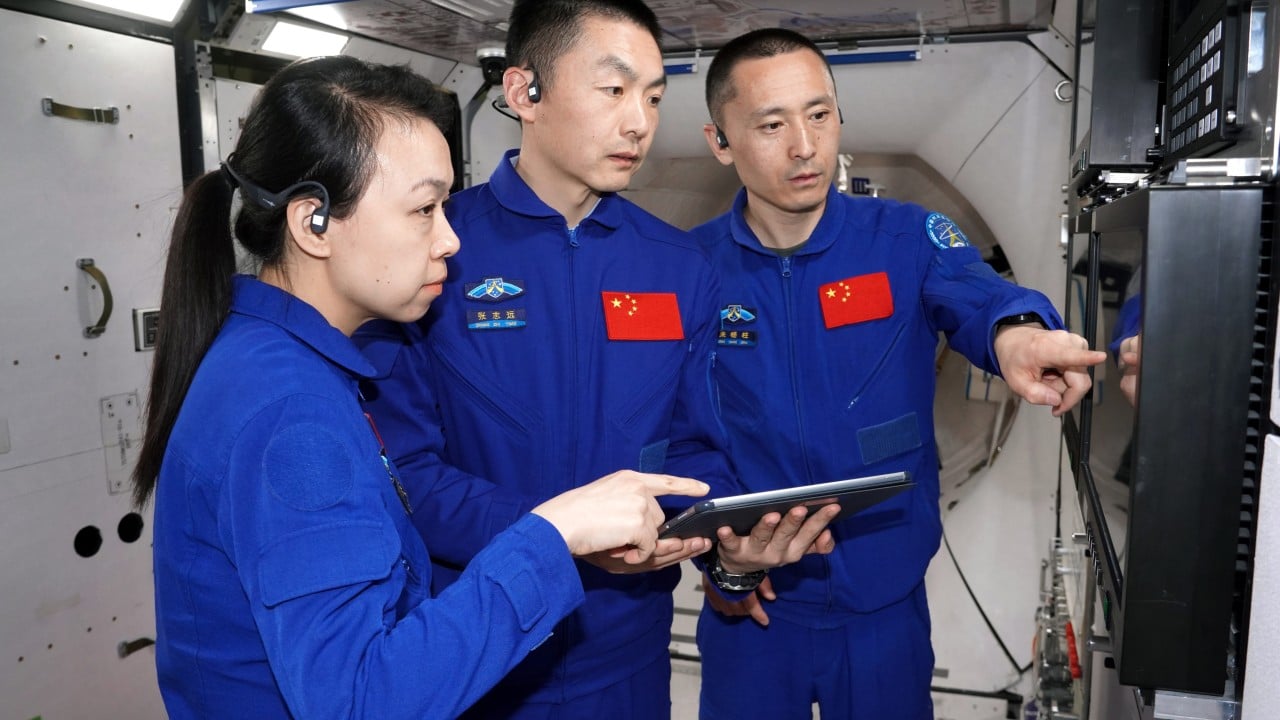
Space travel isn't just for flawless superhumans who never get dizzy. If you think you need a perfect inner ear to survive astronaut training, you're wrong. In fact, Hong Kong first payload specialist Lai Ka-ying proved that sheer determination can override a stubborn stomach. She didn't let chronic motion sickness stop her from securing a spot in China's space program.
Most people assume astronauts possess flawless physical traits right out of the gate. We imagine them riding spinning centrifuges while smiling calmly. The reality is far messier. Lai admitted she faced intense bouts of nausea during her rigorous selection process. Instead of quitting, she adopted a simple mindset. She decided to just give it a try. That gamble paid off, rewriting the rules of who gets to go to space.
Her selection marks a massive shift for the China Manned Space Agency (CMSA). It shows that psychological resilience and specialized expertise matter just as much as raw physical endurance. If you've ever felt held back by a minor physical limitation, Lai's journey offers a masterclass in pushing past your body's complaints.
The Reality of Space Motion Sickness
Space Motion Sickness (SMS) affects around half of all astronauts who travel into orbit. It's a well-documented medical condition caused by the sudden shift to microgravity. Your inner ear, which governs balance, completely loses its sense of direction. Fluid shifts upward in your body. Your eyes tell your brain one thing, but your vestibular system says another. The result is instant, disorienting nausea.
Lai Ka-ying dealt with this issue right here on Earth. Roller coasters and bumpy car rides were enough to trigger her symptoms. When the China Manned Space Agency opened selection to candidates from Hong Kong and Macau, she knew the physical trials would be brutal. The training involves multi-axis chairs that spin candidates until they lose track of up and down.
She didn't mask her symptoms or pretend to be invincible. She acknowledged her susceptibility to motion sickness and worked through it. NASA and the European Space Agency have seen similar cases for decades. Astronauts frequently use medication like scopolamine patches or promethazine during their first few days in orbit. The trick isn't being immune to the spinning. The trick is training your brain to habituate to the chaos.
Behind the Closed Doors of China's Astronaut Selection
The selection process for the fourth batch of Chinese taikonauts was fiercely competitive. Thousands of applicants threw their hats into the ring. The CMSA looked for payload specialists, engineers, and pilots. They needed people who could run complex scientific experiments inside the Tiangong Space Station under extreme stress.
Lai, a chief inspector from the Hong Kong Police Force's Technical Services Division, brought a unique skill set. Her background in specialized technical operations meant she knew how to handle sophisticated equipment under pressure. The physical tests were designed to break candidates. They endured high-G centrifuge runs that mimic the crushing weight of a rocket launch. They spent hours in isolation chambers to test mental stability.
Astronaut Selection Phases:
Phase 1: Initial medical screening and background checks
Phase 2: Deep psychological evaluation and basic endurance tests
Phase 3: Advanced vestibular training and high-G centrifuge runs
During the vestibular function tests, candidates face rapid head movements while spinning on a chair. This is where Lai's motion sickness threatened to disqualify her. She relied on deep breathing techniques and cognitive reframing to endure the sessions. Her ability to maintain focus while her stomach churned proved her mental toughness to the selection committee.
Why Technical Expertise Outweighs Perfect Biology
The days of the Cold War cowboy pilot are over. Modern space stations are flying laboratories. Agencies no longer just look for jet pilots who can pull 9G turns without blinking. They need scientists, technicians, and operational experts.
Lai's role as a payload specialist means her primary job is managing scientific payloads. She will run experiments in microgravity that could lead to breakthroughs in medicine, materials science, and biology. The CMSA realized that you can train a brilliant technical mind to handle motion sickness, but you can't easily teach an immune pilot how to become a top-tier systems expert overnight.
Her selection sends a clear message to aspiring scientists in Hong Kong and across the globe. Physical hurdles can be managed with the right training protocols. The aerospace industry increasingly values cognitive adaptability over raw athletic dominance.
Training Your Vestibular System Like a Space Professional
You don't need a multi-million dollar centrifuge to build resilience against motion sickness. The methods used by aerospace agencies rely on habituation. This basically means exposing your body to small, controlled doses of the triggering movement until your brain stops panicking.
If you struggle with motion sickness during travel or virtual reality gaming, you can use the same principles Lai utilized.
Start by exposing yourself to the motion in short intervals. If a VR headset makes you sick after five minutes, take it off at minute four. Don't push through severe nausea. That just reinforces the brain's panic response. Allow your body to recover completely before trying again.
Fixate your eyes on a stable horizon when possible. This aligns your visual input with your internal balance sensors. Over time, your neural pathways adapt. The brain learns to ignore the conflicting signals, drastically reducing the urge to vomit.
The Broader Impact on Hong Kong's Science Scene
Lai's success is a massive boost for Hong Kong's scientific community. For years, local tech and science graduates felt isolated from major aerospace projects. Her entry into the space corps bridges that gap completely. It opens real pathways for local universities like Hong Kong Polytechnic University, which has already developed tools used in lunar missions.
This milestone changes the narrative for young researchers. Space is no longer a distant dream managed by distant agencies. It's a tangible career path.
To capitalize on this momentum, young professionals need to focus on building deep technical expertise while maintaining peak physical health. Don't let minor physical liabilities disqualify you before you even try. Focus on your core specialty. Build your operational stamina. When the next selection window opens, step up and submit your application. The only definitive way to fail is to count yourself out before the evaluation even begins.