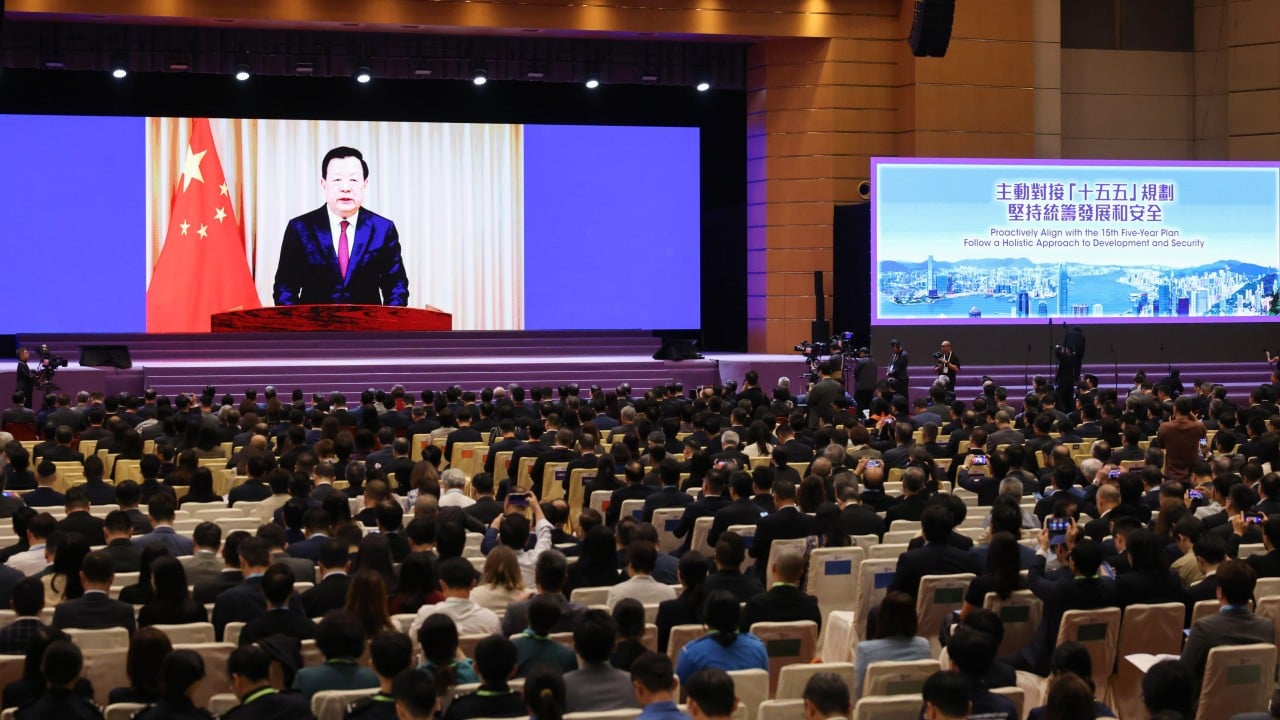
Don't just say you love Hong Kong. Prove it. That was the blunt message delivered by Xia Baolong, Beijing's top official for Hong Kong affairs, during a high-stakes meeting in Shenzhen. He didn't come to hear polite platitudes or recycled promises. He came to demand results.
For decades, the city's business elite operated under a "facilitator" model where the government built the roads and they made the money. Those days are over. The world has changed, and the "wait and see" approach to investment is becoming a liability. If you're a tycoon in this city, your patriotism is no longer measured by the dinners you attend, but by the capital you deploy and the risks you take.
The end of the spectator era
The Shenzhen symposium wasn't just another networking event. It was a mobilization order. With global trade tensions tightening and the local economy facing structural shifts, Beijing is looking at the private sector to do the heavy lifting. Xia's directive to show "patriotism through concrete actions" means the central government expects the business community to stop sitting on its hands.
Think about the port. Hong Kong’s maritime status has been slipping in global rankings for years. While neighboring ports are upgrading and automating, parts of our logistics chain feel stuck in the past. Xia specifically called out this decline. He isn't interested in hearing why it's hard; he wants to see the investment that reverses the trend. It's a call to move beyond traditional rent-seeking and into the messy, expensive work of innovation.
Where the money needs to go
If you’re wondering what "concrete action" actually looks like, look at the Northern Metropolis. This isn't just a housing project; it’s a strategic pivot toward the Greater Bay Area. Yet, many developers have been hesitant, waiting for the perfect market conditions or more government sweeteners.
Xia’s message implies that waiting for a guaranteed profit isn't leadership. It’s just accounting. True commitment to the city involves:
- Bidding on major infrastructure: Actively participating in land sales and reclamation projects like Kau Yi Chau, even when the short-term ROI looks lean.
- Funding the tech pivot: Shifting capital from safe property bets into high-growth sectors like AI, life sciences, and green energy.
- Expanding global reach: Using those legendary international networks to pull in new business from the Middle East and Southeast Asia, rather than just relying on old Western pipelines.
It’s about "walking the walk." You can't claim to support the city's prosperity while keeping your cash in offshore bonds because the local market feels "uncertain."
The responsibility of the main force
Beijing calls the business community the "main force" of Hong Kong’s development. That’s a title with a heavy price tag. In the past, being a patriot in business mostly meant not rocking the boat. Now, it means steering it through a storm.
I've seen too many firms treat "social responsibility" as a PR exercise—a few scholarships here, a charity gala there. Xia is effectively saying that’s insufficient. Real responsibility means aligning your corporate strategy with the city’s survival. If the city needs a better tech ecosystem, you build the labs. If the city needs better logistics, you upgrade the berths.
Stop asking for favors
One of the most telling details from the Shenzhen talks was the reminder that the business sector shouldn't just keep asking for Beijing's "favors." For years, whenever the economy sputtered, the go-to move was to lobby for more mainland tourists or easier policy concessions.
That era of "policy hand-outs" is cooling. The relationship is becoming a two-way street. You want the benefits of the "One Country, Two Systems" framework? Then you have to contribute to the "One Country" part of the equation by strengthening the local economy from the ground up.
What you should do next
If you're running a business in Hong Kong, the strategy for 2026 is clear. The "comfort zone" of traditional industries is shrinking.
- Audit your investment pipeline: How much of your capital is actually staying in Hong Kong or the Greater Bay Area versus being parked in low-risk overseas assets?
- Pivot to I&T: Don't just talk about innovation. Partner with a local university or invest in a domestic startup.
- Modernize your operations: If your business is in a traditional sector like shipping or retail, integrate AI and automation now.
The time for speeches has passed. In the eyes of the central government, your value to Hong Kong is now measured in bricks, mortar, and code. Get to work.