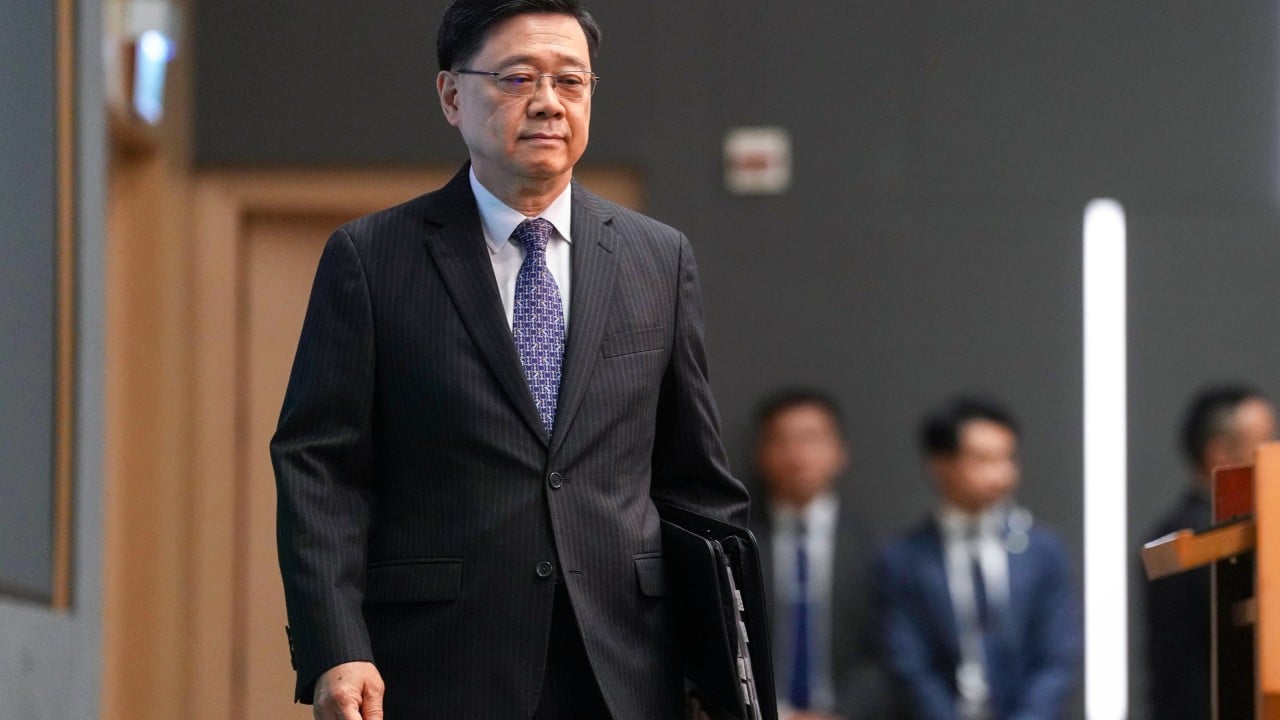
Chief Executive John Lee is packing his bags for Astana and Tashkent, dragging a 60-strong entourage of suits from Hong Kong and mainland China on what the government proudly calls its largest-ever overseas trade delegation. The official narrative writes itself. It is a triumphant march into the heart of the Silk Road, a strategic pivot toward Central Asia, and a bold masterstroke to capture high-growth economies.
It is also an expensive exercise in commercial theater.
The establishment media is playing its usual role, regurgitating statistics from the Trade Development Council about Kazakhstan representing 60 percent of Central Asia’s GDP and Uzbekistan functioning as a massive population engine of 38 million people. They talk about a hub-to-hub cooperation model as if drawing lines on a map automatically generates capital flows. I have watched administrations blow millions on these massive, bureaucratic traveling circuses for decades. They look spectacular in press releases, but the actual conversion rate from political handshakes to profitable private-sector deals is dismally low.
The entire premise of this expedition rests on a fundamental misunderstanding of what Hong Kong is, what Central Asia needs, and how actual trade mechanics function in 2026.
The Mirage of the First Mover Advantage
The biggest fallacy being peddled right now is that Hong Kong companies will secure a lucrative first-mover advantage in places like the Astana International Financial Centre (AIFC) or Uzbekistan’s new special economic zones.
This ignores reality. The first movers in Central Asia arrived a decade ago, and they did not speak Cantonese. They spoke Mandarin, Russian, and Turkish.
Beijing has poured hundreds of billions of dollars directly into Central Asian pipelines, highways, and rail links via the Belt and Road Initiative. State-owned enterprises (SOEs) from the mainland already control the primary resource extraction and infrastructure channels. When the Hong Kong delegation boasts that half of its members are mainland entrepreneurs from the energy, mining, and automotive sectors, it inadvertently exposes the flaw: the mainland does not need Hong Kong to act as a middleman to talk to Kazakhstan. They already have direct state-to-state pipelines.
For the Hong Kong contingent of the delegation—the lawyers, the accountants, the fintech founders—the proposition is even thinner. The local consensus assumes that because Kazakhstan utilizes a common law framework within the AIFC, Hong Kong professionals can seamlessly slide in and dominate.
But legal frameworks do not create deals; volume creates deals.
The transaction costs for a Central Asian firm to list or raise capital through Hong Kong remain prohibitively high compared to domestic alternatives or regional hubs that are physically and culturally closer. Western sanctions and shifting geopolitical alignments mean that Eurasian capital is highly risk-averse and heavily policed. The illusion that a five-day blitz by a government official will magically dissolve these massive structural barriers is wishful thinking.
The Flawed Logic of Hub-to-Hub Cooperation
John Lee argues that Kazakhstan and Uzbekistan are the gateways for foreign capital into Central Asia, while Hong Kong is the gateway into East and Southeast Asia. Connect the hubs, connect the capital. It sounds elegant.
It is logistically nonsensical.
Capital does not travel through a series of daisy-chained regional gateways just for the sake of geographic symmetry. It looks for the path of least resistance, maximum liquidity, and total regulatory clarity.
Consider the numbers. Total Hong Kong exports to the entire Central Asian region hovered around a minuscule $313 million in 2025. To put that in perspective, that is a rounding error in Hong Kong’s broader trade portfolio. Even if this trip miraculously doubles that figure over the next three years, the economic impact on the city's GDP will be unnoticeable.
Furthermore, the structural needs of Kazakhstan and Uzbekistan are deeply industrial and physical. They need modern infrastructure, advanced manufacturing capabilities, supply chain logistics, and green energy technology to diversify away from oil and gas. Hong Kong does not manufacture wind turbines. It does not lay high-speed rail tracks. It does not refine lithium.
Hong Kong excels at financial orchestration, wealth management, and legal structuring. But the medium-sized enterprises in Tashkent and Astana looking to digitalize their factories or upgrade their mining equipment do not need an expensive bespoke offshore financing structure in Central. They need immediate engineering solutions and cheap credit, both of which they can get directly from Shenzhen, Shanghai, or Istanbul without paying the Hong Kong premium.
The Real Cost of Bureaucratic Tourism
What actually happens on these mega-delegations? I have been embedded in the corporate ecosystem long enough to know the anatomy of a government-led trade mission.
The schedule is a grueling marathon of ceremonial dinners, state-monitored facility tours, and the signing of non-binding Memorandums of Understanding (MoUs). These MoUs are the ultimate metric of fake corporate success. They are designed to let both sides claim victory to their respective domestic audiences without committing a single dollar of actual capital.
The real entrepreneurs—the agile, hungry operators who actually build international supply chains—do not wait for a 60-person governmental entourage to clear a path for them. They fly in quietly on commercial flights, hire local fixers, open bank accounts, and negotiate deals in private backrooms far away from the cameras of official press pools.
By the time a massive official delegation arrives, the genuine opportunities have already been picked clean. What is left are high-risk, low-yield projects looking for state-subsidized handouts or naive foreign investors to bail them out.
The True Path Forward
If Hong Kong seriously wants to capture value from the economic modernization of Central Asia, it must stop acting like a trade broker from the 1990s. The city needs to stop selling its generic "gateway" status and start focusing on highly specific, hyper-niche capabilities that cannot be replicated by mainland megacities.
Instead of trying to force a generalized trade relationship through sheer administrative weight, Hong Kong should pivot entirely to a two-pronged strategy:
- Sovereign Wealth Arbitrage: Kazakhstan and Uzbekistan are looking to institutionalize their national wealth funds. Hong Kong should not be trying to export goods to these countries; it should be positioning its family offices and asset management firms to manage their outbound sovereign capital, routing it into broader Asian markets.
- Specialized Digital Infrastructure: Do not send traditional logistics executives. Send the micro-niche fintech operators who specialize in cross-border, non-US dollar clearing systems and multi-jurisdictional compliance. Central Asia needs digital plumbing to bypass Western financial friction, and Hong Kong is uniquely positioned to build those specific pipes.
The downside to this approach? It is quiet, it requires deep technical expertise, and it does not look good in a photo-op. It requires admitting that Hong Kong is no longer the default economic gatekeeper for Asia, but rather a specialized boutique player.
But until the administration stops measuring the success of its foreign policy by the size of its delegations and the number of empty MoUs signed, these overseas trips will remain what they have always been: incredibly expensive, highly coordinated vacations for bureaucrats.


