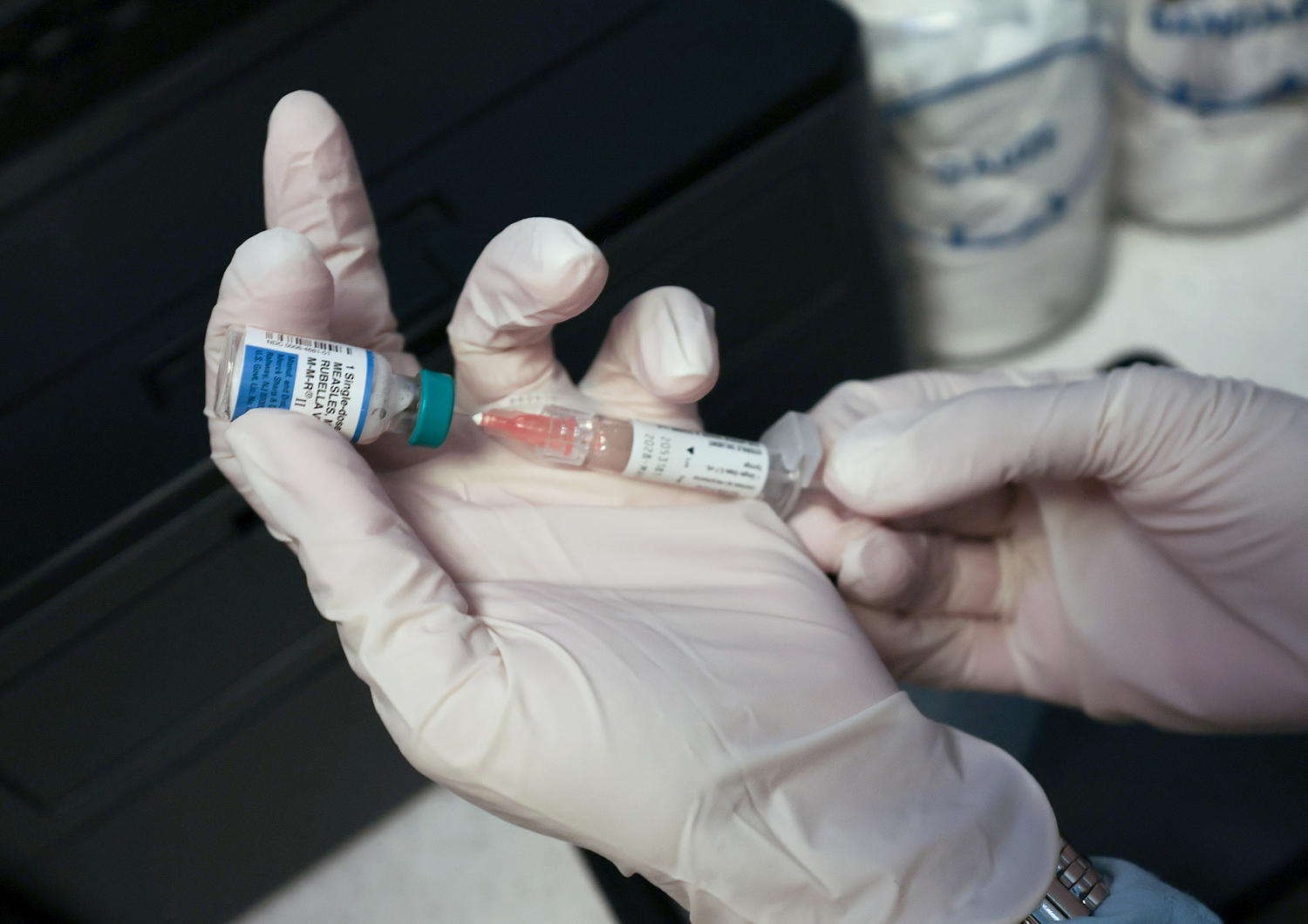
The package arrived on a Tuesday, wrapped in crinkling brown paper that smelled faintly of warehouse dust. Inside sat a tiny glass vial, cold to the touch, bearing a label printed on a home inkjet printer with the letters slightly smeared by moisture.
To anyone else, it looked like trash. To Sarah, sitting at her kitchen island with the harsh fluorescent light buzzing overhead, it looked like an exit strategy. If you found value in this piece, you should look at: this related article.
For two years, Sarah had watched the world change around her. Friends, colleagues, people she followed on social media—they were all shrinking. They spoke of the new class of medications with a hushed reverence, calling them miracles, game-changers, biological rewires. But miracles have a price tag. For Sarah, whose insurance company drew a hard, unyielding line against coverage for weight management, that price was twelve hundred dollars a month. A sum equivalent to rent. An impossibility.
So she did what millions are currently doing in the shadows of the internet. She turned to the gray market, driven by a hunger so acute it bypasses reason. She became a statistic waiting to happen. For another angle on this story, refer to the recent update from CDC.
We live in an era of biological miracles that outpace our collective capacity to distribute them equitably. When science discovers a molecule that can quiet the primal roar of human appetite—turning down the biological volume on the constant, exhausting chatter of hunger—it changes the social contract. Food is no longer just nourishment or comfort; it is a visible marker of discipline, status, and health. To be left out of this pharmacological revolution is to feel not merely overweight, but abandoned.
Consider what happens when a global pharmaceutical pipeline creates a product in hyper-demand and short supply. The vacuum does not remain empty for long. Nature abhors a vacuum, but capitalism abhors a shortage even more. Where legitimate supply chains falter, illicit laboratories step into the breach.
(Note: In this exploration, when we examine the mechanics of underground distribution, we rely on law enforcement reports, regulatory warnings from the Food and Drug Administration, and investigative findings from public health agencies regarding seized shipments.)
The underground labs operate in basements, makeshift clean rooms, and overseas facilities where oversight is an afterthought. They acquire raw peptide powders from chemical supply houses—compounds often labeled "not for human consumption, research use only"—and reconstitute them in kitchen sinks and garage mixing stations. They slap generic labels on the glass and ship them across international borders, hidden inside hollowed-out books, electronic toys, and cosmetics.
The people buying these vials are not reckless risk-takers by nature. They are accountants, teachers, nurses, and mothers. They are people who have spent decades being told that their struggle with weight is a moral failing, a lack of willpower, a failure of character. When a drug comes along that proves biology was the culprit all along, the desperation to touch that relief overrides every internal alarm bell.
The danger is not just that the product might not work. The danger is what lives inside the vial.
When independent laboratories test these seized counterfeit weight loss drugs, the results read like a chemical horror story. Some vials contain nothing at all—just sterile saline or distilled water, sold for hundreds of dollars to a desperate buyer who injects salt water into their abdomen for weeks, wondering why the scale refuses to budge. Others contain dangerous bacterial contaminants, harvested in unsanitary conditions and injected directly into subcutaneous fat.
Worse still are the chemical miscalculations. In the legitimate manufacturing of these peptide-based medications, precision is absolute. A microgram matters. When underground chemists guess at the dilution, or substitute cheaper, related peptides like research-grade leptin or unregulated insulin variants, the consequences turn catastrophic.
Imagine injecting a compound that causes your blood sugar to plummet into a freefall while you sleep. Imagine an accidental overdose of an untested analog that triggers severe acute pancreatitis, landing you in an intensive care unit with abdominal pain so sharp it steals your breath. The irony is bitter. In the pursuit of a healthier body and a longer life, the underground market offers a lottery ticket where the grand prize is organ failure.
Yet the underground persists, fueled by a potent cocktail of social pressure, corporate scarcity, and profound human vulnerability.
We have created a cultural mirror that reflects only one standard of physical form, while simultaneously withholding the key to achieving it from the working class and the uninsured. When society tells you that your worth is tied to your circumference, and then prices the antidote out of reach, it creates a black market as surely as Prohibition created bootleggers.
Sarah stared at that small glass vial on her kitchen island for a long time. She traced the edge of the crooked label with her thumbnail. The liquid inside was clear, pristine, and entirely anonymous. It could be salvation. It could be poison. There was no way to know.
She did not fill the syringe that night. She put the vial back in the brown paper, shoved it to the back of the refrigerator behind a jar of expired mustard, and walked away. But the hunger—the quiet, gnawing ache to belong in a lighter world—remained right there in the dark with her.