The Israeli Defense Forces (IDF) are currently facing a structural deficit that no amount of high-tech weaponry can bridge. It is a math problem masquerading as a political crisis. For decades, the Israeli security doctrine relied on the "small, smart army" concept—a high-tech, lean professional core backed by a massive, agile reserve. That model died on October 7. The current reality is a multi-front war of attrition that has exhausted the standing army and pushed the reserve pool to a state of near-total depletion.
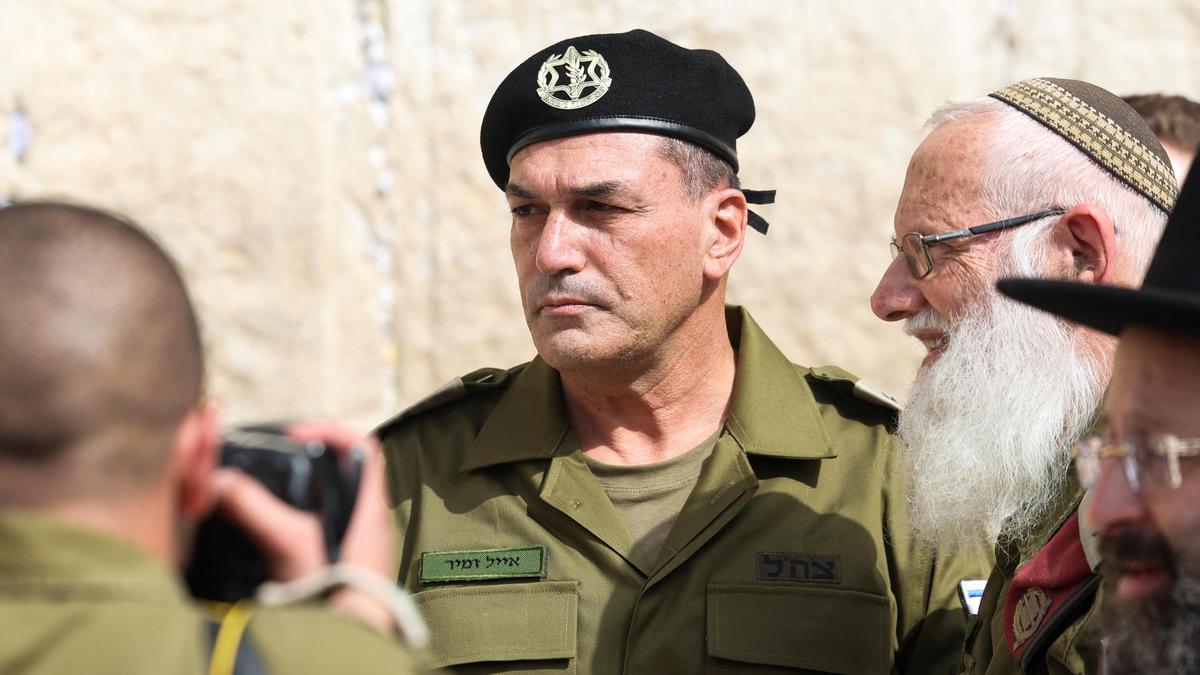
When the Chief of the General Staff warns of a potential military collapse, he isn't talking about a sudden surrender on the battlefield. He is describing the internal rotting of the military's operational capacity. This is about the physics of war. Soldiers who have served 200 or 300 days in a single year eventually stop functioning. Their businesses fail, their marriages buckle, and their mental acuity sharpens into a dangerous, brittle exhaustion. The IDF needs more boots on the ground to rotate these exhausted units out, but the political architecture of the country is preventing the intake of the only remaining untapped pool of manpower: the Haredi (Ultra-Orthodox) community.
The Myth of the Lean Military
For thirty years, Israeli defense planners operated under the assumption that large-scale ground invasions were a relic of the past. They bet everything on air power, intelligence, and a technological barrier. They were wrong. The war in Gaza and the escalating friction on the northern border with Hezbollah have proven that territory is still held by feet in the mud.
The IDF is currently attempting to manage a theater that spans Gaza, the West Bank, and the Lebanese border, all while keeping an eye on long-range threats from Yemen and Iraq. To do this, they have been forced to extend mandatory service for conscripts and repeatedly call up reservists who were supposed to be protected by age caps. The result is a force that is stretched so thin it has become transparent. When you keep the same battalions in the field for months without end, maintenance on vehicles slips. Training for new recruits becomes rushed. The institutional knowledge that makes an army elite begins to evaporate as seasoned officers choose to return to their civilian lives rather than sign on for more rounds of indefinite deployment.
The Reserve Crisis is an Economic Crisis
Israel’s economy is built on its reserve soldiers. These are the engineers, the teachers, and the entrepreneurs who drive the nation's GDP. Unlike professional armies in the West, where a soldier's absence is priced into the social contract, the Israeli system assumes the reservist will return to their desk after a few weeks.
We are now seeing the fallout of ignoring that assumption. Small businesses owned by reservists are shuttering at an alarming rate. High-tech firms, the engine of the Israeli economy, are reporting significant drops in productivity because 15 to 20 percent of their workforce is constantly in uniform. This creates a feedback loop. As the economy weakens, the tax base shrinks, making it harder to fund the very war that is causing the labor shortage. The military is not just running out of people; it is running out of the economic oxygen required to sustain a long-term conflict.
The Inequality of Sacrifice
The social contract is fraying. In any democracy, the legitimacy of a draft relies on the perception of fairness. Currently, that perception is non-existent. While secular and National Religious families bury their dead and watch their livelihoods crumble, the Haredi sector remains largely exempt from service. This isn't just a cultural debate anymore; it is a tactical bottleneck.
The IDF has stated it needs at least 10,000 additional soldiers immediately to maintain its current defensive posture. There are roughly 60,000 military-age Haredi men who are not serving. The math is simple, but the politics are a minefield. The current government relies on Haredi parties to stay in power, creating a deadlock where the survival of the coalition is at direct odds with the survival of the army's operational integrity.
The Quality versus Quantity Trap
There is a common argument that the IDF doesn't need "unwilling" soldiers or that integrating the Haredi population would take too long to help in the current crisis. This misses the point of how a military functions during a war of attrition. You don't need every recruit to be an elite commando. You need personnel for logistics, border security, administrative roles, and civil defense to free up the elite units for high-intensity combat.
When the military lacks quantity, quality suffers. Elite paratroopers are being used for guard duty and convoy escort—tasks that do not require their specialized training but consume their energy and time. This "misallocation of human capital" is a silent killer of military effectiveness. It turns a precision instrument into a sledgehammer, and right now, the sledgehammer is starting to crack.
Equipment Fatigue and the Invisible Cost
While the manpower shortage gets the headlines, the mechanical toll is equally devastating. An army that is constantly deployed doesn't have time for the "deep maintenance" cycles required for tanks, armored personnel carriers, and heavy artillery. Engines are being run past their service hours. Tracks are wearing thin.
In a standard training cycle, a Merkava tank might see a few weeks of heavy use a year. In the current conflict, these machines are operating nearly 24/7 in harsh, urban environments. The technicians responsible for fixing them are the same reservists who are being called away from their civilian mechanic shops and engineering firms. If the people are exhausted, the machines follow shortly after.
Strategic Shrinkage
The IDF is being forced to make choices that no military wants to make. They are essentially triage-ing their security. If they don't have enough troops to hold the "buffer zone" in Gaza and simultaneously protect the northern communities from Hezbollah, they have to withdraw from one or weaken both.
Withdrawal from territory often leads to a vacuum that is immediately filled by the adversary. We saw this in northern Gaza, where the IDF cleared areas only to have Hamas militants return weeks later because there weren't enough permanent boots to hold the ground. This "mowing the grass" strategy is failing because the grass is growing back faster than the IDF can cut it with its current manpower.
The Mental Health Bill
We have yet to see the true cost of the psychological toll on the force. Post-Traumatic Stress Disorder (PTSD) and combat fatigue are not just medical issues; they are readiness issues. A soldier struggling with trauma is less observant, slower to react, and more prone to making catastrophic errors in judgment.
The Israeli medical system is already overwhelmed. The surge in demand for mental health services among returning reservists is unprecedented. If the military continues to cycle these individuals back into combat without adequate rest and processing time, the "collapse" the Chief of Staff warned about will manifest as a surge in friendly fire incidents, civilian casualties, and operational failures.
Tactical Reality over Political Survival
The solution requires a brutal reassessment of who serves and for how long. The current trajectory is unsustainable. You cannot run a country on a permanent war footing with only half the population participating in its defense.
The IDF must pivot from a military that relies on a "miracle" of high-tech efficiency to one that acknowledges the grit of sustained, grinding conflict. This means radical changes to conscription laws and a massive investment in the infrastructure required to house and train a more diverse force. It means telling the public the truth: the era of short, decisive wars is over, and the price of security has just gone up.
If the government continues to prioritize political stability over military manpower, they are choosing a path that leads to a hollowed-out defense force. An army can survive a shortage of shells for a while, but it cannot survive a shortage of souls. The warning from the top brass isn't a plea for more money; it is a fire alarm. The walls are getting thinner, the rooms are getting hotter, and the people inside are tired of holding up the ceiling.
The military needs a broader base of service to ensure that the burden of defense does not break the back of the very society it is sworn to protect. Stop looking for a technological fix for a human problem. Start drafting the numbers.