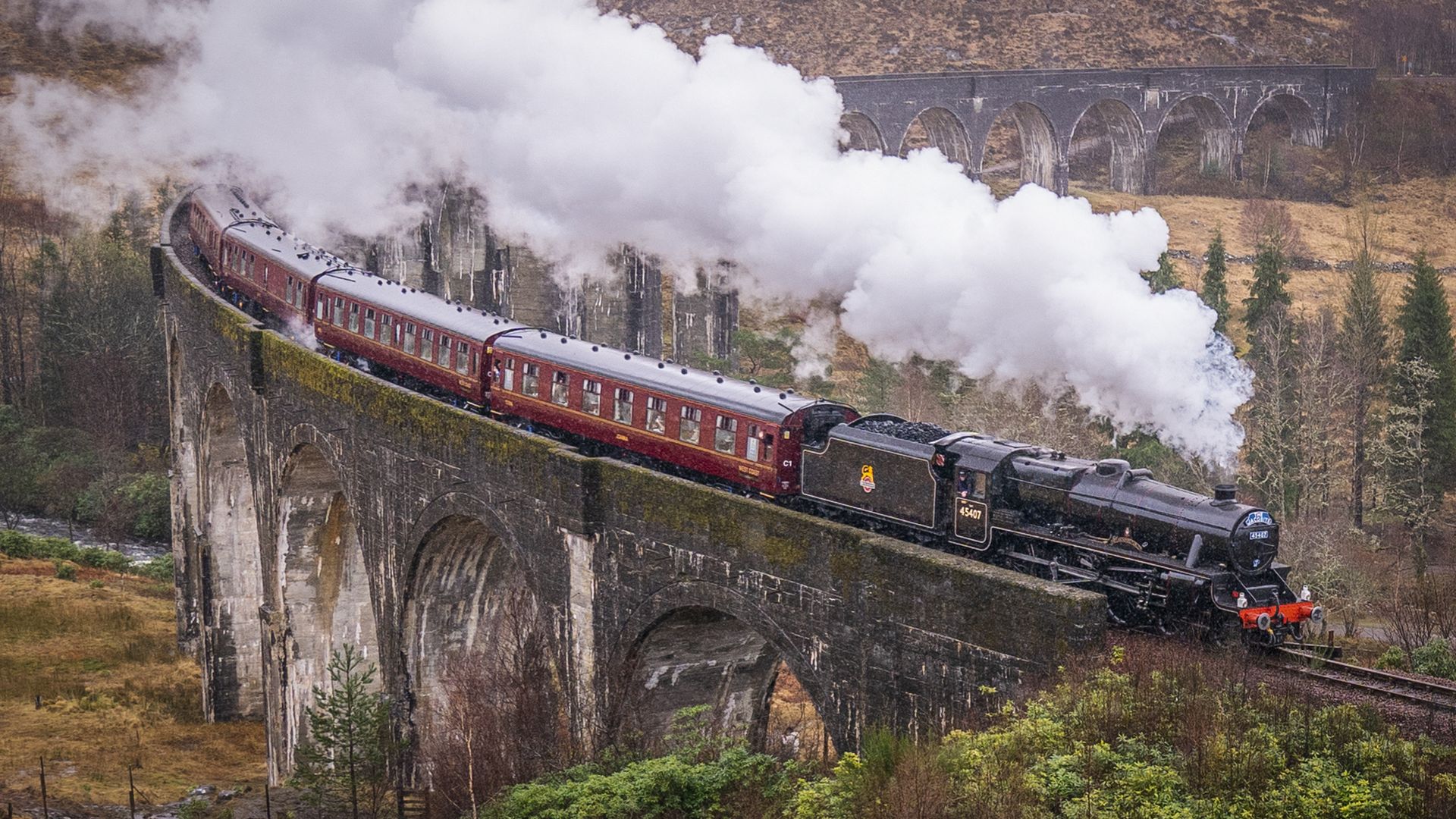
Every spring, the same tired press release gets dusted off and blasted across the British media landscape. Network Rail and British Transport Police issue their annual, solemn warning: Harry Potter fans must stay off the tracks as the Jacobite steam train—affectionately known as the Hogwarts Express—returns to the West Highland Line.
The narrative is always identical. Naive, wand-wielding tourists are supposedly risking their lives, trespassing on active rail lines just to snap a blurry smartphone photo of the iconic K1 class locomotive chugging over the Glenfinnan Viaduct. The media laps it up. It paints a picture of reckless fandom colliding with cold, hard industrial reality.
It is a convenient story. It is also a lazy diversion.
As someone who has spent over a decade analyzing transport infrastructure and crowd management dynamics, I can tell you that the "reckless fan" trope is a manufactured distraction. The annual panic over the Hogwarts Express is not a failure of public common sense. It is a textbook failure of infrastructure design, tourism management, and regional economics.
By blaming the fans, rail authorities are hiding their own inability to monetize, manage, and modernize one of the most famous stretches of track in the world.
The Myth of the Uncontrollable Fan
Let's dismantle the primary assumption: that Harry Potter fans are uniquely reckless compared to any other demographic.
They aren't. What we are witnessing at Glenfinnan and along the West Highland Line is a predictable phenomenon known in urban planning as a "desire line"—the path of least resistance that people take to get where they want to go. When thousands of people descend on a geographic point with a singular, shared objective (viewing a train), they will naturally occupy the space that offers the best vantage point.
If that space happens to be dangerously close to a railway line, that is not a moral failing of the tourist. It is a design failure of the venue.
Imagine a stadium that sells 50,000 tickets but only builds seating for 5,000, then expresses shock and outrage when fans spill onto the field. You would blame the stadium management, not the crowd. Yet, when it comes to rural infrastructure, we routinely excuse the operators and scold the public.
Dismantling the "Just Stay in the Designated Areas" Premise
Whenever this controversy erupts, authorities point to designated viewing platforms and official footpaths. "Why can't they just use the official trails?" they ask.
Here is the brutal reality: the official infrastructure is hopelessly inadequate.
- Capacity Bottlenecks: The official viewing areas at Glenfinnan were built for mid-90s rural tourism numbers. They were never scaled to handle the global, multi-generational onslaught of the Wizarding World fandom.
- The Sightline Problem: Human beings are visually driven. If a designated viewing platform offers a view obscured by trees, scaffolding, or other tourists' heads, people will move until the sightline clears.
- The Chronological Crunch: The Jacobite runs on a strict schedule. Hundreds of people arrive simultaneously, creating acute crowd density. When density reaches a critical mass, crowds naturally expand outward to avoid crushing. Often, "trespassing" is simply the result of crowd displacement.
To expect thousands of international travelers—many of whom have spent thousands of pounds to visit this specific location—to voluntarily accept a substandard view because an agency failed to build a proper platform is economically illiterate.
Why Fines and Scolding Never Work
The British Transport Police love to remind the public that trespassing on the railway is a criminal offense carrying a fine of up to £1,000.
Here is why that threat is an empty deterrent:
[Threat of a £1,000 Fine] ──> Broken by ──> [Lack of Enforcement Personnel]
                                                    │
                                                    ▼
                                      [Calculated Risk by Tourist]
                                                    │
                                                    ▼
                                     "The photo is worth the gamble."
In the history of behavioral economics, there is a fundamental truth: a penalty is only an effective deterrent if the probability of catching the offender is high.
The West Highland Line stretches through some of the most remote, rugged terrain in Scotland. Network Rail cannot police hundreds of miles of open track with a handful of transport officers. The average tourist quickly calculates that the risk of actually being caught and fined is near zero, while the reward—a once-in-a-lifetime photograph—is guaranteed.
Furthermore, many of these tourists are international visitors. Good luck enforcing a £1,000 fine on a tourist heading back to Tokyo or New York next Tuesday.
By relying on punitive rhetoric rather than physical infrastructure solutions, authorities are choosing cheap PR over actual safety management. It is easier to write a finger-wagging press release than it is to allocate capital for physical barriers, dedicated overpasses, and high-capacity viewing decks.
The Economic Irony: Exploiting Fandom Without Investing in It
The ultimate hypocrisy of the Hogwarts Express safety panic lies in the regional economy. Tourism agencies and local businesses aggressively use the Harry Potter connection to lure visitors to the Highlands.
Scotland’s tourism strategy relies heavily on screen tourism. The iconic image of the steam train crossing the viaduct is featured in countless promotional brochures, government websites, and travel campaigns. The region happily pockets the millions of pounds generated by these visitors via hotels, restaurants, car rentals, and gift shops.
Yet, there is a massive disconnect between the entities reaping the financial rewards and the entities responsible for managing the human influx.
| Stakeholder | Economic Action | Infrastructure Contribution |
|---|---|---|
| Tourism Boards / Local Businesses | Monetize the Harry Potter brand heavily. | Minimal to none. |
| West Coast Railways (Operator) | Charges premium ticket prices for the nostalgic ride. | Limited to train operations. |
| Network Rail (Infrastructure) | Bears the operational burden of crowd safety. | Relies mostly on signs and lectures. |
This is a classic tragedy of the commons. The asset (the view of the train) is being aggressively monetized, but the infrastructure surrounding that asset is treated as an afterthought.
If the Scottish government and rail authorities were serious about safety, they would stop treating Harry Potter fans like a nuisance and start treating them like a major economic engine that requires capital reinvestment.
How to Actually Fix the Problem (Unconventional Solutions)
If we want to stop people from standing on the tracks, we have to stop trying to change human nature and start changing the environment. Here is the contrarian blueprint for solving the Glenfinnan safety crisis once and for all.
1. Build Elevated, High-Capacity Safe Zones
Instead of telling people where not to go, give them an undeniable, physically superior place to go. Build a series of architectural, elevated viewing boardwalks that mirror the curvature of the tracks but are entirely separated by high-grade, aesthetically integrated physical barriers. If you give people a safe platform that offers a demonstrably better, unobstructed view than the ditch next to the tracks, 95% of the crowd will choose the platform.
2. Monetize the Vantage Points to Fund the Safety
The purist argument is always: "We shouldn't commercialize nature." Newsflash: it is already commercialized. Capitalize on it properly. Charge a modest fee (£5–£10) to access prime, managed viewing zones. Use 100% of that revenue to fund dedicated safety wardens, physical fencing, and better transport links during peak steam train season.
3. Create Virtual Geofencing and Real-Time Alerts
We have the technology to track crowd densities via anonymous cellular data and localized sensors. Instead of putting up static signs that everyone ignores, deploy localized, real-time mobile alerts. Partner with navigation apps and social media platforms to push instant notifications to users in the area: "The train arrives in 10 minutes. The official viewing deck is at 40% capacity and offers the best angle. Trackside areas are heavily monitored and closed."
4. Adjust the Train's Operational Profile
If crowd density at specific moments is the catalyst for dangerous behavior, change the variable. Run the steam train more frequently but with shorter configurations, spreading the passenger and spectator load across the day rather than creating two massive, unmanageable spikes every afternoon.
The annual warning to Harry Potter fans is a symptom of a deeper, systemic laziness in transport management. It is an admission of operational defeat wrapped in the language of public safety.
Stop blaming the tourists for wanting to see the magic they were explicitly invited to come and buy. If people are putting themselves in danger to get a glimpse of the Hogwarts Express, it isn't because they lack common sense. It’s because the authorities lack imagination. Build the infrastructure the 21st century demands, or stop complaining about the crowds you invited to the party.