Stop Fetishizing the Past
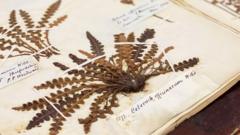
Conservationists are celebrating another scientific triumph: digitizing millions of centuries-old dried plants, extracting 5,000-year-old eDNA from peat bogs, and calling it a "time capsule" that will save nature.
It sounds noble. It makes great headlines. It is also an expensive, backward-looking delusion. Discover more on a similar subject: this related article.
I have watched non-profits and university departments throw millions of pounds into cataloging dead moths and sequencing soil from the Roman era, convinced that if we just figure out what grew in 1820, we can copy-paste it into 2026.
That is not ecological restoration. That is tax-funded museum curation masquerading as environmental action. More reporting by NBC News highlights related perspectives on this issue.
The underlying assumption of these high-profile "time capsule" projects is deeply flawed. They operate on the myth that nature has a default reset point—a pristine historical state we must recreate. But trying to build an ecosystem for tomorrow based on a specimen pressed into a notebook during the Industrial Revolution is actively dangerous for wildlife.
The climate has moved on. The soil chemistry has shifted. The atmospheric carbon levels are higher than at any point in human history. Staring into the rearview mirror will not help us navigate what is ahead.
The Romantic Myth of the Historical Baseline
Every few months, a major institution announces a new initiative to unlock historical data. They pull thousands of Victorian field diaries out of cold storage, run computer vision models across yellowed herbarium sheets, and claim they are establishing a true baseline for nature recovery.
Here is what they refuse to tell you: historical baselines are arbitrary.
Why choose 1820 as your template? Why not 1600, before commercial agriculture transformed the countryside? Why not 8,000 years ago, before early human clearings systematically altered Britain's canopy cover?
Selecting a random decade from a university's archived insect cabinet and treating it as the gold standard for ecosystem design is purely subjective.
Ecosystems are dynamic, non-equilibrium systems. They do not stay frozen in amber. When you force a piece of land to match a historical ledger, you are fighting natural selection. You end up spending immense amounts of energy and money trying to keep species alive in places where the local hydrology, soil microflora, and temperature regimes no longer support them.
Ecology pioneer Richard Hobbs proved decades ago that human activity, atmospheric deposition, and climate shifts have created what scientists call "novel ecosystems." These are environments containing novel combinations of species and altered abiotic conditions that have no historical precedent.
Trying to erase these changes to rebuild a Victorian meadow is like trying to reinstall Windows 95 on a modern server array because you liked the desktop wallpaper. It does not work, and it breaks the system.
Archival Data Hoarding vs Active Intervention
While research teams spend years cataloging 700,000 museum specimens or setting up complex acoustic monitors to listen to degrading habitats, real habitats are failing right now due to simple, structural factors:
- Severe habitat fragmentation.
- Chemical runoff from adjacent agricultural operations.
- Overgrazing by artificially dense populations of invasive or managed herbivores.
- Extreme drought cycles driven by shifting atmospheric jet streams.
None of these problems require eDNA sequencing of 2,000-year-old peat to diagnose or solve.
Imagine a scenario where a hospital emergency room receives a patient suffering from cardiac arrest, but instead of applying a defibrillator, the medical team decides to run a full DNA sequencing profile to discover what the patient's ancestral diet looked like in the Middle Ages.
That is precisely how modern academic conservation operates. It substitutes high-tech data collection for active, physical land management.
Digitizing 35,000 moths from a 19th-century collector's cabinet provides fascinating historical context. It makes for brilliant museum exhibits. But knowing that a specific butterfly species fluttered over a Scottish glen in 1850 does not bring back the micro-climates that disappeared when the surrounding wetlands were drained, built over, or cooked under rising summer temperatures.
We are spending millions archiving decay while starving the actual physical work required to build resilient, functional ecosystems.
The Trap of "Nostalgia Ecology"
Why is the industry so obsessed with these time-capsule narratives?
Because "Nostalgia Ecology" sells.
It is easy to pitch a corporate sponsor or a heritage lottery fund on the idea of "restoring our lost wild history." It taps into national mythologies about ancient primeval forests and pristine Victorian countryside.
It is far harder to pitch the reality: we need to engineer functional, novel ecosystems using whatever mix of native and non-native climate-resilient species will actually survive the next fifty years.
Consider tree planting. Many historical restoration projects insist on sourcing local provenance seed stock—harvesting seeds exclusively from nearby ancient trees to preserve "genetic purity."
On paper, this sounds ecologically sound. In practice, it is a disaster in the making.
An oak tree living in southern England today evolved its genetic traits under the local climate conditions of centuries past. The seedlings produced by that tree today will face peak summer temperatures, prolonged droughts, and novel pathogens that the parent tree never encountered in its youth.
If you plant only local seed stock to preserve a historic baseline, you are planting trees that are genetically unprepared for the weather of 2050.
To build resilient forests, we must actively introduce genetic material from further south—bringing in seeds from southern France or Italy that carry heat-tolerant traits. But doing so violates the sacred tenets of historical baseline ecology. The purists view it as contamination. The pragmatists recognize it as the only way to keep trees standing.
What Functional Restoration Actually Looks Like
If we stop using historical time capsules as our target, what replaces them?
The answer is functional ecology.
Instead of asking, "What species lived here 200 years ago?" we must ask three brutally pragmatic questions:
- What ecological services must this system provide right now? (e.g., carbon storage, flood mitigation, water filtration, thermal cooling).
- What climate stresses will this specific region experience over the next half-century?
- Which mix of resilient organisms can establish self-sustaining biological cycles under those future conditions?
Notice that none of these questions require knowing every plant species present in a 1790 herbarium.
Functional restoration prioritizes ecosystem processes over historical composition. It accepts that species assemblages will change. It accepts that some historic species will go extinct locally, while new, adaptable species will take their place.
The Trade-offs We Must Accept
A honest approach requires admitting uncomfortable truths:
- We will lose historical authenticity. The restored habitats of 2040 will not look like the romantic countryside paintings of John Constable. They will be hybrid systems, mixing surviving native species with drought-resistant varieties.
- We must accept non-native ecological allies. In many heavily altered soils, certain non-native deep-rooting plants are the only organisms capable of breaking up compacted earth and accumulating nitrates. Treating them as enemies because they were not present in 1800 is counterproductive.
- We will make mistakes. Moving away from fixed historical templates means experimenting with active design. Some species introductions will fail. But calculated risk is superior to guaranteed failure under a changing climate.
How to Fix the System
If you manage land, fund environmental projects, or direct conservation research, here is how you dismantle the nostalgia trap:
1. Divert Funding from Archival Digitization to Physical Acquisition
Stop spending tens of millions on scanning centuries-old paper archives under the guise of nature recovery. If university libraries wish to digitize historical records for humanistic research, fine. But do not label it as an environmental emergency measure. That capital belongs in direct land purchases, wetland re-wetting, and heavy machinery operations that remove artificial drainage structures.
2. Abandon Rigid "Local Provenance" Rules
Update forestry and conservation regulations to require climate-matched seed sourcing. Stop forcing land managers to use seed stock locked to historical local ranges. Demand that at least 30% to 50% of plant stock be sourced from regions matching projected climate profiles thirty years out.
3. Measure Functions, Not Historic Lists
Fire any consultancy or monitoring firm that measures project success solely by comparing current species lists against an arbitrary historical record. Measure success by:
- Net carbon sequestered in soil and biomass.
- Water retention volumes during extreme rainfall events.
- Total functional biomass and trophic chain depth.
- Year-round canopy cover resilience during heatwaves.
The Real Choice Ahead
We can continue building high-tech digital museums of a lost natural world, congratulating ourselves while ancient pressed plants are converted into gigabytes of high-resolution image data.
Or we can face the harsh reality of the Anthropocene.
The past is gone. The environmental conditions that created the historical baselines we idolize no longer exist on this planet. Every pound spent trying to reconstruct a vanished Victorian countryside is a pound stolen from building the durable, functional ecosystems required for our survival.
Burn the historic ledger. Build for the future.