The cab of an eighteen-wheeler is a strange cathedral. At three in the morning, illuminated only by the faint, greenish amber glow of the dashboard and the rhythmic sweep of the wipers clearing a relentless interstate sleet, the world narrows down to two strips of rubber, fifty feet of vibrating steel, and the heavy, constant hum of a diesel engine fighting the grade.
For millions of miles across the sprawling spine of America, drivers sit in that quiet isolation. They carry the nation’s lifeblood. Every box of shoes, every pallet of fresh lettuce, every vial of life-saving medicine riding in the chilled belly of a trailer moves because someone is willing to trade their nights, their holidays, and their safety for the open road.
Then, the radio cuts through the static.
Imagine pulling into a rest stop outside Cheyenne, Wyoming. The wind bites through heavy denim, howling off the plains with an icy edge that cuts straight to the bone. You step down from the high cab, boots crunching on frozen gravel, looking only for a cup of black coffee and ten minutes to stretch stiff legs.
Instead, you find a headline waiting on a glowing smartphone screen.
It is an official government social media post. It is supposed to represent the nation. It is supposed to honor contributions. Instead, it features an artificial intelligence-generated image of a stereotypically caricatured South Asian man wearing a turban, accompanied by text that flirts dangerously with outdated tropes and casual alienation.
A heavy silence falls.
In that moment, the isolation of the highway transforms. It is no longer just the isolation of distance and darkness. It is the chilling realization that to the institutions watching from afar, you are not a citizen doing an honest day's labor. You are an archetype. You are an alien prop.
Hours later, that shadow turns real.
The violent escalation that followed on a desolate Wyoming stretch did not happen in a vacuum. It was the brutal culmination of an atmosphere where words and careless digital strokes lower the guardrails of human empathy. When official channels treat a community as an outsider, it gives silent permission for individuals on the ground to treat them as targets.
To understand how a nation gets this completely backward, we have to look at the invisible architecture of representation.
For decades, the trucking industry has transformed. Walk into any major terminal from the Central Valley of California to the toll plazas of Pennsylvania, and you will hear a polyglot symphony of Punjabi, Spanish, Somali, and accented English. Generations of immigrant families have taken up the heavy burden of the long haul. They miss weddings, births, and funerals parked in dusty industrial lots off Exit 42, living on a diet of diner coffee and microwave burritos, all to send their children to college so they never have to stare down a midnight blizzard with tired eyes.
They are the backbone of logistics. Yet, culturally, the trucker in the American imagination remains frozen in amber: a weathered cowboy in a trucker hat, country music playing low on an analog radio.
When reality clashes with that outdated mythology, friction occurs. When government bodies—institutions tasked with bridging divides and fostering social cohesion—reinforce that friction by turning cultural identity into a punchline or a careless stock image, the consequences ripple outward with terrifying speed.
Consider the mechanics of digital degradation.
A graphic is posted. It takes three seconds to generate via an automated tool. It takes half a second to hit publish. But down the line, in the harsh, unshielded reality of a truck stop parking lot under flickering sodium lights, those three seconds carry weight. They signal who belongs and who does not. They draw an invisible line in the gravel.
When a Sikh driver steps out of his cab, easily identifiable by the sacred turban that represents honor, commitment, and faith, he is carrying more than freight. He is carrying centuries of tradition, visible markers of identity that demand respect, yet too often invite ignorance.
When the cultural water supply is poisoned by casual institutional stereotyping, ignorance hardens into hostility.
The attack in Wyoming was not merely a random street crime. It was a symptom of a deeper cultural sickness. It exposed the fragile fault lines running beneath the surface of American infrastructure. We rely utterly on the hands of people we refuse to fully see. We consume the goods they haul while remaining utterly blind to the humanity of the hauler.
Let us be entirely clear about the sequence of events, strip away the noise, and look at the anatomy of this failure.
The post in question emerged from an official federal account. It was meant to highlight diversity in the transportation sector. Instead, it relied on crude, homogenized stereotypes that flattened a rich, complex community into a clumsy cartoon. Public backlash was immediate, sharp, and entirely justified. Critics pointed out the glaring irony: an agency meant to champion safety and inclusion was instead propagating the very cultural biases that make certain communities unsafe.
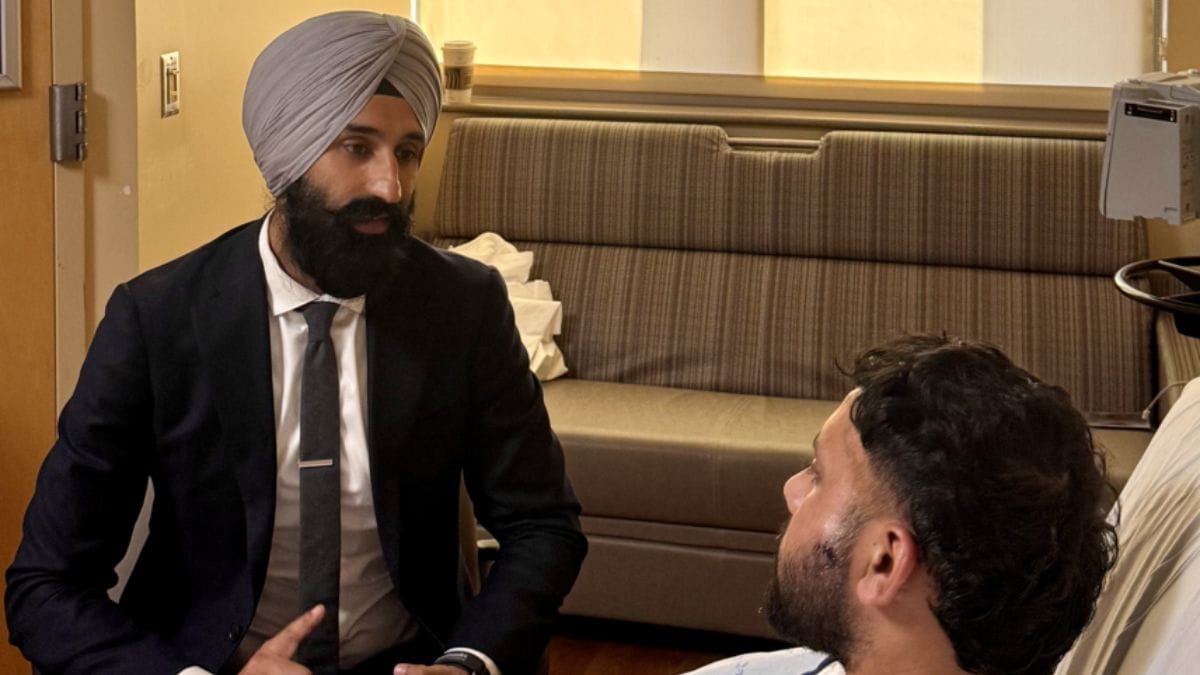
Shortly after the digital uproar, physical violence struck on the asphalt. A Sikh truck driver, plying his trade thousands of miles from home, became the recipient of a brutal, bias-motivated assault.
The leap from a careless government graphic to a shattered jaw and a bleeding face in a Wyoming gravel lot is shorter than we care to admit. Words create worlds. They establish the perimeter of who is human and who is fair game. When an official agency reduces a proud professional to a caricature, it signals to the aggressors of the world that these lives are cheap, foreign, and unprotected.
This is the hidden cost of algorithmic laziness and institutional detachment.
We live in an era obsessed with the polished aesthetic of inclusion. Corporations and government bodies alike rush to publish check-the-box acknowledgments of cultural months and diverse professions. They employ high-priced consultants and automated content generators to push out volume, chasing engagement metrics while hollowing out genuine understanding.
They want the credit for diversity without the burden of empathy.
The result is a hollow facade. It is a digital house of cards built on stock prompts and rushed approvals. And when the wind blows hard off the Wyoming plains, that facade collapses, leaving real people exposed to the flying debris of public malice.
Think about the driver who woke up in a hospital bed following the attack. Think about his family back home, tracking his route on a dispatch app, watching the little blue dot stall indefinitely at a rest area on the map. Imagine the terror of the phone call that shatters the quiet of an ordinary evening.
This is the human cost of cultural negligence.
We cannot separate the digital environment from the physical one. The screens we stare at in our cabs, our offices, and our living rooms are not windows looking out at a harmless virtual playpen; they are the wiring of our collective nervous system. When that system is flooded with lazy stereotypes and casual othering, the tremors are felt directly on the pavement.
Justice requires more than an apology statement deleted quietly from a social media feed. It requires an honest reckoning with how we view the people who keep our society functioning. It demands that we strip away the lazy shorthand of caricature and replace it with rigorous, difficult respect.
The semi-trucks will keep rolling through the night. The headlights will cut through the sleet. Drivers will keep their hands locked on the steering wheel, eyes straining against the dark, carrying the weight of an entire nation on tires worn thin by the miles.
They deserve an America that sees them clearly. They deserve institutions that protect their dignity with the same fierce dedication they bring to the open road. Until we close the gap between the sanitized corporate post and the brutal reality of the highway, those shadows will continue to lengthen, waiting at every dark exit for the next traveler to pass.