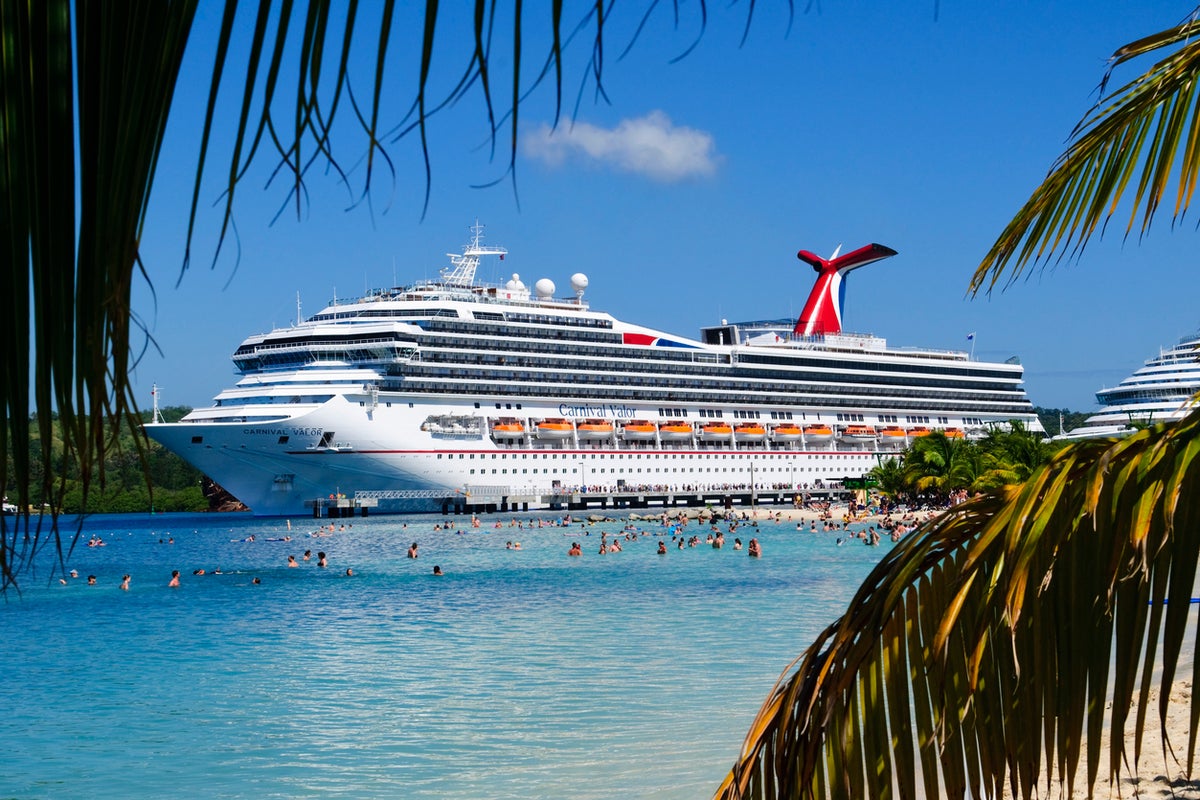
The Caribbean breeze usually carries the scent of salt and expensive sunscreen, a cocktail of freedom that millions pay thousands of dollars to inhale every year. For most, a cruise is a floating sanctuary where the rules of the mainland—the traffic, the boss, the relentless ticking of the clock—simply cease to exist. You trade your car keys for a plastic lanyard and your responsibilities for a bottomless glass of something blue. But for Kanyam G. and Kanyam S., that sanctuary transformed into a federal crime scene before the ship even returned to port.
Violence at sea feels different. On land, if a conflict erupts in a bar or a restaurant, there is an exit. There is a sidewalk, a getaway car, a way to put distance between yourself and the adrenaline-fueled mistake you just made. On a cruise ship, you are locked in a steel city. There is nowhere to go but your cabin, and even then, the authorities are already waiting at the gangway.
The Midnight Fracture
The Carnival Valor was slicing through the water, a massive engine of leisure, when the friction began. It didn't start with a grand conspiracy or a high-stakes heist. It started with the kind of localized, explosive anger that often bubbles up when too much heat, too much alcohol, and too many people occupy the same confined space.
According to federal charging documents, the confrontation erupted into a physical brawl that left more than just bruised egos. We’ve all seen the grainy cell phone footage of "cruise ship fights" that go viral on social media—the chaotic swinging of arms, the screams of bystanders, the frantic intervention of security guards in white polos. But what the viral clips rarely show is the cold, quiet aftermath in a windowless room on the lower decks.
The two Alabama women now find themselves ensnared in a legal system that does not care about the "vacation vibe." They are facing federal assault charges. That distinction is vital. When you are on a vessel in the middle of the ocean, you aren't just in a different ZIP code; you are in the "special maritime and territorial jurisdiction of the United States."
The Jurisdictional Trap
Imagine you are standing on a balcony, watching the sunset. You feel a thousand miles away from the IRS, the DMV, and the local police department. It is a seductive illusion. In reality, the moment you step onto a ship that departs from and returns to a U.S. port, you are wrapped in a web of federal law more rigid than almost anything you encounter at home.
A fight at a backyard BBQ might lead to a misdemeanor citation from a local deputy. A fight on the Carnival Valor brings the FBI to your door. The Bureau is the primary agency responsible for investigating crimes on the high seas involving U.S. nationals. There is no "cooling off" period when the federal government is the one filing the paperwork.
The charges filed against the Kanyams involve assault resulting in serious bodily injury. In the world of federal sentencing, "serious" isn't a subjective term. It refers to injuries that involve a substantial risk of death, extreme physical pain, or protracted impairment of a body part. The stakes aren't just a fine or a banned-for-life letter from Carnival; they are measured in years of federal prison time.
The Psychology of the Floating Pressure Cooker
Why does this happen? Why do people spend their hard-earned savings on a "fun ship" only to end up in handcuffs?
Psychologically, cruises create a phenomenon known as "deindividuation." When you are away from your community, your neighbors, and your professional reputation, the social guardrails start to crumble. You are a stranger among thousands of other strangers. Add the "all-you-can-drink" packages that many cruise lines use as a primary revenue driver, and you have a recipe for volatility.
The brain’s frontal lobe, responsible for impulse control, is the first thing to go under the influence of alcohol and the "I'm on vacation" mindset. A perceived slight—a bumped shoulder in the buffet line, a loud comment near the pool, a disagreement over a chair—can escalate with terrifying speed. In the case of the Alabama women, the altercation wasn't just a momentary lapse; it was a physical manifestation of a total loss of control in an environment that demands the opposite.
The Hidden Cost of the "Vibe"
The victims in these scenarios aren't just the people who walk away with stitches or broken bones. The victim is the very idea of the escape. For the hundreds of families on that deck who had to usher their children away from the violence, the vacation ended the moment the first punch was thrown.
Security on these ships is a delicate dance. They are trained to be invisible until they are absolutely necessary. They are "hosts" until they have to be "guards." When a situation escalates to federal charges, it means the system failed at every level. It means the verbal de-escalation didn't work. It means the "quiet room" wasn't enough. It means the ship's bridge had to coordinate with shoreside authorities to ensure that justice was waiting when the anchors dropped.
Consider the logistics of a federal arrest at sea. You are confined. You are monitored. The very ship you were enjoying becomes your prison. There is no more lobster night. There are no more shows. There is only the mounting realization that the life you left back in Alabama—the jobs, the families, the routines—is about to be fundamentally altered by a few minutes of rage.
The Weight of the Gavel
The legal proceedings for Kanyam G. and Kanyam S. will likely take place in a federal courthouse, a building of marble and silence that stands in stark contrast to the neon lights of a Carnival deck. There, the "maritime jurisdiction" will be explained in excruciating detail.
The prosecution will likely point to the confined nature of the ship as an aggravating factor. On a vessel, violence is a safety hazard for everyone, not just the combatants. A brawl can cause a stampede; it can distract crew members from essential safety duties; it can create a localized riot. This is why the federal government takes such a heavy-handed approach. They aren't just punishing an assault; they are protecting the sanctity of the maritime commons.
We often think of laws as things that exist on land, carved into the dirt of our states and cities. But the law is buoyant. It follows the hull of the ship into the deepest parts of the Atlantic. It sits in the corner of the lido deck. It waits in the cabin.
As the sun sets on the Gulf, the Carnival Valor continues its trek, carrying thousands of stories. Most will end with a photo album and a slight sunburn. But for two women, the story is no longer about the destination. It is about the heavy, inescapable weight of what happens when the vacation mask slips and the federal government decides to look underneath.
The ocean is vast, but it is never empty of consequences.