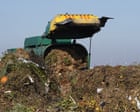
Food waste diversion programs are quietly importing thousands of tons of microplastics into agricultural soils because municipal sorting systems cannot handle modern packaging. When cities mandate organic waste collection to keep methane out of landfills, they frequently overlook a catastrophic side effect. Plastics contamination in food waste schemes has transformed municipal compost streams into delivery mechanisms for synthetic polymers, creating an invisible ecological crisis right beneath our feet.
For two decades, environmental policy focused entirely on diversion rates. Tons collected meant progress. Tons buried meant failure. This metric-obsessed framework created a massive blind spot that material recovery facilities and municipal administrators preferred to ignore. Organic waste streams are no longer just banana peels and coffee grounds. They are heavily contaminated with fragments of polylactic acid, polyethylene liners, sticky fruit labels, and non-compostable films that shred during processing and embed themselves permanently in the final product.
The Mechanics of Municipal Failure
To understand how ordinary kitchen scraps turn into toxic agricultural amendments, you have to look at what happens behind the green bin doors. Households separate their food scraps into paper bags or certified compostable liners, tie them up, and set them on the curb. At the processing facility, these bags hit industrial shredders and anaerobic digesters or windrow composting systems.
Here is where the machinery breaks down. Traditional sorting equipment relies on optical scanners and air classifiers designed for dry, rigid materials like water bottles and milk jugs. Wet, heavy, rotting food waste obscures these sensors completely.
- Shredding and Fragmentation: Industrial grinders pulverize everything in their path. A single plastic produce sticker or grocery bag is chopped into thousands of microscopic confetti pieces rather than being filtered out.
- Thermal Degradation: High-temperature composting breaks down biological matter, but conventional petroleum-based plastics simply soften, fragment, and bind with the organic matrix.
- False Certification: Products labeled as "biodegradable" often require industrial facilities operating under hyper-specific temperature and humidity profiles that municipal windrows rarely maintain for the required duration.
As a result, municipal compost is frequently laced with invisible shards of synthetic polymers. Farmers buy this compost thinking they are enriching their soil with organic carbon. Instead, they are seeding their fields with persistent microplastics that accumulate season after season.
Why Regulators Look the Other Way
The silence from environmental agencies is deafening. Local governments face intense political pressure to show falling landfill tonnages. Admitting that diversion programs are systematically polluting agricultural land with synthetic waste threatens the entire narrative of municipal sustainability.
Setting up high-purity sorting lines costs millions of dollars in capital expenditure. Automated optical sorters equipped with machine vision can catch rogue plastics, but municipalities operating on tight fiscal budgets routinely defer these upgrades. They rely instead on manual sorting lines where workers pull out visible items while millions of tiny fragments slip right through the trommel screens.
The regulatory standards governing compost quality are relics of a simpler era. Most state and federal guidelines focus heavily on heavy metals, pathogens, and weed seeds. Chemical toxicity is measured through germination tests that check if seeds can sprout in the compost. They rarely test for the physical presence of microplastic particles smaller than two millimeters. If a batch of compost passes the standard agronomic checks, it gets certified grade-A and shipped off to vegetable farms across the country.
The Soil Accumulation Cycle
Soil is not an inert sponge. It is a living, breathing biological ecosystem governed by complex interactions between fungi, bacteria, nematodes, and plant roots. When microplastics infiltrate this matrix, they fundamentally alter the physical and chemical properties of the earth.
Research agronomy paints a troubling picture. Synthetic particles alter soil bulk density, reduce water infiltration rates, and disrupt microbial communities that fix nitrogen and cycle nutrients. Earthworms ingest microplastic fragments, leading to reduced growth rates and altered feeding behaviors. More alarmingly, these microscopic polymers act as chemical sponges. They absorb heavy metals, pesticides, and industrial pollutants from the surrounding soil water, concentrating toxins on their surfaces before entering the food web through earthworms and root vegetables.
Consider a hypothetical mid-sized farm receiving five hundred tons of municipal compost annually. If that compost carries a conservative contamination rate of just zero-point-five percent by weight, the farmer is inadvertently dumping over two tons of raw plastic into their topsoil every single year. Over a decade of continuous application, that acreage becomes permanently saturated with synthetic debris that cannot be vacuumed out, filtered, or chemically neutralized.
Fixing the Broken Stream
Addressing this contamination crisis requires dismantling the current model of curbside collection and rebuilding it around strict purity standards rather than raw tonnage goals.
Processing facilities must install advanced cleaning technologies, including wet-scrubbing systems, hydro-cyclones, and high-precision density separators that float plastics away from heavy organic slurries. These systems are expensive, but the cost of inaction is the permanent degradation of arable land.
At the legislative level, packaging laws need a complete overhaul. Governments must ban non-essential plastic components in food packaging, such as adhesive PLU stickers on loose produce. If a label cannot be made from 100 percent marine-degradable, non-toxic organic material, it has no business touching food meant for human consumption.
Furthermore, diversion metrics must shift from weight-based accounting to quality-based accounting. A city that diverts ten thousand tons of exceptionally clean organic waste should be valued far higher than a city that diverts fifty thousand tons of plastic-laced sludge. Until policymakers penalize contamination with the same severity they currently reserve for illegal dumping, the green bin will remain a Trojan horse for industrial polymers.
The next time you scrape your dinner plate into the compost bin, consider where those tiny fragments of packaging are heading. They are not disappearing. They are marching steadily toward the agricultural heartland, embedding themselves into the soil that grows our food supply, waiting out centuries of geological time beneath the surface of the earth.


