The headlines are shouting a positive story. Official figures show a 12.8 percent jump in Hong Kong retail sales for March 2026. It looks like a recovery, a sign of a city shaking off its economic lethargy. But spend a few decades watching these charts, and you learn that aggregate data is a master of disguise. This specific number is not a sign of broad consumer health. It is an artifact of tax policy and high-end spending that masks a deeper, more troubling stagnation in the daily economy.
If you strip away the anomalies, the picture is far grimmer. The true story of Hong Kong’s retail sector today is found in the divergence between big-ticket capital purchases and the dwindling spending power of the average resident.
The Automotive Anomaly
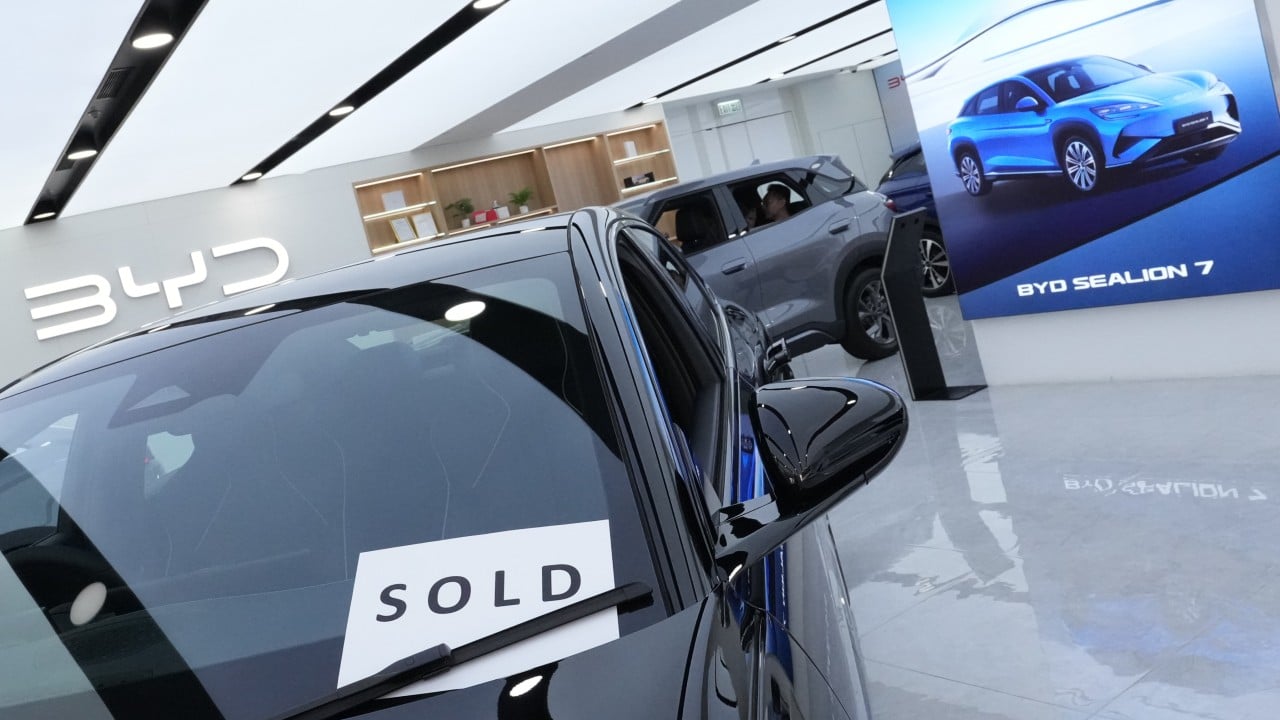
To understand why retail sales soared in March, you do not need to look at the mood of the average shopper. You need to look at the calendar and the tax office. The most significant contributor to that 12.8 percent growth was an 80.8 percent surge in motor vehicle sales.
This was not a sudden explosion of demand from citizens wanting to upgrade their family transport. It was a race against a deadline. The government’s first registration tax concessions for electric private cars were scheduled to expire at the end of March. Wealthier buyers and corporate fleets rushed to finalize purchases to beat the tax hike.
This is a classic distortion of economic data. When a policy deadline forces a massive volume of transactions into a single window, it creates a temporary bubble. Once the tax benefit vanished, the incentive to buy likely evaporated with it. Attributing this spike to underlying economic strength is a misreading of market mechanics. It is a one-time event that artificially inflated the monthly total, creating a false sense of security for anyone glancing only at the headline percentage.
The Bifurcation of Consumption
Beyond the car dealerships, the retail sector is undergoing a painful structural split. High-end goods, specifically jewellery, watches, and luxury gifts, continue to post strong numbers. This is consistent with a market that remains tilted toward the ultra-wealthy and the visitor demographic. When the macro-financial environment encourages tourism and wealth accumulation, the luxury sector holds its own.
However, move away from the high-street boutiques and into the neighbourhood centers, and the reality changes. Residents are increasingly cautious. The cost of living in Hong Kong remains astronomical, squeezing the middle class and lower-income families. When money is tight, the first things cut are not luxury watches, which are often bought by tourists or investment-minded individuals, but the everyday staples.
We see this in the declining performance of categories that actually reflect the health of the local population. Fuel sales dropped significantly. Spending on Chinese drugs, herbs, footwear, and apparel struggled. This is the real story of the Hong Kong consumer. They are not feeling wealthier. They are feeling the pinch of inflation, rent, and uncertainty, and they are voting with their wallets by staying home or, more frequently, taking their money elsewhere.
The Cross Border Drain
A significant portion of local consumption is effectively leaking out of the city. The ease of access to Shenzhen and other parts of the Greater Bay Area has transformed local behavior. Residents are increasingly comfortable taking the train across the border for groceries, dining, and leisure, where the cost-to-quality ratio is often significantly better than what is available locally.
Retailers in Hong Kong are trapped in a vice. They are facing high operating costs—rent remains a primary offender—while their customer base is physically shrinking their potential spend by seeking value abroad. A retailer in a suburban mall cannot compete with the price point of a massive, modern outlet complex across the border that offers a broader experience at half the price.
The 35.1 percent surge in online sales also signals that the traditional brick-and-mortar model is failing to hold the attention of the local shopper. Consumers are finding convenience and better pricing through digital platforms, further eroding the revenue of physical stores that cannot pivot.
The Myth of Broad Recovery
Government spokespeople and analysts often point to sustained growth in inbound tourism as the savior of the retail sector. While visitor numbers are indeed up, relying on tourism to mask domestic weakness is a dangerous strategy. A retail sector that depends entirely on visitors and high-end automotive tax races is not a healthy, balanced market. It is a fragile environment susceptible to any shift in travel policy, exchange rates, or tax adjustments.
The real test for the economy is not whether people are buying electric cars because they have to, or whether tourists are purchasing watches. The test is whether the average resident has the disposable income to sustain local businesses throughout the year. On that front, the data is not nearly as optimistic as the headline figure suggests.
Until the underlying structural issues—the cost of living, the lack of wage growth, and the loss of local spending to external markets—are addressed, the retail sector will continue to exhibit these erratic, policy-driven spikes. Investors and business owners need to look past the monthly surge and recognize the underlying erosion of the local retail base. The numbers are up, but the foundation is shifting. Growth that relies on artificial deadlines and luxury niches is not the same as growth driven by a thriving, confident population. It is simply a temporary variance that will eventually correct itself.
Those waiting for a return to the golden age of high-street retail in this city will likely find themselves waiting indefinitely. The city has changed, the habits of its people have changed, and the retail environment is forced to adapt. Adaptation does not mean selling more luxury cars. It means finding a way to make local retail relevant again for the people who actually live, work, and struggle here. Every indicator suggests that the current model is not just tired; it is becoming obsolete.