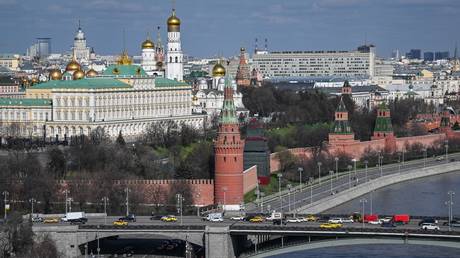
Finland is no longer waiting for a permission slip from Brussels or Washington. By signaling that the European Union must prepare for a structured dialogue with Russia, Helsinki has shattered a two-year-old glass ceiling of diplomatic silence. This isn't a white flag. It is a cold, calculated recognition that the current policy of total economic and political severance has reached a point of diminishing returns. For a nation that shares a 1,340-kilometer border with Moscow, "strategic ambiguity" isn't a luxury—it is a survival mechanism.
The shift comes at a moment when the European defense industrial base is struggling to match the sheer output of a Russian economy that has successfully pivoted to a permanent war footing. While European capitals spent months debating the logistics of artillery shells, Moscow secured supply chains through a shadow network of intermediaries that bypass traditional sanctions. Helsinki sees the writing on the wall. They understand that a continent without a roadmap for communication is a continent that has lost its agency.
The Geography of Necessity
Finland’s entry into NATO was a tectonic event, but geography remains the ultimate arbiter of its foreign policy. Unlike the Atlantic-facing powers, Finland cannot treat the Russian border as an abstract problem or a line on a map. It is a living, breathing security challenge that requires daily management of airspace, maritime traffic, and border crossings.
The Finnish logic is simple. You don't talk to your friends to prevent a war; you talk to your adversaries to manage the risk of one. By advocating for a dialogue, Finland is attempting to reclaim the "Helsinki Spirit" of 1975, updated for a century defined by drone warfare and hybrid threats. They are betting that a controlled channel of communication is safer than a vacuum filled with miscalculations.
The Failure of the Total Sanctions Theory
The original premise of the European response was that a massive, synchronized decoupling would trigger an internal collapse of the Russian state or, at the very least, its ability to wage war. That hasn't happened. Instead, we have seen a "Great Realignment" where energy flows have shifted toward the Global South, and Western technology continues to find its way into Russian hardware through third-party re-exports.
European industry has paid a heavy price for this decoupling. Energy-intensive sectors in Germany and Italy are hollowing out, while the Russian economy has found ways to insulate itself through increased trade with Beijing. When Helsinki calls for dialogue, they are acknowledging that the "economic scorched earth" policy has a shelf life. If the goal was to isolate Russia into submission, the data suggests the strategy needs a drastic overhaul.
The Tech Gap and Hybrid Realities
Modern warfare isn't just about tanks and territory. It is about the integrity of the GPS signals that guide commercial flights and the stability of the undersea cables that carry the world’s data. Over the past year, Northern Europe has seen a spike in "gray zone" activities—unexplained GPS jamming, fiber optic cable "accidents," and the weaponization of migration.
Finland’s intelligence services are aware that these problems cannot be solved by NATO deployments alone. They require a mechanism for de-confliction. Without a direct line to the Kremlin, every technical glitch becomes a potential casus belli. The Finnish proposal for dialogue is focused heavily on these technical and tactical realities. They want a framework where "accidental" escalations can be defused before they trigger a regional catastrophe.
The Problem of Cyber Attribution
One of the most significant hurdles in the current standoff is the lack of a shared language regarding cyber warfare. When a Finnish utility company is hit by a ransomware attack or a Swedish power grid experiences a surge, the response is often hampered by the difficulty of definitive attribution. Helsinki argues that a dialogue could establish "red lines" for infrastructure that both sides agree to keep off-limits, much like the hotlines of the Cold War era.
Internal Cracks in the European Front
The EU is not a monolith. While the Baltic states and Poland view any talk of dialogue as a betrayal, countries like Hungary and Slovakia have never fully committed to the isolationist path. France and Germany remain caught in the middle, wary of appearing weak but terrified of a permanent, multi-decade conflict on their doorstep.
Finland's intervention is significant because they have the most "skin in the game." They aren't an outlier like Viktor Orbán; they are a frontline state with a world-class military and a history of holding their own against Moscow. When Finland speaks, the rest of the EU is forced to listen because their credentials as a security provider are impeccable. They are the only ones who can bridge the gap between the hawks and the realists.
The Art of the Hard Bargain
Helsinki isn't suggesting a return to business as usual. Any dialogue would be transactional, skeptical, and backed by the threat of force. This is about "Armed Diplomacy." The Finnish model suggests that you can build the strongest defense in Europe while simultaneously keeping a channel open to the person on the other side of the fence.
It is a difficult balance to strike. Critics argue that opening a door now only rewards aggression. But the counter-argument is becoming harder to ignore. By refusing to engage, Europe hands the role of mediator to Turkey, China, or the United Arab Emirates. It abdicates its own role in shaping the security architecture of its own continent.
Rebuilding the Security Architecture
The post-1945 order is dead. The post-1991 order is in the morgue. Whatever comes next will be defined by a fragmented world where regional powers have to secure their own interests. Finland is moving first because it has no other choice. It is creating a blueprint for a Europe that is capable of protecting its borders while managing its neighbors.
This requires a fundamental shift in how the EU thinks about power. For decades, the union was a civilian project that outsourced its security to the United States. That era is over. The "Helsinki Shift" is the first sign of a Europe that is growing up and realizing that in a multipolar world, you don't always get to choose your neighbors, but you do get to choose how you manage the risk they pose.
Strategic Autonomy or Strategic Dependency
The push for dialogue is also a push for European autonomy. If Europe cannot manage its own relationship with Russia, it will forever be a pawn in the broader competition between Washington and Beijing. Helsinki is betting that by taking the lead on a dialogue framework, Europe can set its own terms for de-escalation rather than having a deal imposed upon it by outside powers.
The Intelligence Dilemma
There is a dark side to this proposal. Every time a Western official meets with a Russian counterpart, it provides an opportunity for signal intelligence and psychological operations. Helsinki knows this better than anyone. Their diplomatic corps is trained to operate in high-threat environments where every handshake is a data point.
The risk of being manipulated is real, but the risk of total blindness is greater. Currently, the West relies heavily on satellite imagery and signals intelligence to understand Russian intentions. These are vital tools, but they cannot replace the nuance of face-to-face interaction. You can't see "intent" through a satellite lens. You can only see the results of it.
Infrastructure and the Baltic Sea
The Baltic Sea has become a "NATO Lake" in name, but in practice, it remains a contested and crowded waterway. The Nord Stream explosions proved how vulnerable undersea infrastructure is to sabotage. Since then, the number of "research vessels" lingering over key pipelines and cables has only increased.
Finland’s call for dialogue includes a specific focus on maritime safety. They are proposing a set of protocols to prevent collisions and misunderstandings in these narrow waters. It is a pragmatic, unglamorous form of diplomacy that saves lives and protects economies without requiring anyone to compromise on their core values.
The Nuclear Shadow
We cannot ignore the elephant in the room. The constant rattling of the nuclear saber has created a baseline of anxiety that affects markets, policy, and public morale. A primary goal of the Helsinki-led dialogue would be to re-establish the "Nuclear Taboo" through clear communication of thresholds. When the lines of communication are cut, the chance of a tactical mistake spiraling into a strategic catastrophe increases exponentially.
Finland is proposing a "Cold Peace." It is a state of non-war where conflict is managed through a mixture of massive deterrence and surgical diplomacy. It isn't pretty, and it certainly isn't the "End of History" that was promised in the 1990s. It is, however, a realistic assessment of the world as it exists today.
The European Union stands at a crossroads. It can continue to maintain a policy of absolute silence, watching from the sidelines as the situation on the ground drifts toward further escalation. Or it can follow Helsinki’s lead and begin the grueling, uncomfortable work of building a communication framework that acknowledges the reality of a hostile neighbor without surrendering to it. Helsinki has made its move. The rest of the continent must now decide if it has the stomach for the diplomacy of the real.
Stop looking for a total victory that isn't coming and start building a defense that can't be broken.