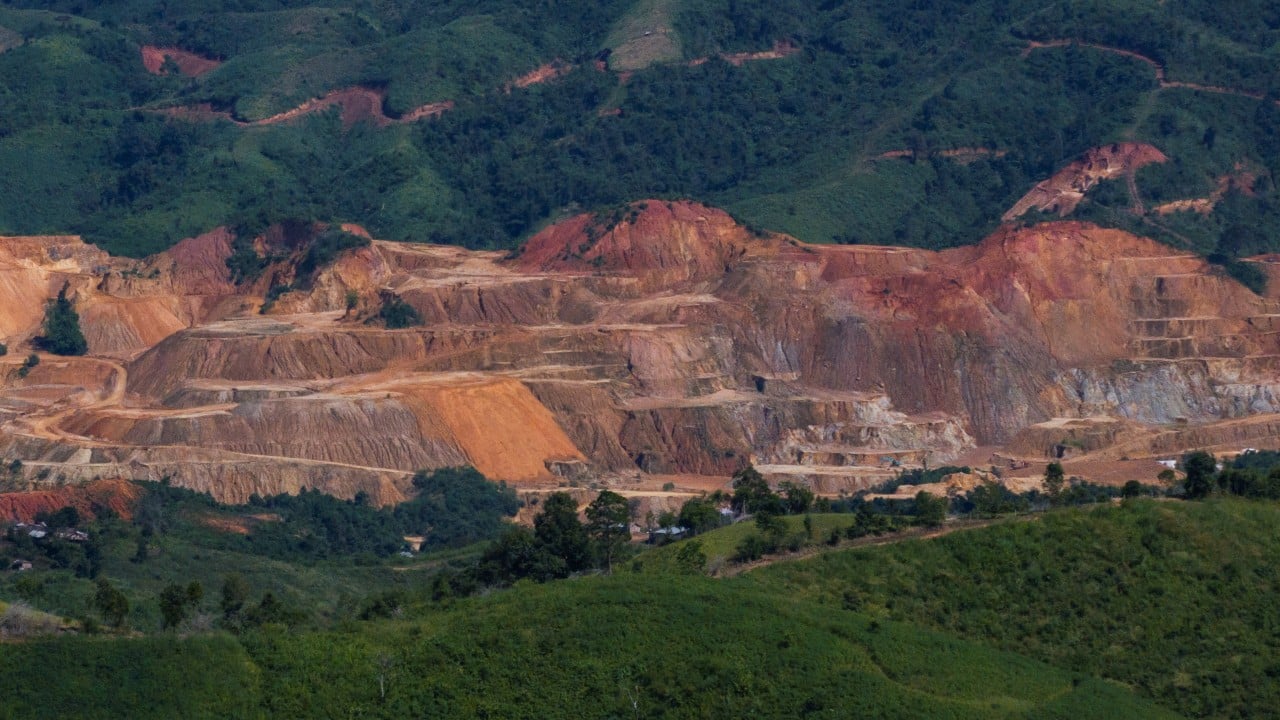
Ja Seng unrolled the plastic tarp, her fingers stained a deep, unnatural yellow. For generations, her family had farmed the hillsides of Myanmar’s northern border, coaxing life from soil that smelled of damp moss and wild cardamom. Today, the air smells like a car battery left out in the sun.
Beneath her feet, the earth is dying so that a smartphone thousands of miles away can live.
We rarely think about the physical weight of our digital lives. We scroll through frictionless feeds, drive silent electric vehicles, and marvel at the lightweight sleekness of our laptops. But every clean technology requires a dirty beginning. At the dark heart of this transition lie rare earth elements—specifically heavy rare earths like dysprosium and terbium. Without them, the magnets that power electric vehicle motors and wind turbines simply fail.
The global tech supply chain has a secret bottleneck, and it runs straight through the war-torn mountains of Myanmar’s Kachin State.
The Liquid Alchemy of the Border
To understand how a mountain becomes a smartphone component, you have to look at the mud.
Imagine a massive, industrial-scale drip coffee maker, but instead of coffee, the machine is an entire hillside, and the water is a toxic cocktail of ammonium sulfate. This process, known as in-situ leaching, is how heavy rare earths are extracted. Miners drill hundreds of holes into the mountain, pumping thousands of tons of chemical solution directly into the earth. The chemicals dissolve the metals, washing them down into crude, plastic-lined sedimentation ponds at the base of the ridge.
It is cheap. It is fast. It is devastating.
In neighboring China, where the world's rare earth processing is heavily centralized, the government strictly curtailed this specific mining method due to catastrophic environmental damage. It ruined water tables, triggered landslides, and left vast swaths of land permanently toxic. But the global demand for these minerals didn't shrink. It grew.
The extraction shifted across the border into Myanmar's lawless frontier, where enforcement is nonexistent and the landscape is controlled by fragmented, armed militias.
Consider the scale of this displacement. Data from satellite imagery shows that in a span of just a few years, the number of rare earth mining sites in Kachin State’s Chipwi township swelled from a handful of scattered outposts to over a hundred distinct complexes, containing thousands of individual leaching ponds. In 2023 alone, Myanmar exported over 50,000 tons of rare earth compounds to China. That represents a staggering percentage of the global supply for heavy rare earths, harvested from an area smaller than many Western metropolitan cities.
The True Cost of True Clean
The paradox of the green transition is that it requires an immense sacrifice of local ecosystems to save the global climate.
Ja Seng’s village no longer drinks from the local stream. The fish died three years ago, turning belly-up in water that turned an eerie, opaque turquoise. Local livestock that graze near the runoff channels frequently suffer from respiratory failure and reproductive issues. When the monsoon rains arrive, the danger escalates from a slow poison to an immediate threat. The acid-soaked hillsides lose their structural integrity. They become liquid.
In the middle of the night, a hillside weakened by thousands of chemical injection holes can liquefy completely, burying mining camps and adjacent villages under a mountain of toxic sludge.
This is not a hypothetical risk. Multiple landslides have claimed the lives of dozens of undocumented workers across these border sites, their deaths unrecorded by any official agency because the mines operate in a legal gray zone. The militias who control the territory collect lucrative taxes on every ton of ore moved across the border, using the profits to fund their ongoing conflicts against the central military junta or rival factions.
The clean energy future is funding a very dirty, very old war.
Tracking the Unseen Thread
The ultimate destination for these minerals is the consumer market. When a major automotive company announces a new fleet of electric vehicles, or a tech giant introduces an upgraded device with a more powerful speaker magnet, the supply chain lines trace backward through proprietary processing facilities in China, right back to the yellow-stained fingers of workers in Kachin State.
The industry relies on a lack of transparency. Because raw rare earth oxide concentrates are mixed and processed together in massive state-run facilities before being manufactured into magnets, separating ethically sourced material from conflict-tainted material becomes nearly impossible by the time the final product reaches a consumer. A magnet inside a wind turbine spinning off the coast of Scotland likely contains a fraction of a gram of terbium that cost a Myanmar farmer his livelihood.
The global community faces a choice that it continually avoids. Regulation exists on paper, but enforcement stops where the pavement ends and the mud begins. Companies claim zero tolerance for environmental degradation in their supply chains, yet they continue to buy from distributors who rely on the opaque output of the borderlands.
Ja Seng walks back to her home as the sun dips below the ridge. The sky turns a brilliant, smoky orange, mimicking the toxic crust that forms on the edges of the sedimentation ponds. She has a handful of clean water brought in from a town miles away, just enough to cook a meal. The mountain behind her glows with the harsh, artificial lights of the night shift, humming with the sound of diesel pumps driving chemicals deep into the bedrock, keeping the rest of the world moving forward.