Fever.
A sore throat.
A sudden, heavy tiredness that makes even lifting a glass of water feel like hauling wet cement.
When Kenya’s Ministry of Health confirmed the country’s third case of Ebola caused by the Bundibugyo virus on October 16, 2026, the official announcement read like a ledger entry. A 65-year-old woman. A close relative of the first and second patients. Already in quarantine since October 6 after the first patient—a 40-year-old man—died on October 5. Transferred to an infectious disease unit once symptoms appeared. No signs of community transmission.
Numbers are tidy. Numbers sit neatly inside press releases and keep headlines calm.
Yet behind every confirmed case is a human being staring at a ceiling in a quiet room, waiting for a thermometer to tell the truth. And right beside that patient stands a family bound by love, grief, and a terrifying new rule: do not touch.
Grief Behind Glass
To understand what that third confirmation meant in mid-October 2026, you have to step back eleven days to October 5.
A 40-year-old man who had fallen ill in the Democratic Republic of the Congo and traveled into Kenya through Uganda died of Ebola Bundibugyo virus disease. Across the border in the DRC, a massive Bundibugyo outbreak—which began in May 2026 and would go on to surpass ten thousand confirmed cases with a fatality rate near half—was already straining clinics and testing community trust. In Kenya, that single death turned a distant regional crisis into an immediate, intimate reality.
When someone you love dies suddenly, human instinct pulls you closer. You hold their hand. You smooth their blanket. You lean in to whisper words that only family understands.
Ebola punishes that exact instinct.
The virus spreads through direct contact with the blood or body fluids of someone who is sick or has died from the illness, or through contaminated bedding, clothing, and surfaces. Unlike respiratory viruses that can slip through the air across a crowded bus before anyone feels unwell, Ebola generally requires physical closeness once symptoms emerge. That biological fact makes it both containable and cruel. It turns ordinary acts of care into potential exposures.
By October 6, health officials had placed the 65-year-old relative into quarantine as a primary contact, alongside a 39-year-old male relative who also became the country’s second confirmed case. (To make the daily weight of quarantine concrete, consider a hypothetical relative—let’s call her Grace—sitting behind a closed door in an isolation ward: every morning a nurse in heavy protective gear checks her temperature, every ache feels like a verdict, and every hour stretches out while she wonders whether a scratchy throat is just dry air or the virus waking up.)
Ten days into isolation, the fever arrived. A sore throat followed. Fatigue settled in.
Confirmation—the third case—was not a bolt out of a clear sky. It was a chain that had already been spotted and partially fenced in. Still, knowing a risk exists does not make watching a family member fall ill any easier.
Why a "Contained" Case Still Matters
Reading that a patient was already in quarantine tempts many people to exhale too soon. Good, the thought goes. The system worked. Nothing to worry about.
That reaction misses the sharper tension of an outbreak.
Think of an outbreak like a spark landing near dry grass at dusk. Putting a bucket over the first flame stops the fire from racing across the field, yet heat still radiates from the soil underneath. Even when every early case is linked to a known chain and held in isolation, the window between exposure and symptoms—often up to 21 days—keeps everyone on edge. A person can feel completely fine on day four of monitoring and wake up burning with fever on day ten.
Health officials in Kenya emphasized that 127 of the first 130 listed contacts had been identified and quarantined around the time of the third confirmation, keeping community transmission risk low. That contact tracing is painstaking detective work. Epidemiologists reconstruct movements, trace rides and meals, check temperatures, and knock on doors day after day.
But detective work has blind spots.
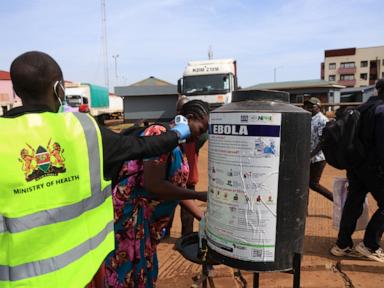
Along busy corridors like Busia, where trade and daily life pulse between Kenya and Uganda, temperature checks and handwashing stations at official crossings are vital front lines. Yet locals know how porous borders can be. Footpaths, informal crossings, and everyday movement between kin on both sides of a line drawn on a map mean public health never stops at a customs gate. A single missed link can turn a quiet containment story into a wider scramble.
I have stood in clinics during infectious disease scares and watched the same quiet pattern repeat: fear does not announce itself with screaming; it arrives as hesitation. A neighbor avoids a family’s gate. A shopkeeper wonders who sat on the bench an hour ago. A nurse zips up a gown knowing that one slip when removing gear after a long shift is the moment accidents happen.
Admitting how frightening and uncertain those days feel is not weakness. It is honesty. People do not follow health guidance out of fear alone—they follow it when they trust the people giving it and understand why each precaution matters.
Questions Everyone Asks When Ebola Hits the News
Whenever a headline announces a new case in East Africa, the same urgent questions ripple through living rooms and group chats far beyond the affected household.
How does Ebola actually spread, and can you catch it from someone with no symptoms?
Ebola is not airborne like measles or the common cold. It spreads through direct contact with blood, vomit, diarrhea, sweat, or other body fluids from an infected person—or with objects contaminated by those fluids—as well as through unprotected contact with the body of someone who has died from the disease. A person does not spread the virus during the silent incubation period before symptoms begin; contagiousness rises as symptoms appear and becomes highest in later stages of illness and after death. That is why isolating people as soon as a fever or other early sign starts is so decisive.
Why does a third case matter if the patient was already quarantined?
First, a third case confirms the virus actively jumped from the index patient to another household member, proving the exposure was real. Second, every new patient requires intensive clinical care, strict infection control, and fresh vigilance among caregivers and close contacts. Third, in an outbreak with a severe fatality rate like the 2026 Bundibugyo strain, every confirmed infection is a life on a knife-edge—and a reminder that containment holds only as long as monitoring stays unbroken.
What does "no community transmission" really mean?
It means health authorities have not found cases popping up out of nowhere among the general public with no known link to the initial cluster. Instead, the cases trace back to the same family chain. It is encouraging news, not a finish line. True containment is proven over time, not in a single afternoon.
The Quiet Heroism of Contact Tracing
If you have never watched an outbreak response up close, you might picture sirens and hazmat teams sweeping through streets. In reality, much of the hardest work looks like a clipboard, a phone call, and a knock at dusk.
Contact tracers are the bridge between clinical medicine and ordinary life. They ask people personal questions at the worst possible moment. Who visited? Who helped carry him? Where did she rest? Answering those questions takes courage, especially when rumors swirl and stigma threatens to brand an entire household.
When health workers show up consistently—bringing food support, checking temperatures gently, explaining test results clearly, and treating quarantined relatives with dignity rather than suspicion—fear begins to loosen its grip. Trust is an infection-control tool, even if you cannot hold it in a gloved hand.
Kenya’s response in autumn 2026 also underscored a truth that stretches well beyond Nairobi: readiness cannot stop at major capital hospitals. Border towns, rural clinics, local laboratories, and community health volunteers carry the weight of early detection. When local teams have supplies, rapid diagnostics, and clear communication channels, a potential spark gets spotted early instead of smoldering in silence.
Holding the Line Until the Clock Runs Out
Outbreaks do not end with a dramatic explosion. They end with patience.
In Ebola responses, public health officials watch a 42-day countdown—two full 21-day incubation cycles—starting after the last confirmed patient recovers and tests negative or is safely buried, provided no new cases emerge. By mid-November 2026, following weeks without new confirmed cases and the discharge of the last patient, Kenyan health leaders announced that seven patients had recovered and the country had entered that 42-day countdown toward being declared Ebola-free, even as massive transmission continued across parts of the DRC.
Think about what those 42 days feel like from the inside.
Day ten.
Day twenty-four.
Day thirty-nine.
Every morning, surveillance teams still check. Every clinic still stays alert. Nobody gets to celebrate early because viruses do not care about relief or exhaustion.
That third case confirmed in October was a sobering chapter in a tense autumn. It reminded the region that borders are porous, grief is heavy, and containment is a daily discipline rather than a permanent shield.
Yet it also showed what happens when people do not look away—when families accept quarantine to protect their neighbors, when nurses step into heavy gear shift after shift, and when quiet vigilance holds the line one day at a time.
Outside an isolation room at dusk, a pair of rubber boots dries by the door, waiting for another shift that nobody wanted, in a neighborhood determined to keep the lights on.