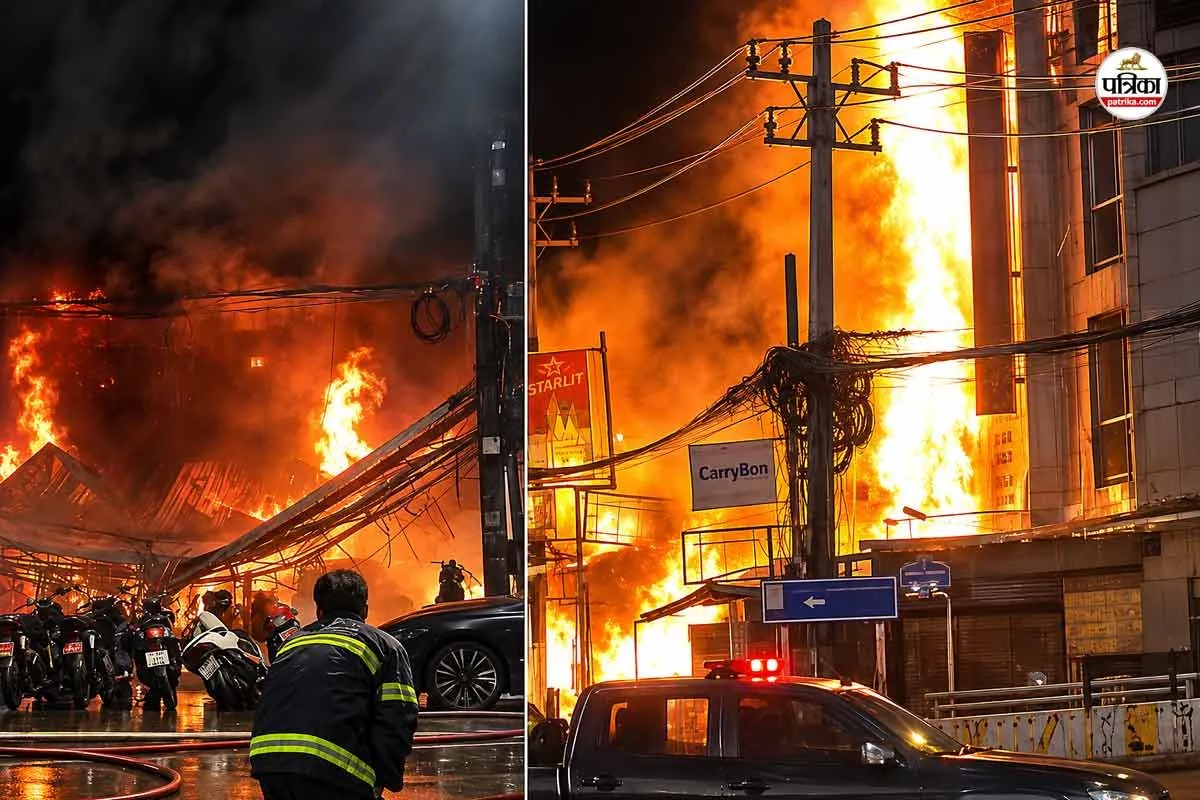
Three-seventeen in the morning is the quietest hour on a resort island. Even Patong, usually loud with basslines, sizzling street woks, and the rumble of rented scooters, exhales around that time. The neon signs dim to tired hums. Travelers sleep off long flights and tropical heat. Along the narrow streets set back from the beach, ordinary people—the ones who keep the island running—finally close their eyes.
Then came the heat. Read more on a similar issue: this related article.
On November 16, 2026, a fire tore through a four-storey shophouse near Patong on Thailand's resort island of Phuket, killing at least 11 people and injuring 16 more before firefighters brought the flames under control roughly two hours later. According to police reports, the blaze began around 3:17 a.m. in a building housing a motorcycle rental shop, a restaurant, and rented accommodation, before spreading to neighboring structures. Most of those who died are believed to have succumbed to smoke inhalation.
Numbers like eleven dead and sixteen injured fit neatly into a morning news brief. They sit cleanly in a headline. Yet behind those digits are Thai locals and Myanmar nationals—workers and residents sharing tight vertical spaces—whose lives collided with a wall of black smoke in the dark. No tourists were among the dead or injured, a detail that can quietly push a tragedy out of international travel feeds faster than it should. When the victims are the people sweeping the floors, cooking the noodles, and renting out the bikes rather than visitors holding boarding passes, the story often fades before the ash even cools. Additional journalism by NBC News explores comparable views on the subject.
The Architecture of Convenience
To understand why a fire in a building like this turns lethal so fast, you have to look at how Southeast Asian shophouses work. They are masterpieces of practical hustle. Ground floor for commerce—a shopfront, a kitchen, a row of motorbikes parked inches apart. Upper floors for living, sleeping, storing gear, and stretching every square meter to make rent pencil out.
I have stood inside buildings built on that exact blueprint, feeling the warm air trapped on upper landings after a long shift downstairs. You hear every footstep on the stairs. You smell frying garlic long after the stove is off. Convenience lives right below you, and convenience is rarely built with fire walls in mind.
(Note: The following two characters are hypothetical composites created to illustrate the human reality of shophouse living and migrant labor in coastal Thai towns; they are not real individuals involved in the November 16 fire.)
Picture Noi, a hypothetical night-shift kitchen prep worker in her late thirties renting a small room above a ground-floor business. Her day starts in the afternoon and ends well past midnight, when her legs ache from wet tile and her ears still ring from exhaust fans. Sleep at 3:00 a.m. isn't a luxury for someone like Noi; it is the only window of stillness she gets. Another hypothetical character, Kyaw, a young migrant worker from Myanmar taking a short breather between shifts, knows the unspoken rules of shared rooms: keep your head down, save what you can, don't complain about a sticky lock or a single narrow staircase.
Now, step back and use a metaphor. Think of a shophouse like a chimney turned on its side. At the bottom sit the volatile ingredients of daily commerce: electrical wiring running under heavy load, cooking heat, and in a vehicle rental shop, fuel and rubber. Above sits a vertical shaft of rooms where people are asleep. Once fire catches near the base, hot air and toxic smoke race upward faster than human reflexes can wake from deep sleep.
Smoke doesn't wait for flames to reach your door. It slips under the frame. It turns a familiar hallway into a blind, choking tunnel in less than a minute. Most victims in blazes like this don't burn; they breathe in superheated gas and carbon monoxide before they even reach the stairs.
That is terrifying to admit, even for someone who writes about safety and urban risk. We like to believe we would wake up, grab our bag, find the exit, and walk out calmly. In reality, pitch-black smoke at three in the morning strips away your sense of direction in seconds. Doubting your own readiness in a scenario like that isn't cowardice—it's honesty.
A Pattern That Keeps Repeating
The Phuket fire did not happen in a vacuum. It struck just four months after a devastating bar fire in Bangkok in July 2026 claimed dozens of lives following an electrical short circuit, and years after other high-casualty blazes across Thailand—including a 2022 music pub fire in the east that killed 14 people and the infamous New Year's Day fire at Bangkok's Santika nightclub in 2009 that killed 67.
| Incident / Era | Location | Reported Toll | Key Context |
|---|---|---|---|
| November 16, 2026 Blaze | Patong area, Phuket | At least 11 dead, 16 injured | Broke out around 3:17 a.m. in a four-storey shophouse with rental bikes, restaurant, and rooms. |
| July 2026 Bar Fire | Bangkok | Over 30–40 dead, dozens injured | Occurred roughly four months prior; authorities cited an electrical short circuit. |
| 2022 Music Pub Fire | Eastern Thailand | 14 dead | Highlighted recurring venue fire hazards. |
| 2009 Santika Club Fire | Bangkok | 67 dead, over 200 injured | Struck during New Year celebrations; remains a benchmark tragedy in Thai fire history. |
Why does this keep happening despite grief, pledges, and investigations?
Because enforcement in fast-moving tourism and service economies runs headfirst into human economics. When a town booms, buildings adapt quickly. A shop expands. Extra partitions go up upstairs to house staff or budget renters. Metal security grilles get welded onto windows to keep thieves out—and sometimes trap people inside when heat surges. Wiring gets spliced to power air conditioners, water heaters, fridges, and phone chargers all at once.
None of those choices come from malice. Usually, they come from trying to make ends meet on thin margins. A business owner tries to squeeze extra revenue out of a tight property. A worker takes an affordable room a few minutes from work so they don't spend half their wages on transit. Every shortcut looks harmless on a normal Tuesday.
But the real problem lies elsewhere: normal Tuesdays lull everyone into forgetting how unforgiving physics is when a spark finds fuel.
Consider what happens next in the aftermath of a tragedy like this. Investigators sift through charred debris to pinpoint the exact ignition source—whether wiring, fuel, or something else—while emergency crews tally the dead and tend to the injured. Politicians and officials face renewed pressure to check fire exits, inspect commercial-residential buildings, and tighten oversight.
Yet rules on paper only save lives if they survive contact with everyday pressure. A smoke alarm with a dead battery or no battery at all doesn't care about a municipal code. A locked rear door or a single narrow stairwell doesn't care how sunny the beach is two blocks away.
What Travelers and Locals Both Miss
If you are planning a trip to Phuket or any busy coastal hub, it is easy to split the world into two neat boxes: "safe resort zones" and "places where bad news happens." That division is an illusion. Real towns don't work like theme parks. Side streets, shophouses, scooter rentals, eateries, and staff quarters sit right next to the places where visitors eat pad thai and watch sunsets.
Knowing that doesn't mean living in fear. It means paying attention.
When you walk into a guesthouse, a budget room, or a mixed-use building anywhere in the world, look up and look around with fresh eyes. Where is the second way out if the front stairs fill with smoke? Are windows barred shut? Do you see extinguishers or exit signs, or just tangled extension cords behind a counter? Those small observations take ten seconds and change how you read a room.
For people who live and work in places like Patong—especially migrant workers who often face language barriers, precarious housing, and long hours—safety isn't an abstract policy debate. It is whether the building owner keeps exits clear, whether electrical systems are maintained before they fail, and whether emergency systems are actually in place when darkness falls.
Eleven lives lost before dawn is a heavy weight for an island known for warmth and escape. By morning, the smoke clears over the Andaman coast, and life tries to restart, even as families grieve and investigators search for answers.
Long after the headlines move on to the next big story, the real test remains in the quiet hours—long before sunrise, when nobody is watching, and every wall, wire, and doorway is put to the test.


