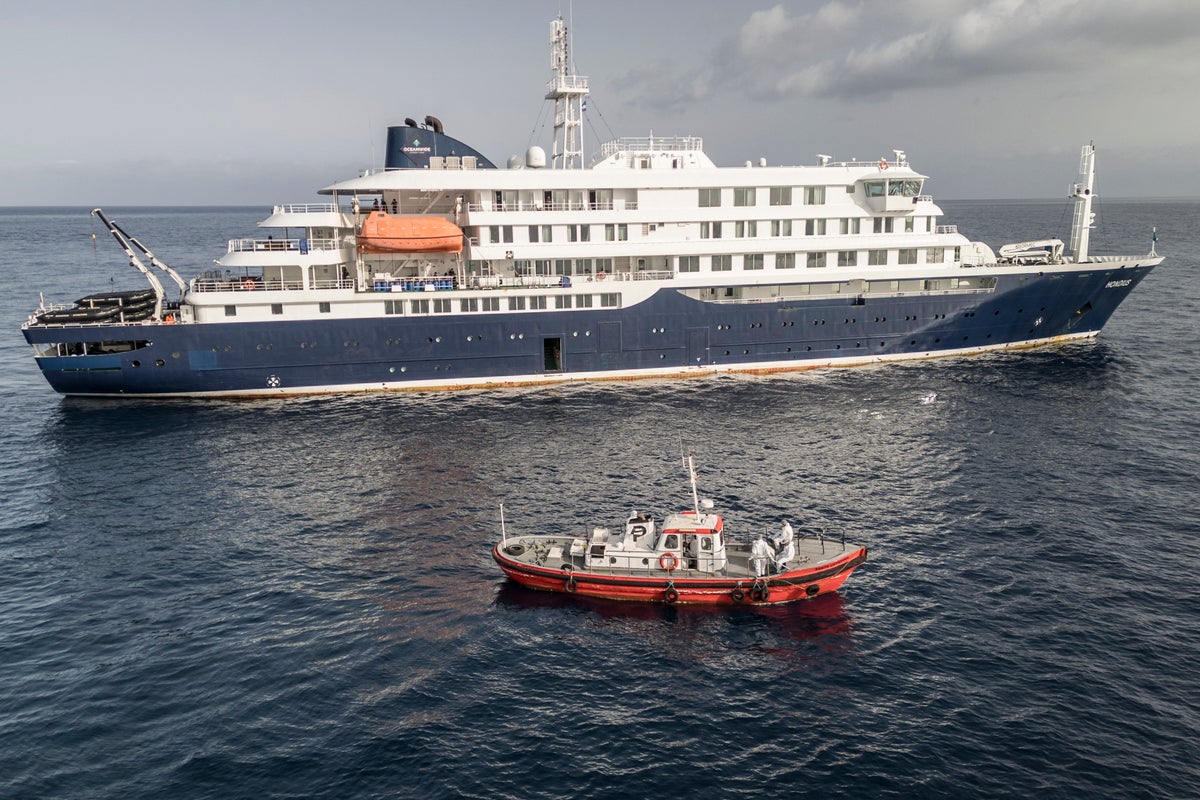
The report of potential human-to-human transmission of Hantavirus aboard a cruise ship represents a fundamental shift in the risk profile of Orthohantaviruses, which have historically been categorized as zoonotic spillover events with limited secondary clusters. Traditional epidemiological models for Hantavirus rely on the "Dead-End Host" theory, where humans contract the virus via aerosolized rodent excreta but fail to generate sufficient viral shedding to infect other humans. If maritime environments are facilitating inter-human transmission, the industry faces a structural breakdown in its current biosafety protocols.
The Mechanism of Spillover vs. Transmission
To understand the threat, one must differentiate between the Primary Spillover Event and the Secondary Transmission Chain. Hantaviruses, such as the Sin Nombre virus in North America or the Andes virus in South America, typically reside in specific rodent reservoirs (Sigmodontinae). Expanding on this theme, you can also read: MAID is Not a Medical Conspiracy It is a Symptom of Your Failed Healthcare System.
The standard transmission logic follows a linear path:
- Reservoir Proliferation: Rodent populations increase due to ecological shifts.
- Aerosolization: Dried urine, droppings, or saliva containing the virus become airborne in confined spaces.
- Human Inhalation: Humans inhale these particles, leading to Hantavirus Pulmonary Syndrome (HPS) or Hemorrhagic Fever with Renal Syndrome (HFRS).
The cruise ship variable introduces a third, non-linear factor: High-Density Environmental Forcing. When a virus enters a closed-loop HVAC system or a high-contact social environment, the viral load required for infection may drop, or the opportunities for contact may increase beyond the threshold of the virus's natural $R_0$ (basic reproduction number). Analysts at National Institutes of Health have provided expertise on this situation.
The Three Pillars of Maritime Pathogen Risk
Maritime vessels function as "Incubator Microcosms." The risk of an outbreak on a cruise ship is not merely a function of the pathogen's virulence, but a result of three intersecting operational variables.
1. The HVAC Sequestration Factor
Cruise ships utilize complex Heating, Ventilation, and Air Conditioning (HVAC) systems. While modern ships use HEPA filtration, older vessels or specific zones may recirculate air. If Hantavirus particles remain viable in a recirculated air stream, the "Aerosolization" phase of the virus is no longer tied to the rodent nest; it becomes tied to the ship’s internal atmosphere. This creates a continuous exposure loop for passengers who never came into direct contact with the original point of contamination.
2. The Asymptomatic Shedding Window
A critical bottleneck in managing Hantavirus is the long incubation period, typically ranging from 1 to 8 weeks. In a maritime context, a passenger may ingest or inhale the virus at a port of call, board the ship, and remain asymptomatic for the duration of the cruise. If the Andes virus strain—the only Hantavirus currently known to allow human-to-human transmission—is involved, the ship becomes a mobile vector. The density of a cruise ship (often exceeding 2,000 people in a confined footprint) provides the necessary proximity for respiratory droplet transfer that is absent in the rural settings where Hantavirus usually occurs.
3. Logistical Latency in Diagnostics
Most cruise ship medical facilities are optimized for gastrointestinal outbreaks (Norovirus) or cardiac events. Hantavirus presents initially with non-specific symptoms: fever, myalgia, and fatigue. By the time a patient develops the hallmark pulmonary edema or renal failure, they have already spent days in high-traffic areas (dining halls, theaters, elevators). This latency between onset and isolation is where the reproduction rate spikes.
The Andes Virus Exception and the Genetic Threshold
While most Hantaviruses are strictly zoonotic, the Andes virus (ANDV) found in South America has documented cases of human-to-human transmission. The structural biology of ANDV allows it to bind more effectively to human lung microvascular endothelial cells.
The primary risk in a cruise ship scenario is Genomic Drift. If a traditionally zoonotic strain (like Seoul virus, often found in urban rats) undergoes a mutation that stabilizes its presence in human saliva or upper respiratory tracts, the "Dead-End Host" model collapses. We must view the cruise ship not just as a location, but as a selection pressure environment where high-density contact favors strains with higher transmissibility.
Quantifying the Contact Function
The probability of a Hantavirus outbreak on a vessel can be expressed through a modified contact function:
$$P_{outbreak} = (V_{load} \times E_{rate}) \times \int (C_{density} + T_{duration})$$
Where:
- $V_{load}$: The concentration of viral particles in the initial contamination zone.
- $E_{rate}$: The efficiency of the ship's ventilation in removing particulates.
- $C_{density}$: The frequency of human-to-human proximity under 2 meters.
- $T_{duration}$: The length of the voyage, which determines if the incubation period concludes while the "vector" is still on board.
This equation reveals why standard cleaning protocols are insufficient. Most "deep cleans" focus on surfaces (fomites). However, Hantavirus is primarily an airborne threat. Scrubbing decks does nothing to address the viral load suspended in a stagnant air pocket behind a galley bulkhead.
Operational Vulnerabilities in Global Port Logistics
The risk is rarely the ship itself, but the "Port-to-Hull Interface."
- Provisions Supply Chain: Rodents frequently enter ships via food crates or dry goods pallets. If a warehouse in a Hantavirus-endemic region has a lapse in pest control, the ship's cargo hold becomes a primary reservoir.
- Shore Excursion Exposure: Passengers visiting rural or wilderness areas in endemic zones (e.g., Patagonia, the American Southwest, or parts of East Asia) may encounter "dusty" environments—sheds, cabins, or trails—where the virus is active.
The current industry standard for health screenings—thermal scanning and self-reporting questionnaires—is useless against Hantavirus. Thermal scanners miss the incubation phase, and passengers are unlikely to report a mild headache that they attribute to "sea legs" or a "hangover."
The Economic Cost of Epidemiological Uncertainty
The maritime industry operates on thin margins regarding itinerary stability. A single confirmed case of human-to-human Hantavirus transmission necessitates:
- Total Quarantine: Unlike Norovirus, which can be managed with localized isolation, Hantavirus carries a mortality rate of 35% to 40% for HPS. The liability of a "wait and see" approach is catastrophic.
- Structural Remediation: If the HVAC system is implicated, the ship must be taken out of service for duct decontamination and filter replacement, costing millions in lost revenue and docked labor.
- Brand Erosion: The psychological impact of a "deadly respiratory virus" is significantly higher than that of a "stomach bug," leading to mass cancellations across the fleet, not just the affected vessel.
Comparative Risk Analysis: Hantavirus vs. Norovirus vs. COVID-19
| Feature | Norovirus | COVID-19 | Hantavirus (ANDV) |
|---|---|---|---|
| Primary Vector | Fomites / Food | Respiratory Droplets | Aerosolized Droplets / Zoonotic |
| Mortality Rate | Very Low (<0.1%) | Moderate (1-3%) | High (30-40%) |
| R0 (Reproduction) | High (2-7) | High (3-10+) | Low-Suspected (Unknown) |
| Primary Counter | Surface Sanitization | Masking / Air Flow | Pest Control / HVAC Filtration |
The danger of Hantavirus is its combination of high lethality and low visibility. While COVID-19 is more transmissible, Hantavirus is significantly more lethal. A cruise ship cluster of Hantavirus would result in a death toll that outweighs any other maritime infectious disease event in the modern era.
Structural Failures in Current Response Frameworks
The "vague statements" often found in public health advisories—such as "wash your hands" and "avoid rodents"—fail to address the mechanical reality of shipboard life.
The first failure is the Detection Gap. Rapid diagnostic tests (RDTs) for Hantavirus are not standard equipment on most vessels. Confirming a case usually requires PCR testing at a land-based reference lab. This creates a 48-to-72-hour window where the infected individual is potentially shedding virus while the medical team treats them for "flu-like symptoms."
The second failure is Zoning Inefficiency. Ships are divided into fire zones and watertight compartments, but air zones are often much larger. A contamination event in a Crew Mess can migrate to Passenger Cabins if the pressure differentials in the HVAC system are not properly balanced.
Strategic Mitigation and Engineering Controls
To move beyond the current reactive posture, the maritime industry must adopt a "Defense in Depth" strategy.
Upgrading the Air Barrier
Ships must transition from MERV-rated filters to true HEPA (High-Efficiency Particulate Air) filtration across all communal air handlers. Furthermore, the installation of UVC (Ultraviolet-C) lamps within the ductwork can neutralize viral RNA before it reaches the cabin vents. This addresses the aerosolized risk without requiring behavioral changes from passengers.
Point-of-Origin Pest Forensics
Instead of general pest control, ships must implement "Genomic Pest Surveillance." This involves trapping rodents at the embarkation ports and testing them for Hantavirus strains before the ship sails. If a high-risk strain is detected in the port's rat population, the ship must refuse cargo from that specific terminal or undergo an immediate "fogging" protocol.
Hyper-Specific Isolation Protocols
Medical staff must be trained to recognize the "prodromal phase" of HPS. Any passenger presenting with fever and a history of shore excursions in endemic zones must be placed under negative-pressure isolation immediately. This bypasses the need for a confirmed test, prioritizing containment over diagnostic certainty.
The evolution of Hantavirus from a rural, zoonotic nuisance to a potential maritime threat is a function of increased global mobility and environmental encroachment. The cruise industry’s survival in the face of such high-mortality pathogens depends on transitioning from a "hospitality-first" mindset to a "biocontainment-first" engineering model. The logic is clear: the cost of upgrading a fleet’s ventilation and diagnostic capabilities is a fraction of the cost of a single HPS-induced "ghost ship" scenario.
Ship operators must immediately audit their HVAC pressure maps and establish direct protocols with land-based PCR labs in every port of call to close the diagnostic latency gap. Failure to do so leaves the industry vulnerable to a biological event that, while low in probability, is terminal in consequence.