Rain. It started with a spring deluge that turned the bright green turf of David Kuykendall Stadium into a swamp. In Frisco, Texas, high school track meets are massive, gleaming spectacles, but on April 2, 2025, the sky opened up, forcing teenagers from rival schools to scramble for shelter.
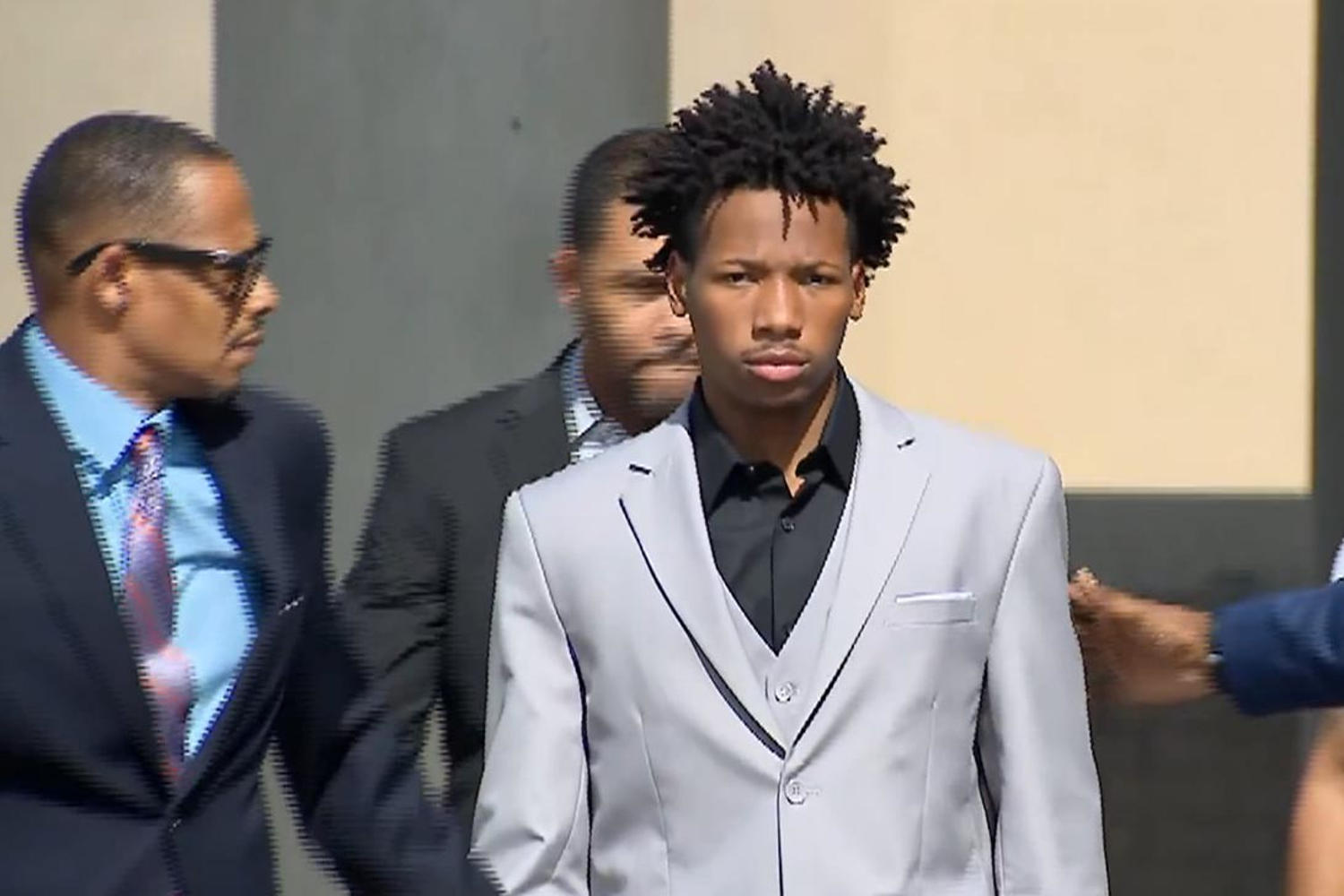
Karmelo Anthony, a 17-year-old captain of the Centennial High School track and football teams, had no tent. His team hadn't set one up. After being kicked out of a baseball dugout by a coach, he sought refuge under a tent belonging to Memorial High School. Inside that white canvas shelter stood Austin Metcalf, also 17.
What followed took less than a minute. Words were exchanged. A brother intervened. A push. A shove. Then, a black knife pulled from a backpack, a single thrust into a chest, and a teenager running down the stadium bleachers clutching his torso, crying out for help before collapsing. Austin Metcalf died minutes after reaching the hospital. Karmelo Anthony was arrested on the spot, crying out to police officers that he was only protecting himself.
One life ended; another was effectively canceled. A Texas jury looked at the blood and the horror and saw a senseless murder, sentencing Anthony to 35 years in prison. Case closed.
Except the law is rarely as neat as a jury verdict. Behind the doors of the Collin County Courthouse, away from the screaming social media feeds and the protesters lining the streets, a different kind of battle was fought. A battle of invisible handshakes, unwritten rules, and a secret agreement that collapsed at the eleventh hour, leaving a young man's defense in tatters.
Now, Anthony’s new legal team has thrown down a massive challenge, demanding a completely new trial and the immediate removal of the judge. They argue that what happened inside that Texas courtroom wasn't a pursuit of truth, but a carefully choreographed illusion.
The Handshake that Stripped the Defense
To understand why a routine appeal has turned into a constitutional wildfire, you have to look at what the jury never got to hear.
Criminal trials are supposed to be transparent. Every motion, every piece of evidence, every legal argument is typically stamped, filed, and placed into a public record for anyone to see. But months before the trial began, the prosecution and the original defense team sat down and made a deal. It was a classic "clean trial" agreement. The lead prosecutor suggested they try the case strictly on what happened under the tent that day. No mudslinging. No character assassination. The state wouldn't bring up any negative past behavior regarding Anthony, and the defense wouldn't bring up anything about the Metcalf twins.
It sounds fair. Safe. Clean.
But it came with an invisible, crushing price tag. Because of this unwritten agreement, Anthony’s lawyers hand-delivered their legal documents directly to the judge rather than filing them in the public record. More importantly, the defense agreed to muzzle their own case. They chose not to call a specialized medical expert who was prepared to explain how Anthony’s chronic epilepsy directly warped his perception of physical threats. They locked away a forensic psychologist who could have explained the volatile, split-second fight-or-flight mechanisms of the adolescent brain.
The strategy was simple: Anthony himself would take the stand. He would tell the jury how it felt to be a Black teenager cornered by a white teenager under a tight tent, explaining his terror and his actions without the threat of the prosecution tearing his character apart on cross-examination.
Then came June 8, the final day of evidence.
The trap snapped shut. The prosecution suddenly announced that their unwritten agreement had never actually contemplated the defendant taking the stand. They claimed the defense had already violated the spirit of the deal by mentioning during opening statements that Anthony played chess. The prosecution threatened to unleash full character impeachment if Anthony stepped up to testify.
The judge sided with the state.
Suddenly, the entire foundation of the defense evaporated. It was too late to select a different jury. Too late to rewrite the opening statements. Too late to recall the state's witnesses for a tougher cross-examination. Stunned and backed into a corner, the defense pulled Anthony from the witness stand. The young man who had spent a year waiting to tell his side of the story was silenced. The defense case was reduced to just three pre-approved, hollow questions asked of Anthony’s mother.
The jury took just two and a half hours to return a 35-year sentence. They heard the state's narrative of a "sneak attack" perfectly. They never heard Anthony's voice.
The Closed Doors of Justice
The secrecy didn't stop with unwritten agreements. Anthony’s new appellate team argues that the public, and Anthony himself, were denied a fundamental constitutional right: a fair and open trial.
Ten months before a single juror was selected, a strict gag order was slapped on the case. When the trial finally arrived, public access was heavily restricted. The courtroom doors were locked to the general public, forcing journalists, families, and observers to watch the high-stakes proceedings on a live video feed in an adjacent room.
Why does an open courtroom matter? It is the ultimate check on state power. When a government seeks to lock a teenager away for the rest of his youth, the public has a right—a duty—to watch how that power is wielded. When you push the public into another room and hide the legal filings from the official docket, the transparency that anchors the justice system begins to rot.
Consider what happens next when the referee of the game decides to join the winning team's celebration.
Just two days after the jury handed down the devastating 35-year sentence, Collin County District Judge John Roach did something rare. He sat down for a televised interview with a local news station to discuss the trial. The reporter asked him a direct question: Did the jury get it right?
"Yeah, they did," the judge replied.
With those three words, the illusion of judicial neutrality shattered. The legal battle is far from over; a motion for a new trial is a live, pending proceeding. For a presiding judge to publicly validate a verdict while the ink is barely dry on the appeals paperwork signals a profound bias. It tells the world that any motion put before his desk will face a closed mind.
Anthony’s new lawyers are demanding Judge Roach be recused immediately. A man cannot easily grade his own test, especially when he has already praised the final score on television.
The Legacy of a Rainy Morning
We are left looking at the wreckage of a rainy morning in Frisco. There are no winners here. Austin Metcalf’s family is missing a son, his twin brother missing a lifetime of shared memories. Karmelo Anthony sits in a cell at the Pack Unit near Navasota, staring at a three-decade horizon, his dreams of football and track fields replaced by gray concrete.
The justice system is a human construct. It is fragile, run by people with biases, prone to shortcuts, and easily tempted by the convenience of secret handshakes behind closed doors. But the law demands rigidity when a life is on the line. It demands that the accused be allowed to speak, that the public be allowed to watch, and that the judge remain an impartial arbiter until the absolute final gavel falls.
If a teenager is to spend 35 years in a Texas prison, it must be because he was found guilty in the blinding light of an open courtroom, not because his defense was choked out by a broken promise in the dark.