The velvet rope separates worlds. On one side, the flashbulbs pop with blinding regularity, turning evening air into a grid of white fire. Designer gowns brush against the sidewalk. Publicists whisper into muffled phones. On the other side, cold metal clicks around human wrists.
Midnight in New York does not care about your IMDb profile.
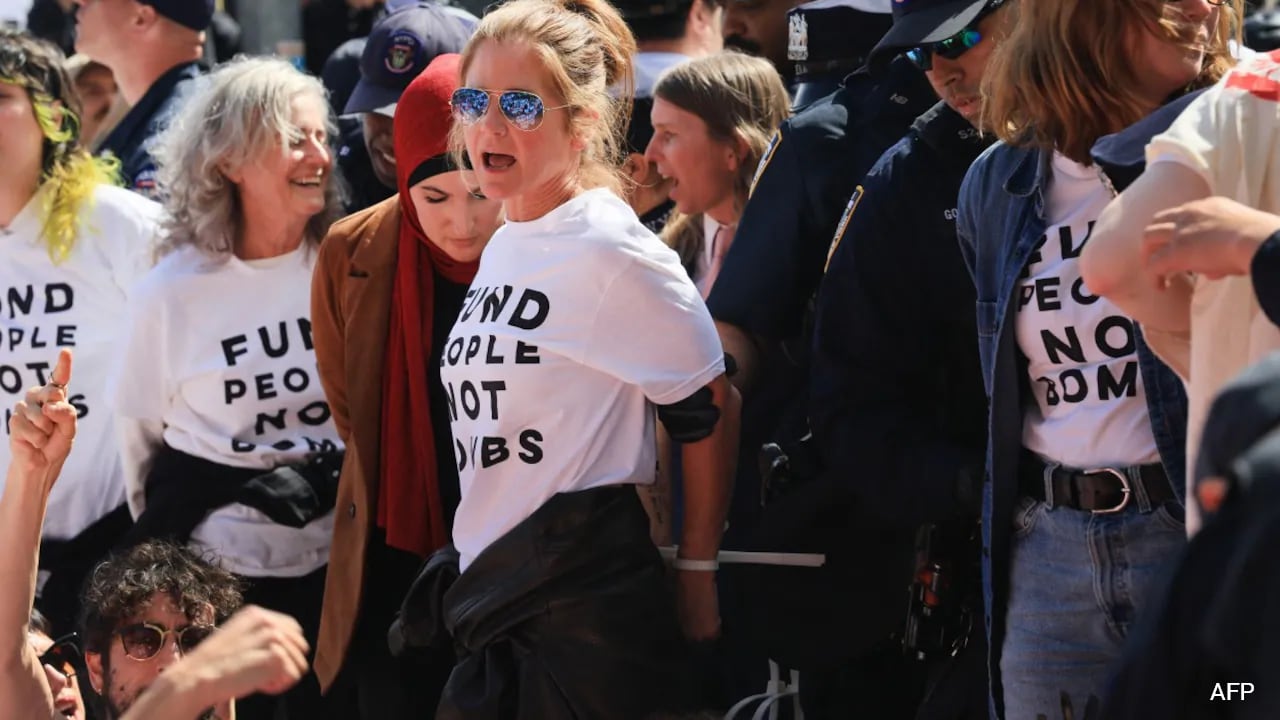
When a group of high-profile actors and cultural figures stepped onto the pavement near Grand Central Terminal to join a massive anti-Netanyahu demonstration, they were not trading in the currency of scripts or box-office returns. They were stepping into a different script entirely—one written with zip-ties, chanting crowds, and the flashing blue and red strobes of NYPD cruisers.
We often forget that celebrity is a megaphone seeking a sound. For months, the humanitarian crisis in Gaza has ground forward, a slow-motion catastrophe broadcast in high definition to phones in bedrooms across the globe. For most, the response is a heavy heart, a shared post, or a quiet sigh before closing the app. But for those whose lives are spent under a constant, magnified glare, the urge to convert visibility into leverage becomes an itch that cannot be scratched by a simple social media statement.
They wanted to be arrested. Let us be entirely clear about that. Civil disobedience is a deliberate choreography. You do not accidentally find yourself sitting on the cold asphalt of a major Manhattan thoroughfare, linking arms with activists and rabbis, waiting for the zip-ties to tighten behind your back. You choose the asphalt. You choose the optics.
Consider the mechanics of the protest. Organized by groups like Jewish Voice for Peace, the demonstration was designed to bottleneck traffic and capture attention precisely because neutrality had become, to many of its participants, an untenable moral stance. Prime Minister Benjamin Netanyahu’s visit to Washington and his address to Congress served as the gravitational pull, drawing thousands into the streets of Manhattan to demand an immediate ceasefire. Among the sea of placards and banners, a handful of recognizable faces stood out.
There was a surreal dissonance to the scene. Cameras that usually track awards season chatter were suddenly focused on famous actors being led toward police transport vans, their hair slightly disheveled, expression solemn, hands bound behind them.
Why do it?
The question hangs over every act of celebrity protest like a cynical cloud. Critics are fast, and often justified, in their accusations of performative activism. It is easy to cynically view a star-studded arrest as a masterclass in modern public relations—a way to stay relevant in a news cycle dominated by geopolitical agony. Are they truly standing with the oppressed, or are they simply feeding their own relevance?
To dismiss it entirely as vanity, however, is to misunderstand the strange, intoxicating physics of modern fame. When you possess a million followers, silence is interpreted as cowardice. Yet speaking out online often feels like shouting into an empty canyon, swallowed by algorithms designed to favor outrage over nuance. Real bodies in real streets create a friction that pixels cannot replicate. By trading their comfort for a holding cell, these actors were buying something priceless: a temporary hijacking of the news cycle. They forced assignment editors to cover Gaza on the same page as entertainment news.
The police vans moved slowly through the dense crowds. Inside, the atmosphere was a mix of adrenaline, exhaustion, and nervous solidarity.
This is where the grand narrative of geopolitics collides with the messy, beating heart of individual conscience. You do not need to agree with their tactics, nor even their specific political demands, to recognize the raw human impulse driving them forward. We live in an era of profound institutional failure. Governments posture, diplomats issue carefully worded condemnations that mean nothing, and thousands of miles away, ordinary families pick through the rubble of their homes.
When the systems designed to maintain order seem utterly broken, individuals—even famous ones—look for tangible ways to register their dissent. They put their bodies where their mouths are, quite literally.
As the night wore on, the arrestees were processed, ticketed for disorderly conduct, and released into the cool morning air. The red carpet was miles away, but the glare of the cameras remained. The headlines would fade within forty-eight hours, replaced by the next manufactured scandal or box-office milestone.
Yet something shifted, if only slightly. The invisible barrier between the screen and the street had cracked. In the quiet hours before dawn, walking away from the precinct with red marks around their wrists, those actors returned to a world that suddenly felt a little heavier, a little more real, and infinitely harder to ignore.