The Feel-Good Trap
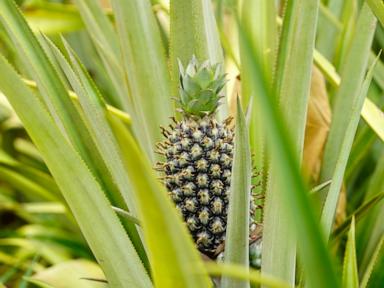
Every few months, a feel-good dispatch surfaces about an enterprising farmer defying the odds. The narrative follows a familiar script. A man in Burkina Faso manages to coax sweet, juicy pineapples out of the unforgiving soil of the Sahel, proving that human grit can conquer any climate. The media eats it up. NGOs draft funding proposals. Well-meaning urbanites share the story on social media as proof that agricultural miracles are just a matter of willpower.
It is a comforting fairy tale. It is also an economic disaster disguised as triumph.
Let us get something straight immediately. You can grow almost anything anywhere if you throw enough capital, artificial shade, and hyper-targeted drip irrigation at the dirt. I have watched well-funded agricultural projects try to force tropical fruit into semi-arid zones, burning through millions in donor funds just to harvest a few dozen stunted pineapples that cost fifty dollars each to produce.
The story out of Burkina Faso is not a breakthrough. It is an anomaly born of extreme microclimate management, massive resource inputs, and total disregard for unit economics. When you celebrate an agricultural project that ignores the fundamental realities of hydrology and market logistics, you are not championing innovation. You are applauding an expensive hobby.
The Brutal Physics of the Sahel
The Sahel is not built for Ananas comosus. This plant demands between one thousand and fifteen hundred millimeters of well-distributed annual rainfall, high relative humidity, and acidic, well-draining soils.
The Sahel offers a blistering dry season that stretches for eight to nine months, punishing solar radiation that scalds unprotected fruit, and alkaline soils loaded with calcium carbonate. To force a pineapple to grow in Ouahigouya or Dori, you have to wage total war against nature.
You must sink deep boreholes into fragile aquifers, depleting groundwater tables that local pastoralists and staple crop farmers rely on for basic survival. You have to build artificial shade structures using imported plastics or timber that degrades rapidly under the relentless sun. You have to acidify the soil manually with imported chemical amendments because the local earth will lock up every trace of iron the plant tries to absorb.
Let us run a quick thought experiment. Imagine a commercial grower trying to scale this backyard triumph into a regional export hub. To match the yields of Côte d'Ivoire or Ghana—actual tropical powerhouses located a few hundred kilometers south—the grower must pump millions of liters of scarce groundwater onto sandy soils where evaporation rates will steal half of it before the roots can even drink.
You are burning non-renewable water reserves to grow a fruit that is eighty-five percent water. From an ecological and financial standpoint, that is not farming. That is a liquidation of natural capital.
The Opportunity Cost Nobody Mentions
Proponents of Sahelian horticulture love to talk about diversification and food security. They argue that local production reduces import dependency and keeps money in the community.
This argument collapses the moment you look at the balance sheet. Capital is finite. Every dollar, euro, or CFA franc spent subsidizing high-input tropical fruit production in a dryland zone is a dollar stolen from interventions that actually make sense.
Think about what those resources could achieve if deployed correctly. You could fund cold-chain logistics for locally adapted drought-resistant crops like cowpeas, sorghum, and millet. You could invest in solar-powered processing units to turn wild-harvested shea nuts or mangoes into high-value exports. You could build resilient livestock management systems that protect pastoralists from erratic rainfall patterns.
Instead, we chase the vanity metric of harvesting a tropical novelty in a desert transition zone.
I have seen companies blow millions on flagship agricultural stunts designed to look good in an annual report. They bring in foreign agronomists, install high-tech telemetry systems, and celebrate the first harvest with a ribbon-cutting ceremony. Two years later, the donor funding dries up, a pump breaks, the soil salinity spikes past the tolerance threshold, and the project is abandoned like a rusted tractor in the sand.
The farmer in Burkina Faso who grew those pineapples deserves credit for sheer stubbornness. But treating his success as a scalable blueprint for regional development is sheer economic illiteracy.
The Real Question You Should Be Asking
People look at dryland agriculture and ask, "How can we make this arid land grow lush, water-hungry crops?"
It is the wrong question. It stems from a paternalistic mindset that views local geography as a defect that needs fixing rather than a reality that must be respected.
The better question is, "How do we build high-margin agricultural economies based on the crops that actually want to live here?"
The Sahel has distinct biological advantages. High solar irradiance, massive thermal amplitude, and vast tracts of land unburdened by intensive chemical history. These conditions are tailor-made for specific high-value commodities. We should be talking about sesame, gum arabic, hibiscus, and specialized oilseeds. These plants thrive with minimal irrigation, anchor the soil against desertification, and command exceptional prices in global organic markets.
If you want to make money in Sahelian agriculture, stop trying to turn the edge of the Sahara into Costa Rica. Lean into the toughness of the landscape instead of fighting it.
The Logistics Nightmare
Even if you manage to grow a sweet pineapple in the middle of Burkina Faso against all meteorological odds, you still have to sell it.
Agriculture is a logistics game. Fresh pineapples have a limited shelf life. They bruise easily. They require careful temperature management during transit to prevent rot.
Look at the transport infrastructure in the region. Paved roads are sparse. Border crossings are plagued by bureaucratic delays and informal tolls that eat profit margins alive. Fuel prices are volatile. If you harvest a crop of pineapples in northern Burkina Faso, how do you get them to a profitable market before they turn to mush?
If you sell them locally, your target market has very little disposable income. High-input fruit commands a high price tag to cover production costs. If the local population cannot afford to buy your luxury fruit, you have to export it.
To export, you are competing against producers in Latin America and coastal West Africa who have direct access to deep-water ports, cheap maritime shipping, and established global supply chains. You are trying to fly or truck perishable luxury goods out of a landlocked country with high transport costs and weak infrastructure.
The math never closes. It only works on paper when the production costs are subsidized by grant money that doesn't care about return on investment.
Stop Rewarding Bad Economics
We need to stop romanticizing inefficiency.
When a farmer performs an agricultural miracle against impossible odds, it makes for a great human interest story. But journalism is not business strategy. By framing these anomalies as sustainable models, we misdirect young entrepreneurs, waste scarce venture capital, and encourage governments to misallocate public funds into dead-end supply chains.
True innovation in the Sahel looks unglamorous. It looks like drought-tolerant seed breeding. It looks like decentralized solar cold storage. It looks like efficient market access for indigenous crops that require a fraction of the water and zero artificial shade.
The next time you read about a breakthrough harvest in an unlikely place, check the balance sheet. Ask who paid for the water. Ask how long the project can survive without external subsidies.
And then look away toward the systems that actually work without needing a miracle to break even.