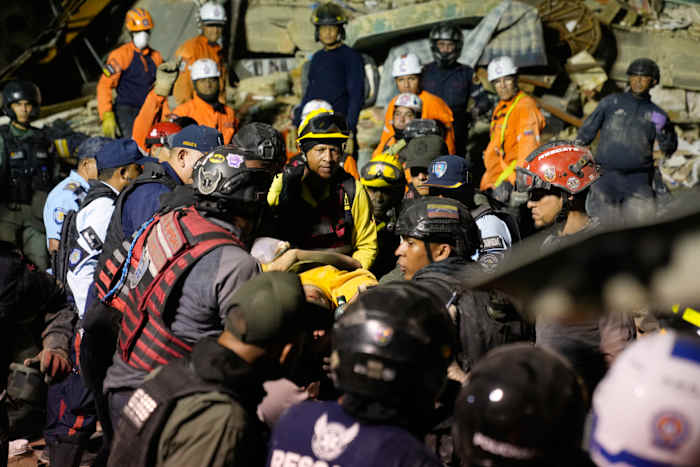
Two massive earthquakes just shattered northern Venezuela, and the official numbers coming out of Caracas don't add up. On Wednesday evening, a rare seismic "doublet"—a 7.2 magnitude quake followed just 39 seconds later by a shallower, far more destructive 7.5 magnitude tremor—tore through the capital and the coastal state of La Guaira. The timing was brutal. It was a national holiday, meaning apartment buildings were packed when the structures gave way.
While health officials tentatively put the death toll around 235 with 4,300 injured, the reality on the ground is vastly different. Independent digital registries have already exploded with over 40,000 missing person reports.
When the dust settled, families didn't wait for emergency crews that never arrived. They turned to the only tool they had left: their phones. Ground-level digital tools, crowdsourced registries, and frantic social media posts are now the primary lifelines for a population navigating a massive disaster in a heavily restricted information ecosystem.
The Information Gap and the Fight for Digital Access
If you're trying to find a missing relative in a disaster zone, you need real-time data. But in Venezuela, getting that data is a battle against both destroyed infrastructure and deliberate political censorship.
Before the quakes even hit, the country's digital space was tightly locked down. Back in August 2024, platforms like X and the encrypted messaging app Signal were blocked by the government. Following the geopolitical shift in January 2026, when former Vice President Delcy Rodríguez stepped in as acting president after the U.S. captured Nicolás Maduro, those digital blocks mostly remained in place. State telecommunications regulator CONATEL kept more than 200 internet domains restricted.
When the twin quakes knocked out power lines and collapsed local cellular towers, the existing blocks turned an emergency into an information blackout. The U.N. Independent International Fact-Finding Mission on Venezuela immediately warned that unblocking social media access was literally a matter of life and death.
Under heavy international pressure, local digital restrictions relaxed slightly on Thursday, allowing citizens back onto X. But relying on scattered, chaotic social media timelines isn't enough when thousands are buried.
How Grassroots Tech Stepped In
Instead of scrolling through a disorganized mess of hashtags, local tech collectives and volunteers built centralized solutions from scratch. Platforms like the independent registry organized by volunteer networks have cataloged tens of thousands of entries. These tools are bypassing state media entirely.
If you are looking for someone or trying to help from the outside, the digital response relies on a specific structure. These platforms divide the chaos into two clear tracks:
- Survivor Verification: An open-access registry where field volunteers, local churches, and field hospitals input the names of people pulled alive from the rubble. This allows families to instantly verify if a loved one has been admitted to a temporary medical triage center.
- Missing Person Crowdsourcing: A standardized form where relatives upload photos, last known locations, and physical descriptions. Instead of a tweet that disappears in seconds, these entries create a searchable database that local volunteer rescue teams use to prioritize where to dig.
This isn't an organized government operation. It's a decentralized, frantic collective effort managed by regular people who are dodging patchy internet connections and using VPNs to keep the data flowing.
The 8 Million Person Diaspora Problem
The desperation isn't contained within Venezuela's borders. With over 8 million citizens having migrated abroad over the last decade, millions of people are watching the destruction from places like Madrid, Santiago, or Miami, entirely cut off from their families.
For those outside, the lack of news is agonizing. The international airport is shut down due to severe structural damage, and widespread mudslides have cut off the main roads connecting the coast to Caracas. You can't just fly in to help.
People are managing digital search campaigns from thousands of miles away. They take photos sent months ago via WhatsApp, turn them into digital "MISSING" flyers, and post them across Facebook groups and X feeds, hoping someone near the debris in Catia La Mar or La Guaira will spot a familiar face. They are registering their elderly parents on independent databases because it's the only actionable thing they can do from a laptop in Chile or Spain.
What to Do If You Are Searching for a Loved One
If you have family in the affected zones and haven't heard from them, don't waste time refreshing generic news feeds or waiting for official government statements. The ground-level data is moving much faster.
First, upload your relative's details to the verified independent missing person registries managed by local NGOs and volunteer networks rather than relying only on standard social media posts. Be highly specific: include the exact neighborhood, the specific floor of their apartment building, and any identifying marks or clothing they were wearing on Wednesday.
Second, check the survivor logs hosted by independent medical groups and neighborhood networks on platforms like Telegram, which often stay online even when heavier sites lag.
Local volunteer rescue teams, supplemented by newly arrived international crews, are actively pulling survivors from the rubble in La Guaira and Caracas. The infrastructure is deeply damaged, but the crowdsourced digital map is currently the most accurate guide rescuers have to find where those cries for help are coming from.