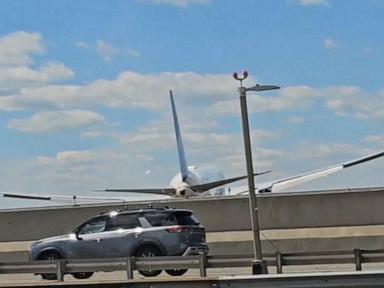
The sight of a United Airlines Boeing 737 scraping its wing against a light pole while taxiing is more than a viral video moment or a social media punchline. It is a symptom of a systemic breakdown in airport ground operations that is costing the industry billions and putting passengers at unnecessary risk. While the public focuses on dramatic mid-air engine failures or turbulent descents, the real danger is increasingly found at low speeds, on the asphalt, where a lack of technological oversight and a shrinking pool of experienced ground crews have created a high-stakes obstacle course.
The incident involving United Flight 2148 isn't an isolated stroke of bad luck. It is the predictable result of a "close enough" culture in ground handling. When a multi-million dollar aircraft makes contact with stationary infrastructure, it indicates a failure of the three-man loop—the pilot, the wing walkers, and the tug operator. If one link breaks, the metal crunches.
The Invisible Billions in Hangar Rash
In the industry, we call this "hangar rash." It sounds minor, like a skin irritation. In reality, it is a financial hemorrhage. Ground damage costs global airlines an estimated $5 billion annually in direct repairs, according to IATA data. But the direct cost is just the tip of the iceberg. When an aircraft is pulled from service for a structural inspection after hitting a pole, the ripple effect through the flight schedule is catastrophic.
Consider the logistics. You have 160 passengers who now need hotels, rebooking, and meal vouchers. You have a flight crew that may "timeout" on their legal working hours, requiring a fresh crew to be flown in from a hub. Then there is the loss of the hull itself—an asset that should be generating revenue every hour it is in the air, now sitting idle in a maintenance bay while NTSB investigators and insurance adjusters take photos of a dented winglet.
The industry has tolerated these "fender benders" for decades as a cost of doing business. That era is ending. With profit margins squeezed by fuel volatility and labor strikes, the tolerance for preventable ground accidents has evaporated.
Why Cockpit Visibility is a Growing Myth
Modern aircraft are engineering marvels, but they are also remarkably blind. A pilot sitting in the cockpit of a Boeing 737 or an Airbus A321 cannot see their own wingtips. They rely entirely on the painted yellow lines on the taxiway and the hand signals of ground marshals who are often earning barely above minimum wage.
As airports become more congested, the margins for error shrink. Terminals built in the 1970s were designed for smaller aircraft with shorter wingspans. Today, we are cramming "heavy" aircraft into narrow gates with inches to spare. The physics simply don't favor the pilot.
The Human Element Breakdown
Ground handling is the most grueling, high-turnover job in aviation. Crews work in sub-zero temperatures, blistering heat, and deafening noise. Since the pandemic, the "brain drain" in this sector has been profound. Experienced veterans who knew every corner of a specific tarmac retired or moved to warehouse logistics. They were replaced by a revolving door of new hires who receive accelerated training.
When a United jet clips a pole, the investigation usually starts with the wing walker. These are the individuals tasked with ensuring the aircraft has clearance. If they are distracted, fatigued, or improperly positioned, the pilot is flying blind into a stationary object. We are asking people under immense pressure to maintain 100% situational awareness for eight to twelve hours a day. It is a recipe for metal-on-metal contact.
The Failure of Technology on the Tarmac
We have self-driving cars that can parallel park with millimeter precision, yet we are still moving $100 million jets using 1950s methodology. Why? Because the "ramp" is a technological wasteland.
While the sky is filled with ADS-B tracking and sophisticated collision avoidance systems (TCAS), the ground remains a manual environment. There are no proximity sensors on wingtips. There are no automated braking systems that trigger when an aircraft gets too close to a light pole or a fuel truck. The technology exists, but the cost of retrofitting existing fleets is seen as prohibitive by airline boards.
They would rather pay the $5 billion in damages than spend $10 billion on a global fleet upgrade. It is a cynical calculus that ignores the potential for a catastrophic fire or a wing shear that could lead to loss of life.
The Infrastructure Trap
Airports are static; airplanes are evolving. The trend toward "sharklets" and "winglets"—the vertical extensions on the ends of wings designed to save fuel—has actually increased the risk of ground collisions. These extensions make the aircraft taller and wider at its most vulnerable point.
Lighting and Signage Deficiencies
Investigative reports often point to poor taxiway lighting or faded paint as contributing factors. At many major hubs, the "apron"—the area where planes park—is a chaotic mix of ground service equipment, catering trucks, and baggage tugs. It is a miracle more collisions don't occur.
If you look at the United incident, the pole didn't move. It was exactly where it was supposed to be. The failure was a failure of spatial navigation and communication. If the airport had installed smart-bollards or infrared proximity alarms on high-risk poles, the cockpit would have received a warning. Instead, they got the sound of tearing aluminum.
The Regulatory Blind Spot
The FAA and other global regulators focus heavily on "Phase of Flight" safety. There are strict rules for takeoff, climb, cruise, and landing. However, taxiing is often treated as a secondary concern. The "sterile cockpit" rule, which prohibits non-essential conversation below 10,000 feet, applies on the ground, but the mental intensity often dips the moment the wheels touch the runway.
We need a shift in how we categorize ground incidents. They shouldn't be viewed as "logistical delays." They should be treated as "pre-accident indicators." Every clipped wing is a sign that the safety buffer has been eroded to zero.
The Real Cost to the Passenger
For the traveler, these incidents represent the worst kind of friction. It isn't weather-related, which people generally understand. It is an "unforced error." When a flight is canceled because the pilot hit a pole, passenger trust in the brand's operational competence takes a hit that no "frequent flyer" miles can fix.
The industry is currently at a crossroads. They can continue to write off these accidents as the price of high-volume travel, or they can finally invest in the ground-based safety tech that matches the sophistication of their avionics.
Until sensors are standard on wingtips and ground crews are treated as specialized safety professionals rather than manual laborers, the video of a United jet hitting a pole won't be a rare occurrence. It will be a recurring segment on the evening news. The solution isn't more training videos; it's a total overhaul of the "blind" taxiing culture that assumes the path is clear just because no one is screaming into a radio.
Aviation safety is built on the premise that we learn from every mistake. If the industry ignores the structural causes of hangar rash, they are simply waiting for a ground collision that involves more than just a light pole. Stop looking at the sky for the next big safety breakthrough. The real crisis is happening under our feet, at fifteen miles per hour, on a crowded taxiway.
Equip the wings or expect more wreckage.