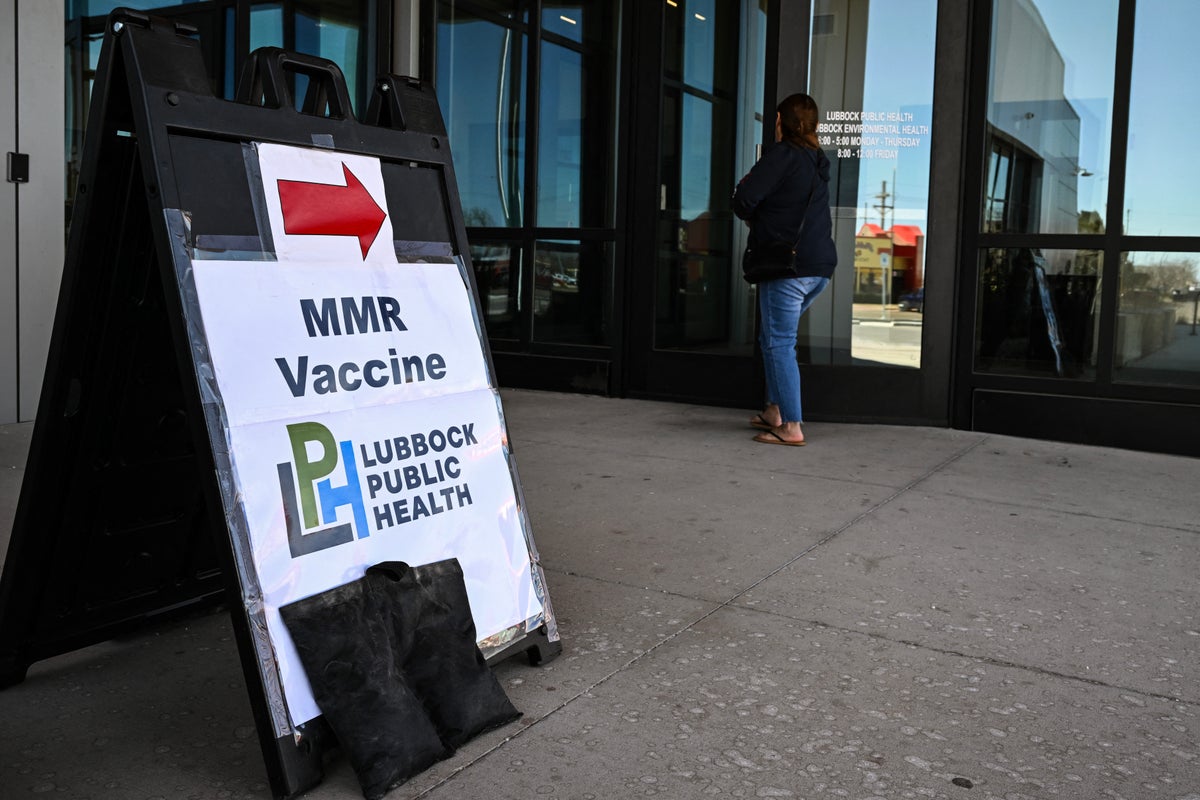
The mainstream media is panicked. They are currently churning out dozens of variations of the same tired headline: the United States is "drowning in misinformation" because of Robert F. Kennedy Jr. and his stance on autism and vaccines. They frame the public as a helpless, illiterate mass being led off a cliff by a single charismatic figure.
They are wrong. They are missing the point so spectacularly that they are actually fueling the fire they claim to be putting out.
The rise of skepticism toward public health institutions isn't a byproduct of a "misinformation" epidemic. It is the natural, logical reaction to a decade of institutional arrogance and the systematic suppression of legitimate scientific inquiry. When you treat the public like children, don't be surprised when they stop listening to the parent who keeps lying to them.
The Consensus Fallacy
Most reporting on the intersection of autism advocacy and public health relies on a "consensus" that is often treated as a divine decree rather than a moving target of scientific data. Critics claim that RFK Jr. is "dangerous" because he questions the established narrative. But science, by its very definition, is the process of questioning the established narrative.
The "lazy consensus" here is the idea that because certain links have not been definitively proven in specific large-scale studies, any further investigation or concern is "anti-science." I have spent years watching regulatory bodies brush aside the lived experiences of thousands of parents under the guise of "protecting public trust."
Here is the irony: nothing erodes public trust faster than an institution that refuses to acknowledge its own blind spots. When the CDC or the FDA acts as a PR firm for industry rather than a rigorous watchdog, they create a vacuum. RFK Jr. didn't create the skepticism; he just moved into the house that the public health establishment left vacant.
The Autism Rate Question No One Wants to Touch
The standard response to the skyrocketing rates of autism is to point toward "better screening" and "broadened diagnostic criteria." It’s a convenient answer. It suggests that nothing is actually changing in our environment—we’re just getting better at seeing what was always there.
But let’s look at the numbers. In the 1970s, autism rates were estimated at roughly 1 in 10,000. By 2024, the CDC reported that 1 in 36 children are diagnosed with autism spectrum disorder (ASD).
Does better screening account for some of that? Absolutely. Does it account for a 270-fold increase? If you believe that, I have a bridge in Brooklyn to sell you. To suggest that we were simply "missing" millions of non-verbal, high-support-needs individuals for decades is a statistical fantasy.
When advocates demand a deeper look into environmental triggers—be it glyphosate, heavy metals, or the compounding effects of an ever-expanding pediatric schedule—they aren't being "anti-science." They are asking for the basic precautionary principle to be applied. The "misinformation" label is used as a silencer to prevent a massive industry from being held accountable for the potential externalities of their products.
The Regulatory Capture Problem
You cannot talk about RFK Jr. without talking about the revolving door between the pharmaceutical industry and the agencies that regulate them. This isn't a conspiracy theory; it’s a documented business model.
In my time analyzing health policy, the most glaring issue has always been the funding structures. When a significant portion of a regulatory agency’s budget comes from the very companies it is supposed to be policing (via user fees), the objectivity of that agency is fundamentally compromised.
- The Scenario: Imagine a car manufacturer paying the salary of the inspector who decides if their brakes are safe.
- The Reality: That is essentially how the FDA operates.
Critics of RFK Jr. scream about "safety" while ignoring the fact that the Gold Standard of safety—the randomized, double-blind, inert-placebo-controlled trial—is often conspicuously absent in long-term cumulative health studies for pediatric products. Pointing this out isn't "spreading lies." It is demanding the highest level of evidence for the most vulnerable population.
The "Drowning" Metaphor is a Projection
The article I’m disrupting claims the US is "drowning" in misinformation. The reality is that the public is drowning in insincerity.
People are looking for someone who acknowledges the complexity of the modern chronic disease epidemic. They are tired of being told that the food they eat, the air they breathe, and the medical products they use have zero impact on the massive spike in autoimmune disorders, allergies, and neurodevelopmental issues.
When legacy media outlets attack RFK Jr., they often focus on his "tone" or his "controversial" past. They rarely engage with the specific data points he raises regarding the National Childhood Vaccine Injury Act of 1986, which effectively removed liability from manufacturers.
If you want to understand why people are flocking to "alternative" voices, look at the legal framework. If a product is "unavoidably unsafe" (a legal term used by the Supreme Court in Bruesewitz v. Wyeth), and the manufacturer cannot be sued for design defects, the consumer is the one taking all the risk. Acknowledging that risk isn't misinformation; it’s informed consent.
Stop Treating "Advocates" as a Monolith
The competitor article cites "autism advocates" as if they all share the same script. This is an insult to the neurodiversity movement and the parents of children with severe autism.
There is a massive rift in the advocacy community. On one side, you have groups that are heavily funded by corporate interests, focusing strictly on "acceptance" and "service access." On the other, you have parents and researchers looking for causality.
By framing RFK Jr. as an enemy to autism advocates, the media is picking a side in an internal civil war. They are siding with the organizations that want to maintain the status quo and marginalizing the parents who are actually doing the heavy lifting of biological research.
I’ve seen families spend their life savings on functional medicine because the "consensus" doctors told them there was nothing that could be done for their child’s underlying gut issues or systemic inflammation. These families don't care about the politics of the New York Times; they care about what works. When RFK Jr. talks about these issues, he is speaking to a segment of the population that has been gaslit by the medical establishment for decades.
The Real Danger of Censorship
The loudest voices calling for the censorship of "misinformation" are often the ones with the most to lose from a transparent debate.
When you ban a topic from social media or label it "dangerous," you don't make the idea go away. You just validate the suspicion that there is something to hide. The "misinformation" label has become a blunt instrument used to protect institutional reputations.
If the "consensus" is so robust, why is it so afraid of a debate?
If the data is so clear, why can’t it stand up to the scrutiny of a contrarian?
The danger isn't that people might hear a "wrong" opinion. The danger is that the infrastructure of science is being replaced by the infrastructure of dogma. When we stop allowing questions about the biological mechanisms of injury or the environmental factors of ASD, we aren't "saving" anyone. We are ensuring that the current crisis continues unabated.
The Actionable Truth
If you want to combat "misinformation," stop yelling at the people who are skeptical. Start cleaning up the institutions that gave them a reason to be skeptical in the first place.
- Demand Total Liability: If a product is truly "safe and effective," the manufacturers should have no problem standing behind it in a court of law. End the 1986 liability shield.
- Separate Funding: Remove industry user fees from the FDA and CDC budgets. Regulation should be funded by the taxpayer to ensure the regulator works for the taxpayer.
- Conduct the Unvaccinated vs. Vaccinated Study: The establishment has fought this for decades, citing "ethical concerns." In an age of massive data sets and retrospective digital records, this study is entirely possible. The refusal to do it is a glaring red flag.
The "drowning" isn't coming from a single politician's rhetoric. It's coming from the weight of a billion-dollar industry that has successfully convinced the media that asking questions is a sin.
RFK Jr. is just the mirror. If you don't like what you see in it, don't blame the glass.
The public isn't stupid. They are observant. And they are starting to realize that the people calling them "misinformed" are the same ones who have been wrong about almost every major health crisis of the last twenty years.
Stop trying to "fix" the misinformation. Start telling the truth about the uncertainty. Until the public health establishment admits it doesn't have all the answers, it will continue to lose the argument to anyone brave enough to ask the right questions.