The champagne corks popped across marine biology departments when the Australian Institute of Marine Science dropped the latest monitoring report. Thirty-five point one percent hard coral cover in the central region. A record high since monitoring began nearly four decades ago. Environmental PR machines immediately seized the narrative. The patient is cured. The crisis is cancelled. Stop worrying about carbon emissions and let nature do its thing.
It is a seductive lie. And it is completely tearing apart the reality of what is actually happening underwater.
I have spent years analyzing ecological datasets and watching conservation capital get funneled into vanity metrics while real functional diversity burns. Celebrating a thirty-five percent hard coral number right now is the equivalent of looking at a forest clear-cut that has suddenly been overrun by invasive weeds and declaring the ecosystem pristine because total green biomass is up.
Let us dismantle the lazy consensus.
The Monoculture Trap Nobody Talks About
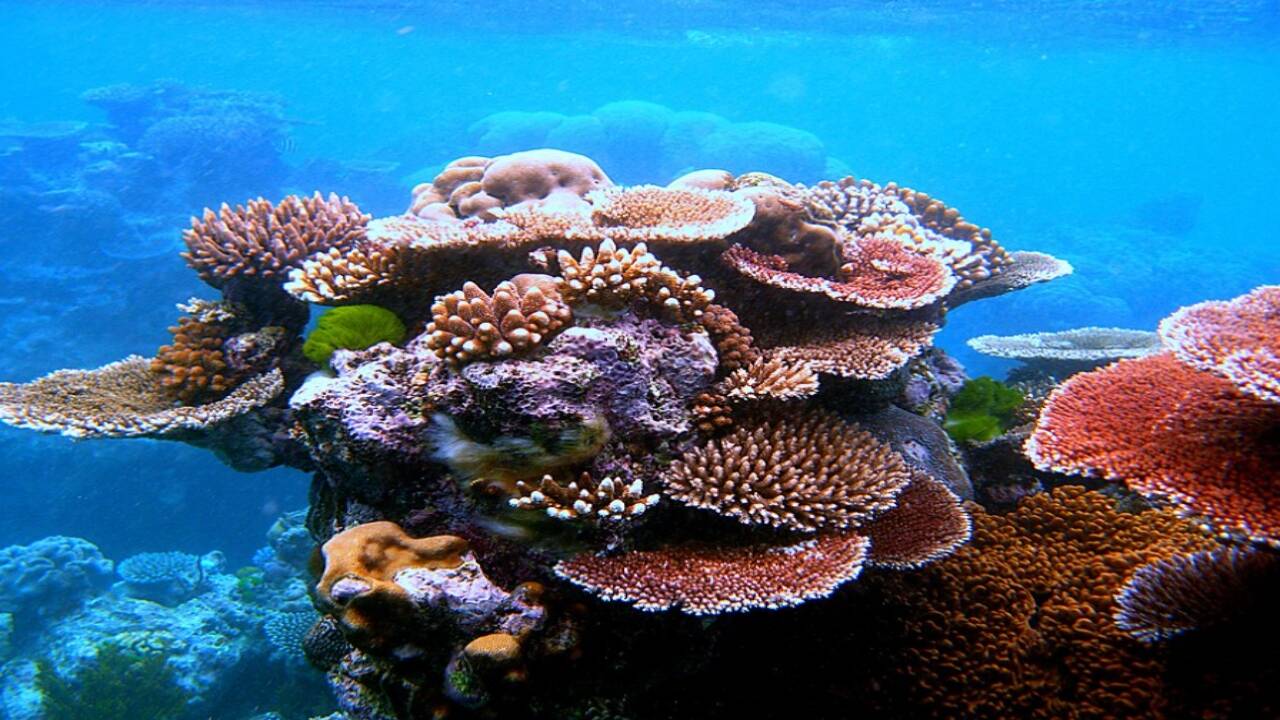
When headlines scream about coral cover bouncing back, they are relying on a blunt instrument: total spatial coverage of stony corals. That metric hides a devastating ecological truth. The species driving this massive numerical rebound is almost entirely Acropora, commonly known as fast-growing tabular and branching staghorn corals.
Think of Acropora as the weeds of the marine world. They grow fast. They break fast. And most importantly, they are absolute glass jaws when thermal stress hits.
Imagine a neighborhood completely dominated by cheap, highly flammable wooden shacks. A mild summer passes without a spark, and suddenly the housing density metric looks incredible. The neighborhood is denser than ever. Then a heatwave rolls in, and the entire subdivision goes up in smoke over a single weekend.
That is the Great Barrier Reef today. We have traded a complex, slow-growing, highly resilient old-growth structural system for a hyper-dense monoculture of fragile weed species. When the next major marine heatwave hits—and ocean temperatures are not cooling down regardless of annual weather oscillations—this record-breaking cover will not bleach gradually. It will liquefy.
The Metric is Broken
Marine scientists love percentage cover because it is easy to measure from a helicopter or a towed video frame. But counting how much ocean floor is technically shaded by limestone-secreting polyps tells you nothing about ecological function.
Let us look at the structural complexity index. Older coral reefs feature massive, centuries-old porites colonies and deep architectural crevices that shelter hundreds of dependent reef fish, invertebrates, and pelagic larvae. A dense field of young Acropora offers none of that long-term architectural stability. It provides a quick sugar rush of biological statistics that looks fantastic in an annual report for government stakeholders, but collapses under structural scrutiny.
Why do media outlets and institutional boards cling to this narrative? Because nuance does not secure funding. Doom sells subscriptions for a week, but a miraculous recovery sells government grants and tourism tickets for a decade. The industry needs a hero, so they appointed a fast-growing genus of coral to save the day, ignoring the fact that the underlying life support system is fracturing.
The False Dichotomy of Resilience
People love to ask a straightforward question in search queries and public forums: Is the Great Barrier Reef adapting naturally, or is it doomed?
The question itself is a trap. It forces a binary choice where none exists.
Nature does not negotiate with physics. Coral adaptation is real, but it operates on generational timelines that require thousands of years of gradual genetic drift. Thermal anomalies are accelerating at a decadal scale. Natural selection cannot outpace a thermal curve that resembles a vertical hockey stick. When reefs bounce back after a bleaching event, they are not evolving heat resistance out of thin air. They are simply recruiting surviving remnant colonies from deeper, cooler pockets, or relying on opportunistic larvae that will face the exact same thermal ceiling when the water warms by another half a degree.
Pretending that natural rebound equals permanent adaptation is professional malpractice. It tells the public that carbon reduction targets are optional because the corals figured it out. They have not figured it out. They are simply surviving round one of a twelve-round fight against a heavyweight champion who is not getting tired.
What Real Ocean Recovery Looks Like
If we want to stop lying to ourselves about ocean health, we have to change how we measure success. We need to throw out total cover metrics and pivot entirely to functional diversity, calcification rates, and microbial microbiome resilience.
Here is what needs to happen, stripped of all political diplomacy:
- Abandon Single-Metric Triumphalism: Stop funding programs that reward sheer square-footage recovery of fast-growing genera.
- Prioritize Genetic Outplanting of Heat-Tolerant Strains: Stop waiting for random natural selection to save the day and aggressively scale targeted assisted evolution and selective breeding trials in controlled nurseries.
- Tie Funding to Local Stressor Reductions: Runoff from coastal agriculture and industrial sediment dumping weakens coral immune systems before the water even warms up. Fixing climate change globally means nothing if we keep poisoning the water locally.
The Great Barrier Reef is not recovering. It is resetting into a simpler, more fragile, and far more volatile state.
Stop celebrating the bounce. Start preparing for the fall.