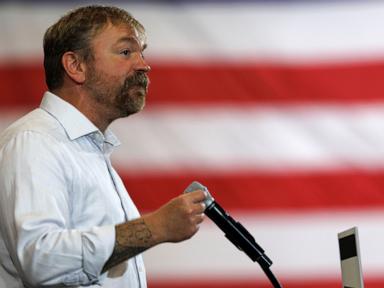
The Maine Senate race just imploded. If you thought American politics couldn't get any more chaotic, look at what just went down in the Pine Tree State.
Graham Platner, the progressive populist who managed to clear out a sitting governor in the primary, officially signed the paperwork to withdraw his name from the ballot. The Maine Secretary of State's office confirmed the receipt of his formal written notice on Friday, ending days of intense speculation and immense political anxiety.
This isn't just a routine candidate swap. It's an absolute disaster for the progressive movement that hitched its wagon to an incredibly flawed vessel, and it leaves Maine Democrats scrambling to save a crucial seat they thought they could flip. If you want to understand how a surefire political insurgency crashed into a brick wall in a matter of weeks, you have to look at the wreckage Platner left behind.
The Sudden Fall of an Oyster Farmer
Platner wasn't your typical politician. He was an Iraq and Afghanistan veteran, a former Marine, and a working-class oyster farmer from Blue Hill. He ran a campaign built on raw anti-establishment anger, promising to take on the "oligarchy" and the billionaire class. The message resonated deeply. He built massive grassroots momentum, packed town halls, and raised millions.
His populist surge was so powerful that it forced Maine Governor Janet Mills to suspend her active campaign before the primary. On June 9, Platner crushed the primary field, taking over 72% of the vote. Progressive heavyweights like Bernie Sanders and Elizabeth Warren rushed to endorse him.
Then everything evaporated.
The primary win didn't erase his past; it just put a giant spotlight on it. Rumors and past controversies suddenly turned into concrete, devastating allegations. The final blow landed when an ex-girlfriend publicly accused him of sexual assault, detailing a harrowing account of a 2021 incident. Another former partner came forward to detail a pattern of unsettling and abusive behavior.
The institutional support vanished almost instantly. Representative Ro Khanna rescinded his endorsement. Then Bernie Sanders called on him to step aside. When your most influential national allies tell you it's over, it's over.
Defiance Until the Very End
Platner didn't go quietly. He released an 11-minute, straight-to-camera video on social media announcing the suspension of his campaign operations. It was a masterclass in bitter defiance.
Instead of taking accountability, Platner blamed the system. He explicitly stated that his exit was not an admission of guilt. He claimed the corporate media and the Democratic establishment acted as "judge, jury, and executioner." In his view, the powerful forces of the status quo simply used the allegations to destroy a movement they couldn't control.
"We are not doing it because of the allegations," Platner said in his video statement. "We are doing it because of the structures that are being taken from us by those in power."
That kind of rhetoric didn't sit well with state party leaders. To make matters worse, Platner delayed actually signing the withdrawal paperwork. In Maine, a public video saying you are dropping out doesn't mean a thing legally. The candidate must submit a signed, formal written notice to the Elections division.
By waiting until Friday to hand over the paperwork, Platner kept the party in limbo. Rumors swirled that he was trying to put his thumb on the scale, attempting to force the Maine Democratic Party into picking a successor who aligned with his specific brand of politics. He even tried to pitch state Representative Valli Geiger as his hand-picked heir.
How Maine Democrats Plan to Choose a Nominee
Now that the paperwork is officially processed, Platner's name will not appear on the November ballot. The state party has a massive administrative hurdle to clear, and the clock is ticking loudly.
Under Maine state law, because Platner met the official withdrawal deadline, the Democratic Party has until July 27 at 5 p.m. to submit a qualified replacement candidate. State statute is incredibly vague about how a party actually selects that replacement. It essentially says the process is entirely up to the party committee.
The Maine Democratic Party quickly announced a plan to hold a nominating convention on July 25. Here's how that process will work:
- The Delegates: There will be 601 voting delegates. This includes 101 members of the Democratic State Committee and 500 delegates appointed during emergency nominating meetings across Maine's 16 counties.
- The Threshold: Any candidate wanting to jump into the ring must submit a formal declaration of intent, a 300-word statement of campaign vision, and at least 500 signatures from registered Maine Democrats.
- The Voting Process: The convention will use a multi-round elimination system. If no candidate wins an outright majority in the first round, the field narrows to the top five, with the lowest vote-getter eliminated in subsequent rounds until someone crosses the finish line.
The Scramble to Face Susan Collins
With Platner out, the floodgates have opened. A half-dozen Democrats have already signaled their intent to run, transforming a settled race into an intense internal sprint.
Former Maine Senate President Troy Jackson wasted no time throwing his hat in the ring, pitching himself as a champion for working-class families. Dan Kleban, the brewery founder who suspended his primary campaign early on, announced he's back in the mix. David Costello, who placed a distant third in the June primary, is also making another run for it.
The biggest wildcard remains Governor Janet Mills. While she was beaten badly by the Platner momentum in the spring, she still commands immense name recognition and has a proven statewide infrastructure. She hasn't committed to jumping back in, but national Democrats, including Senate Minority Leader Chuck Schumer, are undoubtedly looking for a stable, vetted name to salvage the seat.
What Happens Next for Voters
If you are a Maine voter or a political observer tracking this mess, the next two weeks will decide whether Republicans hold onto this seat or if Democrats can mount a credible comeback. The party's challenge is balancing the raw energy of the progressive grassroots who voted for Platner with a candidate who can actually withstand the scrutiny of a general election campaign against a seasoned incumbent.
Watch the county-level nominating meetings closely over the next week. Who gets appointed as a delegate will tell you exactly which faction holds the power heading into the July 25 convention. If the establishment steamrolls the progressive wing, the ensuing infighting might just hand the election over without much of a fight.



