Celebrating Steel While the Trade House Burns
Ribbon-cutting ceremonies are the ultimate opiate for politicians. Give an elected official a giant pair of scissors and a shiny piece of concrete infrastructure, and they will tell you a fairy tale about economic resilience.
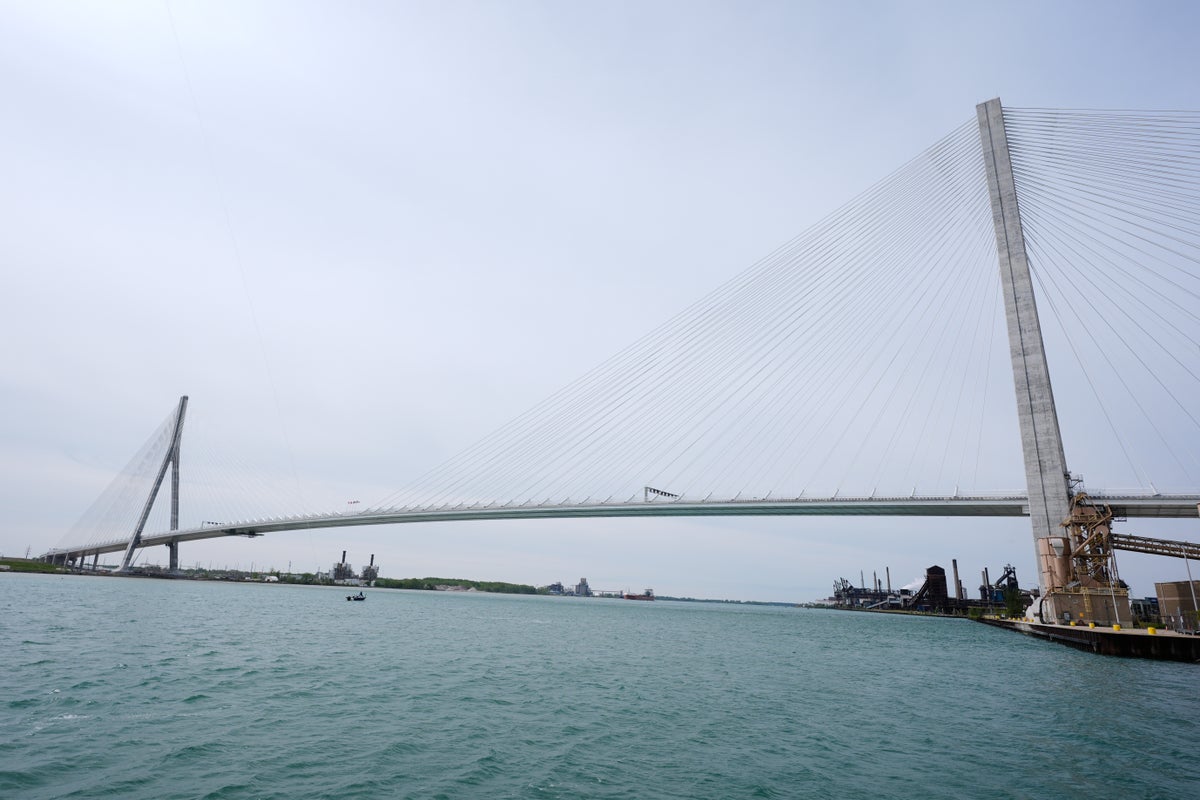
The Gordie Howe International Bridge, connecting Windsor to Detroit, is being framed as a triumphant testament to cross-border integration. The narrative is neat, comforting, and fundamentally wrong. While headlines marvel at six lanes of cable-stayed steel and automated border lanes, the economic reality beneath it is rotting.
Building a faster funnel between two nations does not matter if the pipe on the other end is getting throttled by protectionist policy.
Canadian trade officials are cheering a massive infrastructure milestone while pretending the underlying bilateral dynamic hasn't fundamentally shifted. The bridge isn't a silver bullet against trade aggression; it is a high-priced monument to a border integration model that the United States is actively dismantling.
The Speed Fallacy: Infrastructure Is Not Policy
The central premise peddled by mainstream coverage is simple: more physical capacity equals more trade security. Faster clearance times for freight trucks will supposedly insulate Canadian exporters from American tariff volatility.
This confuses logistics with political economy.
+-------------------------------------------------------+
|  THE INFRASTRUCTURE PARADOX                           |
|                                                       |
|  Physical Capacity != Tariff Immunity                 |
|  [More Lanes] -> [Faster Transit] -> [Higher Tariffs] |
|                                                       |
|  Outcome: Efficient movement of penalized goods.      |
+-------------------------------------------------------+
I have watched supply chain executives sink hundreds of millions into logistics optimization, only to watch a single regulatory pen stroke render the entire investment useless. A border crossing designed to process thousands of trucks an hour does nothing when those trucks are hauling goods slapped with 25% duties.
Trucks moving faster through customs just means your penalized inventory reaches a hostile market a few minutes earlier.
The actual bottleneck in cross-border trade isn't the Ambassador Bridge's aging span or Detroit's traffic congestion. The bottleneck is Washington's bipartisan retreat from free trade. Whether through aggressive tariffs, strict local-content mandates, or aggressive renegotiations of regional trade agreements, American trade posture has permanently changed.
A shiny new bridge doesn't fix a broken tariff framework. It just makes the conflict more visible.
The Asymmetric Risk Canada Refuses to Face
Why are media outlets hyping this bridge as a shield against trade troubles? Because confronting the alternative requires acknowledging a terrifying truth: Canada is an economic hostage to its geography, and its bargaining power is evaporating.
Over 70% of Canadian exports head south. The U.S., meanwhile, sends less than 20% of its exports north. This asymmetry means every trade war, tariff threat, or nationalistic trade policy hits Canada with concentrated force while remaining a minor blip for the American economy.
+-------------------------------------------------------+
|  TRADE DEPENDENCY ASYMMETRY                           |
|                                                       |
|  Canada  [=========> 70%+ Exports to US <=========]   |
|  US      [===> 20% Exports to Canada <===]            |
|                                                       |
|  Result: High vulnerability for Canada, low for US.  |
+-------------------------------------------------------+
When American leaders threaten tariffs on automotive parts, steel, or aluminum, Canadian commentators reflexively point to shared infrastructure like the Gordie Howe Bridge as proof that "we need each other."
We don't need each other equally. The U.S. can absorb the friction of supply chain reshoring far longer than Canadian industry can survive being locked out of American consumer markets.
Dismantling Common Assumptions
Assumption: "Enhanced cross-border infrastructure deters tariff implementation."
Reality: Infrastructure is sunk capital. Tariffs are variable policy instruments. American policymakers view physical trade routes as access points to be regulated, not sacred bonds that prevent trade enforcement.
Assumption: "The Detroit-Windsor corridor is too integrated to fail."
Reality: Modern industrial policy prioritizes domestic production over cross-border efficiency. Supply chain integration is no longer viewed in Washington as an asset; it is viewed as a vulnerability to be eliminated through domestic subsidies and local procurement rules.
Supply Chain Diversification Is a Myth Without Domestic Reform
When faced with trade friction from the U.S., the standard political response in Ottawa is to call for "export diversification." Politicians love to talk about building ties with Europe, Asia, and Indo-Pacific markets.
It is empty rhetoric.
You cannot diversify your way out of geographical reality when your domestic regulatory environment actively penalizes productivity. Canada's internal trade barriers between provinces remain higher than trade barriers between many sovereign European nations.
It is routinely easier for an Ontario manufacturer to ship goods across the Detroit River than to sell them into Quebec or Alberta.
+-------------------------------------------------------+
|  CANADIAN TRADE REALITY                               |
|                                                       |
|  Inter-Provincial Trade: High Friction / Regulations   |
|  Cross-Border Trade:   High Dependency / Vulnerable   |
|                                                       |
|  Fixing the bridge doesn't fix the internal paralysis.|
+-------------------------------------------------------+
Building a multi-billion-dollar span across the U.S. border while failing to eliminate internal provincial tariffs is political theater. It prioritizes external optics over structural reform.
If Canada wanted true trade resilience, it wouldn't just be celebrating physical bridges to Michigan. It would be tearing down regulatory walls between Toronto, Calgary, and Vancouver.
What Exporters Must Actually Do Now
Stop treating infrastructure expansion as a proxy for trade stability. If your business model relies entirely on frictionless access to the U.S. market via physical corridors, you are operating on borrowed time.
Price Tariff Volatility Into Your Capital Expenditure
Stop treating American tariffs as black swan events. They are now standard operating conditions. If your margins can't survive a 10% to 15% unexpected duty spike at the border, your logistics efficiency won't save you.Establish On-Shore American Subs|diaries
If the market is moving toward local content and protectionism, stop trying to ship finished goods across the river. Move assembly, final processing, or intellectual property holding structures into the target market. Move past the bridge entirely.Capitalize on Internal Efficiency First
Push for domestic supply chain optimization. Squeeze costs out of inter-provincial logistics rather than praying that a new border facility will shave four minutes off your transit time.
The Uncomfortable Bottom Line
The Gordie Howe International Bridge is an impressive engineering feat. It will move trucks. It will clear traffic. It will look wonderful in promotional photography.
But framing it as a shield against American trade aggression is a dangerous delusion.
A bridge is just concrete and steel. It carries no political weight, commands no legislative authority, and offers zero protection against a nation determined to rewrite the rules of global commerce in its own favor.
Stop celebrating the corridor. Start preparing for the wall.


