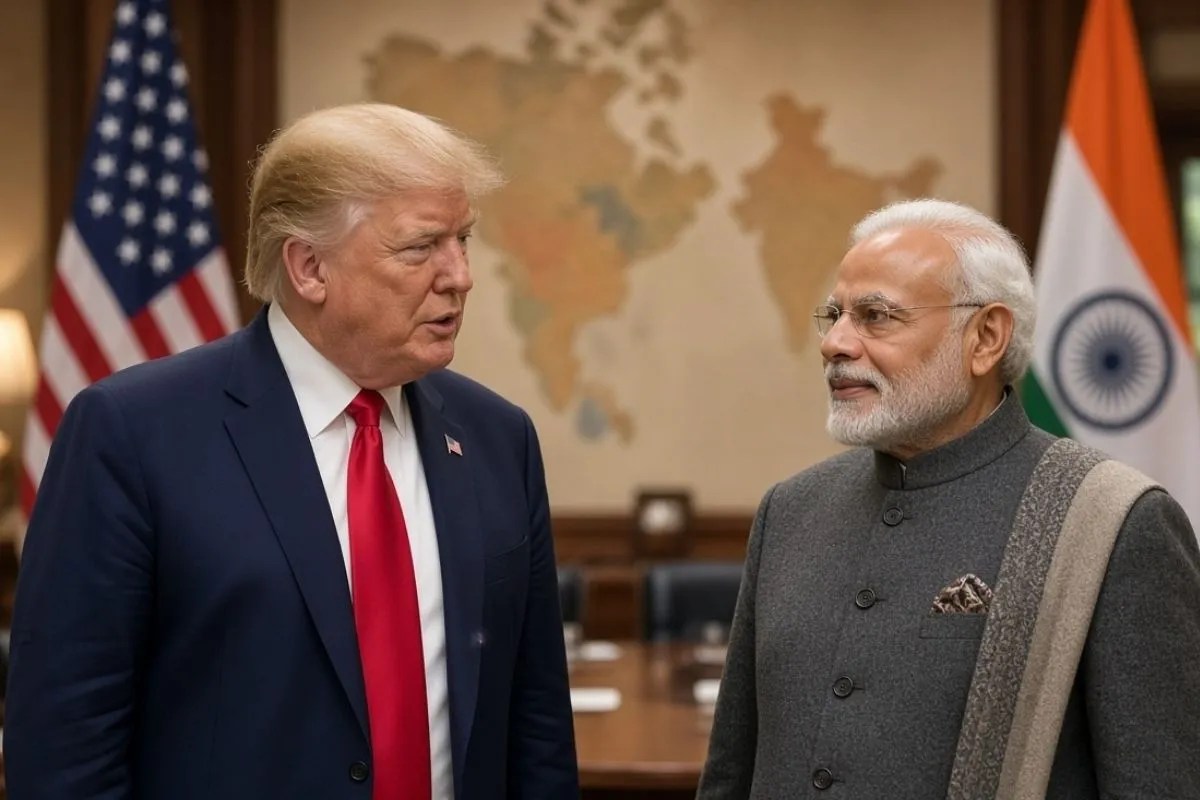
Diplomacy has always functioned through layers of curated theater, where every ceremonial exchange carries a subtext understood only by those inhabiting the highest echelons of state power. When Donald Trump handed Canadian Prime Minister Mark Carney a large gold key to the White House during a closed-door meeting, the gesture appeared at first glance to fit a long tradition of idiosyncratic presidential hospitality. Yet the accompanying punchline delivered by the American president transformed a conventional photo opportunity into something entirely different. You just bring it, they will let you in, Trump remarked before adding a stark caveat: maybe they will shoot you.
When Mark Carney recounted this anecdote publicly months later at the Canada Investment Summit in Toronto, the room erupted into knowing laughter. Political commentators treated the quote as another colorful soundbite from a mercurial American leader known for blurring the lines between statecraft and dark comedy. Beneath the surface humor, however, lies a revealing window into the structural fractures defining modern North American relations. The gift of a White House key coupled with a warning about lethal force captures the precise friction of an era where traditional alliances are measured less by shared values and more by raw transactional friction, tariff walls, and economic nationalism. For a deeper dive into similar topics, we suggest: this related article.
To understand why this specific piece of political theater resonates so deeply, one must examine the state of bilateral relations at the exact moment the key changed hands. The spring of 2025 marked a period of intense economic anxiety between Ottawa and Washington. Trade negotiations had stalled amid aggressive protectionist maneuvers, culminating in sweeping tariffs slapped on billions of dollars worth of Canadian exports. In this tense climate, Trump treated state visitors to a brand of personal dominance theater that weaponized humor to assert absolute asymmetry. Giving someone the key to a building while simultaneously suggesting the guards might open fire on them is not merely a joke. It is an assertion of sovereign unpredictability. It tells the recipient that access is conditional, protection is arbitrary, and the host holds all the cards.
For Mark Carney, navigating this aggressive diplomatic style required a delicate balancing act. Carney, an economist and former central banker who stepped into the political arena carrying a reputation for cold rationalism, understood the utility of public framing. By airing the White House key story himself, he preempted external narratives and reframed the encounter on his own terms. He used the anecdote to illustrate the sheer unpredictability of dealing with Washington while simultaneously acknowledging Trump as a gracious host. It was a masterclass in political jujitsu. He took an anecdote that could have made his government look vulnerable and converted it into evidence of Canada stoic resilience in the face of erratic American pressure. For additional details on this issue, extensive coverage is available on The Washington Post.
The contrast Carney drew during his Toronto address highlighted the divergence in national political cultures. If you are given a key to Canada, you receive a genuine welcome, civic hospitality rooted in institutional predictability, and respect for legal frameworks. If you are handed a key to the United States under the current administration, you receive a gilded trinket accompanied by a reminder of state violence and arbitrary exclusion. This cultural chasm defines the contemporary geopolitical reality. Canada has spent generations building its foreign policy on the assumption that rules-based international trade and predictable regulatory environments would shield smaller economies from the whims of superpowers. That assumption has fractured beyond repair.
The economic backdrop to this diplomatic theatre cannot be overstated. Trade between the two countries remains vast, with the vast majority moving across the border without tariffs under existing baseline structures. Yet the constant threat of sudden tariff hikes, quota renegotiations, and outright economic threats has forced Canadian policymakers to rethink their fundamental strategic orientation. For decades, economic geography dictated that Canada commercial destiny was inextricably bound to its southern neighbor. Over eighty percent of Canadian exports crossed the border into a single market, creating a comfortable yet dangerous dependency.
When Washington began treating trade deficits as national security threats and weaponized tariffs against its closest allies, that dependency transformed into a structural vulnerability. Mark Carney seized upon this vulnerability not as a permanent trap, but as an urgent catalyst for structural change. Behind closed doors and on international stages, his administration began accelerating efforts to diversify trade partnerships away from the United States. Ties with European economies, Asian markets, and alternative multilateral trading blocs shifted from peripheral diplomatic talking points to central economic imperatives.
The pivot away from total reliance on Washington is fraught with economic friction. Reorienting supply chains, renegotiating logistics networks, and building new commercial bridges across oceans requires immense capital expenditure and years of sustained effort. Critics argue that no market on earth can fully replace the sheer purchasing power and geographic proximity of the United States. That argument is entirely correct. Geography remains an immutable constraint. Canada cannot pick up its territory and float it closer to Europe or Asia. Every ton of lumber, barrel of oil, and automotive component shipped across the Pacific incurs higher transportation costs and longer transit times than the trucks rolling across the Ambassador Bridge.
Yet the calculation in Ottawa has shifted from absolute optimization to risk mitigation. When the cost of dependence involves enduring sudden economic coercion, arbitrary executive orders, and constant threats of border closures, paying a higher baseline logistics cost for diversified markets becomes an insurance policy worth buying. Sovereignty carries a price tag. Maintaining a truly independent economic policy means accepting that trade diversification is necessary even when it is inefficient.
This brings the narrative back to the gold key sitting on a shelf in Ottawa. The artifact is emblematic of a broader diplomatic shift where personal relationships between leaders matter more than institutional frameworks. In previous decades, the United States and Canada relationship ran on autopilot. Cabinets negotiated technical details, ambassadors managed minor disputes, and trade disputes were resolved through established dispute-resolution panels under trade agreements. Today, those institutional buffers have been bypassed or actively undermined. Foreign policy is personalized, centralized, and driven by individual executive whims.
When leaders like Donald Trump conduct foreign relations through direct personal transactions, institutional norms erode. A key to the White House ceases to be a traditional civic honor bestowed upon a visiting dignitary. It transforms into a prop in a one-man show, a tangible symbol of a relationship built on personal rapport rather than mutual legal obligations. For a pragmatist like Carney, dealing with this reality requires shedding any lingering nostalgia for the old international order. The rules-based system of the late twentieth century is gone, replaced by a transactional arena where might, market size, and nationalist posturing dictate terms.
The reaction of the Canadian public to the gold key anecdote revealed a populace weary of diplomatic insults yet increasingly unified in its quiet determination to stand firm. Canadians have long lived in the cultural and economic shadow of their massive neighbor, mastering the art of polite distinction while absorbing American media, pop culture, and economic trends. Yet the overt nature of recent pressures has hardened public sentiment. When political leaders mock the absurdity of American threats while calmly pursuing independent trade deals elsewhere, voters respond with a mixture of dark humor and nationalist resolve.
The geopolitical chessboard continues to shift at a dizzying pace. While Washington remains preoccupied with bilateral confrontations and zero-sum trade postures, other global powers are actively courting middle powers like Canada. European capitals, anxious over their own security and economic stability in an increasingly fragmented world, have found common ground with Ottawa. Initiatives to utilize frozen sovereign assets for regional defense and infrastructure financing have opened new avenues for cooperation that bypass American hegemony entirely.
When reporters ask Canadian officials whether future security or economic architectures could include the United States, the response is often a mixture of wry laughter and diplomatic caution. The reality is that complete disengagement is impossible. Intelligence sharing, defense cooperation through continental aerospace commands, and integrated energy grids tie the two nations together with steel cables that no single administration can sever overnight. Integration is a physical fact of geography.
However, operational integration does not require political subservience. The challenge for Canadian statecraft in the coming years is to manage the daily realities of operational interdependence while systematically insulating the national economy from political extortion. This requires a hard-headed assessment of national capabilities. Canada possesses critical minerals, energy reserves, agricultural capacity, and technological expertise that the global economy desperately needs. These assets provide real bargaining power, provided policymakers have the spine to use them instead of reflexively capitulating to southern pressure.
The golden key anecdote will eventually fade into a footnote in political histories of this turbulent era. It will be remembered alongside other bizarre diplomatic artifacts as a symptom of a presidency that treated international alliances like reality television casting calls. But for those charged with steering nations through troubled waters, the lesson goes far beyond the humor of the punchline.
When a superpower hands you a key with a warning about lethal force, the proper response is not to laugh off the threat as mere exaggeration. The proper response is to recognize that the locks are being changed, the rules no longer apply, and your security can never again be outsourced to the goodwill of a neighbor. Independence is not a gift presented in a velvet box by a visiting head of state. It is forged in the quiet, unglamorous work of building alternative paths, diversifying alliances, and refusing to be intimidated when the rhetoric turns hostile. The key to the White House may open doors in Washington, but the future of Canada will be written far away from its gates.