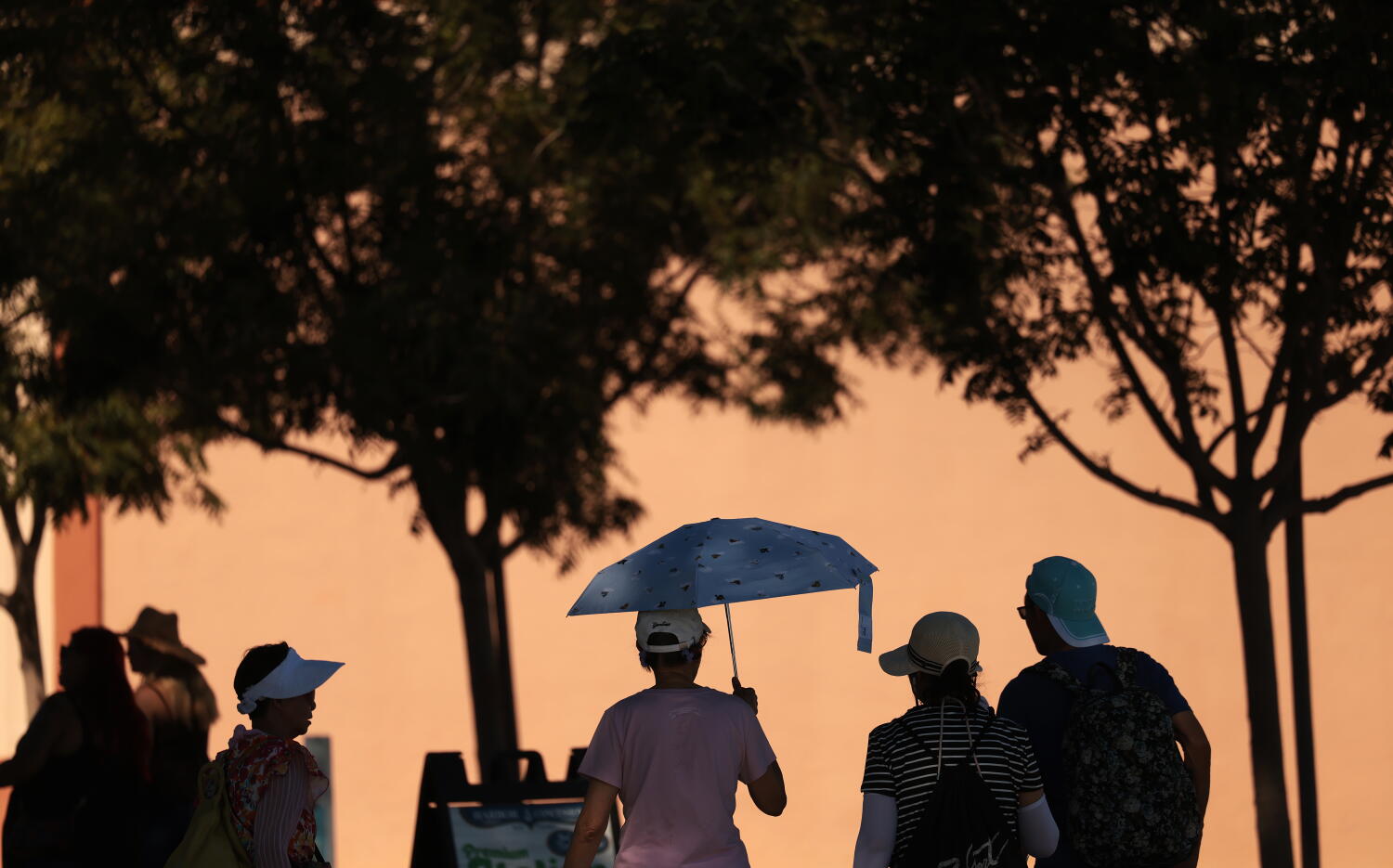
The air does not move. It sits heavy against the skin, smelling faintly of baked dust and sun-bleached eucalyptus.
It is October. By every rule of the calendar, by every inherited memory of autumn, the mornings should bite. There should be a sharp, clean clarity to the atmosphere that makes you pull your jacket tighter around your ribs as you walk to the car. Your breath should fog. The Santa Ana winds should have swept through weeks ago, bringing their familiar dry panic and clearing the slate for winter.
Instead, the thermometer reads ninety-two degrees at three in the afternoon.
Elena stands on her front porch in Pasadena, squinting against a glare that feels less like sunlight and more like a spotlight. In her hand, she holds a yellowing oak leaf that crumbles into fine, copper dust between her fingers before it even hits the ground. It is mid-October in Southern California, and the earth is trapped in a relentless, gilded amber prison.
"Another one," she mutters to the empty street.
She isn't just talking about the weather. She is talking about the streak. Thirty days and counting of unseasonal, punishing heat that has baked the basin into a quiet, simmering endurance test.
To understand what is happening here, you have to look past the beach umbrellas still crowding Santa Monica and the tourists snapping selfies in tank tops along the boardwalk. You have to look at the psychological weight of a season that refuses to turn the page.
Meteorologists call it a persistent high-pressure ridge parked stubbornly over the Great Basin. They talk about sinking air masses, compression heating, and offshore pressure gradients pushing the desert heat toward the coast. They cite the numbers with the casual detachment of scientists reading an electrocardiogram. Ninety-five in downtown Los Angeles. Ninety-eight in Woodland Hills. Records broken not by margins, but by weeks.
But numbers don't capture the texture of the experience. They don't capture the way the light looks at five o'clock—no longer golden and welcoming, but a harsh, brassy glare that turns the asphalt into a shimmering mirage. They don't capture the sound of air conditioners humming in a desperate, unbroken chorus across entire neighborhoods, a mechanical drone that becomes the white noise of daily life.
Consider what happens to a city when the seasons stall.
We are creatures of rhythm. Our biology expects transition. We look for the cooling dusk of October to signal a slowdown, an exhale after the intense, brilliant pressure of summer. We crave the psychological permission to pull inward, to wear sweaters, to watch the deciduous trees drop their load and prepare for rest.
When that signal never arrives, something subtle shifts in the collective mood. People walk a little slower. Tempers fray a little faster in traffic on the 405. The grocery store aisles are stocked with pumpkins and cinnamon brooms, yet shoppers stand beneath the fluorescent lights in shorts and sandals, sweating into their shopping carts while the speakers play holiday music that feels like a cruel joke.
The climate here has always flirted with extremes. That is the bargain you make when you choose to live in a Mediterranean biome kissed by desert air. You trade traditional seasons for perpetual sun. But there is a difference between a warm autumn day and a month-long meteorological blockade that suffocates the landscape.
Down in the canyons, the brush is whispering.
Every local knows the language of the chaparral. It speaks in dry snaps. The native sage and manzanita, starved of the moisture they usually begin to collect as coastal humidity creeps in, have turned brittle. They are holding their breath. A stray spark, a carelessly tossed cigarette, a downed power line—any of these could turn the golden hillsides into a roaring front. Fire season, once a distinct chapter in the regional calendar, has expanded to devour the entire year, bleeding effortlessly from summer into what used to be autumn.
Down the street, twelve-year-old Leo is sitting on the curb with his skateboard, wiping sweat from his forehead. Soccer practice was canceled again today because the heat index on the turf field topped a hundred degrees.
"When is it going to cool down, Mom?" he had asked earlier that morning.
Elena didn't have an answer. Neither did the forecast. The weather maps show a stubborn, unchanging band of high pressure stretching from the desert floor all the way to the coastline, anchored by upper-level atmospheric patterns that seem entirely content to stay put. There is no relief coming from the north. There is no marine layer pushing deep enough inland to break the spell.
We are living in an era where anomalies are becoming the baseline.
What makes this October remarkable isn't just the numerical peak of the thermometer, though breaking century-old records week after week is certainly notable. It is the sheer endurance of the heat. It wears you down. It turns the natural world into an indoor sport. You retreat from the outside, hiding behind blackout curtains and humming cooling units, waiting for a sun that refuses to set on summer.
Yet, there is a strange, melancholy beauty to it if you look closely enough.
In the late afternoon, when the sun finally dips low enough to cast long, stretching shadows across the scorched lawns, the light takes on a rare, crystalline intensity. The jacaranda trees, confused by the warmth, push out a second, reluctant bloom of purple flowers against the copper sky. It is a biological mistake, a calendar error written in petals.
Elena walks back inside, letting the cool wave of air-conditioned air hit her face. She turns off the kitchen faucet, listening to the sudden, ringing silence that follows. Outside her window, the palm fronds remain motionless in the heavy, baked air, standing like sentinels over a city caught between what it used to be and what it is becoming.
The heat will break eventually. It always does. A cold front will slide down from the Gulf of Alaska, or the jet stream will finally buckle, sending a sudden, violent rush of cool Pacific air cascading down the canyons. The first real rain will wash the summer grime from the streets, and the hills will turn a sudden, shocking green.
Until then, the long October continues. The sun stays high. The shadows stay short. And the city keeps waiting for the other shoe to drop.


