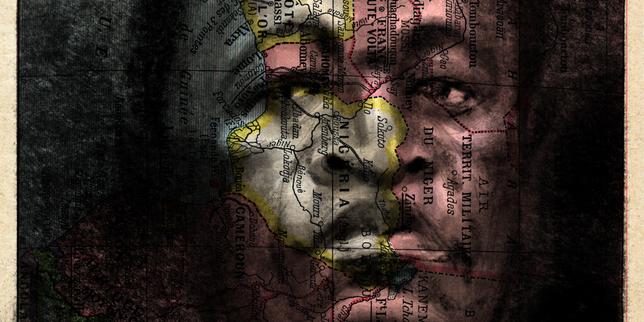
The ultimate fate of a deposed dictator is rarely dignified, but the exile of Blaise Compaoré presents a unique study in political insulation. For over a decade, the man who ruled Burkina Faso with an iron fist has lived in the affluent Cocody Ambassades neighborhood of Abidjan, Côte d'Ivoire. While superficial accounts paint a picture of a lonely, aging man abandoned to his regrets, the operational reality is far more complex. Blaise Compaoré is not merely a forgotten relic. He remains a protected asset, a walking repository of West African intelligence, and a symbol of the enduring, often toxic solidarity among the region’s ruling elite. His comfortable confinement is a deliberate geopolitical choice, managed by the Ivoirian presidency and sustained by a web of historical complicities that refuse to unravel.
To understand the endurance of Compaoré’s exile, one must look past the heavy iron gates of his Abidjan villa and examine the precise mechanisms that keep him safe from international justice.
The Security Shield of Alassane Ouattara
The primary reason Blaise Compaoré lives in absolute impunity, despite a life sentence handed down by a Ouagadougou military court in 2022, rests entirely on Ivoirian state policy. President Alassane Ouattara has consistently refused to extradite the former Burkinabé leader. This is not mere charity. The ties between Ouattara and Compaoré stretch back decades, rooted in the turbulent history of Côte d'Ivoire’s own civil conflicts.
During the Ivoirian rebellions of the early 2000s, Compaoré’s Burkina Faso served as a strategic rear base for the forces that eventually propelled Ouattara to power. Weapons, logistics, and political backing flowed freely across the border. When Compaoré was ousted by a popular uprising in 2014, Ouattara did not hesitate. He dispatched an Ivoirian military helicopter to rescue his old ally from the encroaching crowds.
By granting Compaoré Ivoirian citizenship in 2016, Ouattara legally blocked any possibility of extradition. The Ivoirian constitution explicitly prohibits the extradition of its own citizens. This legal maneuver effectively neutralized the international arrest warrants issued for Compaoré’s role in the 1987 assassination of his predecessor, the iconic pan-Africanist Thomas Sankara.
The Archive in a Failing Mind
A common narrative focuses on Compaoré’s declining health, specifically his struggle with hydrocephalus, a condition that impairs speech, memory, and mobility. Visitors often describe a man who sits in silence, staring into space, unable to sustain a conversation.
This cognitive decline serves a dual purpose in the geopolitical landscape. For his protectors, a silent Compaoré is a safe Compaoré. During his 27 years in power, Compaoré was the central pivot of West African diplomacy, espionage, and conflict. He knew where the bodies were buried because, in many cases, he helped dig the graves. He maintained backchannel relationships with various insurgent groups, facilitated hostage negotiations, and held intimate knowledge of French military operations in the Sahel.
+--------------------------------------------------------------------------+
|                        THE COMPAORÉ SYSTEM (1987-2014)                   |
+--------------------------------------------------------------------------+
|  Diplomatic Pivot: Acted as regional mediator while backing rebellions.  |
|  French Alignment: Served as Paris's primary intelligence hub in Sahel.  |
|  Domestic Control: Managed a ruthless internal security apparatus.       |
+--------------------------------------------------------------------------+
Had Compaoré been put on a witness stand in full possession of his faculties, the fallout would have damaged political establishments across West Africa and Europe. His current state of physical and mental frailty offers a convenient shield for his contemporaries. It allows them to honor their debts to him without fearing what he might reveal.
The Irony of the New Sahelian Order
The geopolitical landscape surrounding Compaoré’s villa has shifted dramatically since his flight from Ouagadougou. Today, Burkina Faso is ruled by a military junta led by Captain Ibrahim Traoré, a regime that has severed ties with France, embraced Russian mercenaries, and adopted a fiercely nationalistic posture.
In public, the junta uses the memory of Thomas Sankara to legitimize its rule, celebrating the conviction of Compaoré as a triumph of historical justice. In private, the reality is far more pragmatic. The current authorities in Ouagadougou know that demanding Compaoré’s physical return is a useless exercise.
In July 2022, Compaoré actually made a brief, highly controversial return to Ouagadougou. Invited by the previous military transition leader, Paul-Henri Sandaogo Damiba, the trip was framed as an effort toward "national reconciliation." The experiment backfired spectacularly. The Burkinabé public was outraged by the sight of a convicted, deposed dictator being flown in on an Ivoirian state plane, treated as an honored guest rather than a fugitive.
That brief return proved that Compaoré’s physical presence in Burkina Faso is destabilizing for any regime in power. For the current junta, keeping Compaoré at a distance in Abidjan serves as a permanent political foil. He is far more useful to them as an abstract symbol of past corruption and foreign interference than as an ailing prisoner in a local jail, whose presence would require constant security and invite unpredictable tribal alignments.
The Limits of Political Shelter
Life in Cocody Ambassades is comfortable, but it is not free. Compaoré lives under the constant surveillance of the Ivoirian intelligence services, ostensibly for his protection, but equally to monitor who comes and goes.
His daily routine is managed by his wife, Chantal Compaoré, an influential figure whose own deep roots in the Ivoirian elite have helped secure the family’s position. The villa is a fortress of silence. The stream of old political allies, regional power brokers, and foreign emissaries has slowed to a trickle. This isolation is the price of survival.
The true tragedy of the situation is not Compaoré’s personal loneliness, but the systemic failure of accountability it represents. The families of those who disappeared during his 27-year rule, the activists who were tortured, and the journalists who were assassinated—like Norbert Zongo—are left with a verdict that cannot be executed.
The international community, which frequently lectures the continent on the rule of law, has largely looked the other way. For Paris and Washington, Compaoré was a stable partner in a volatile region for nearly three decades. His peaceful retirement in Abidjan, sponsored by an essential regional economic power, is viewed behind closed doors as an acceptable compromise.
The golden cage of Abidjan demonstrates that in West African politics, historical networks of solidarity frequently override judicial pronouncements. Blaise Compaoré will likely never see the inside of a prison cell. He will remain in his villa, a quiet ghost of the Cold War and Françafrique eras, protected by the very state structures he spent a lifetime manipulating. The justice achieved by the Burkinabé people remains moral, confined to court records and history books, while the man himself exists just out of reach, a permanent reminder of how the powerful protect their own.