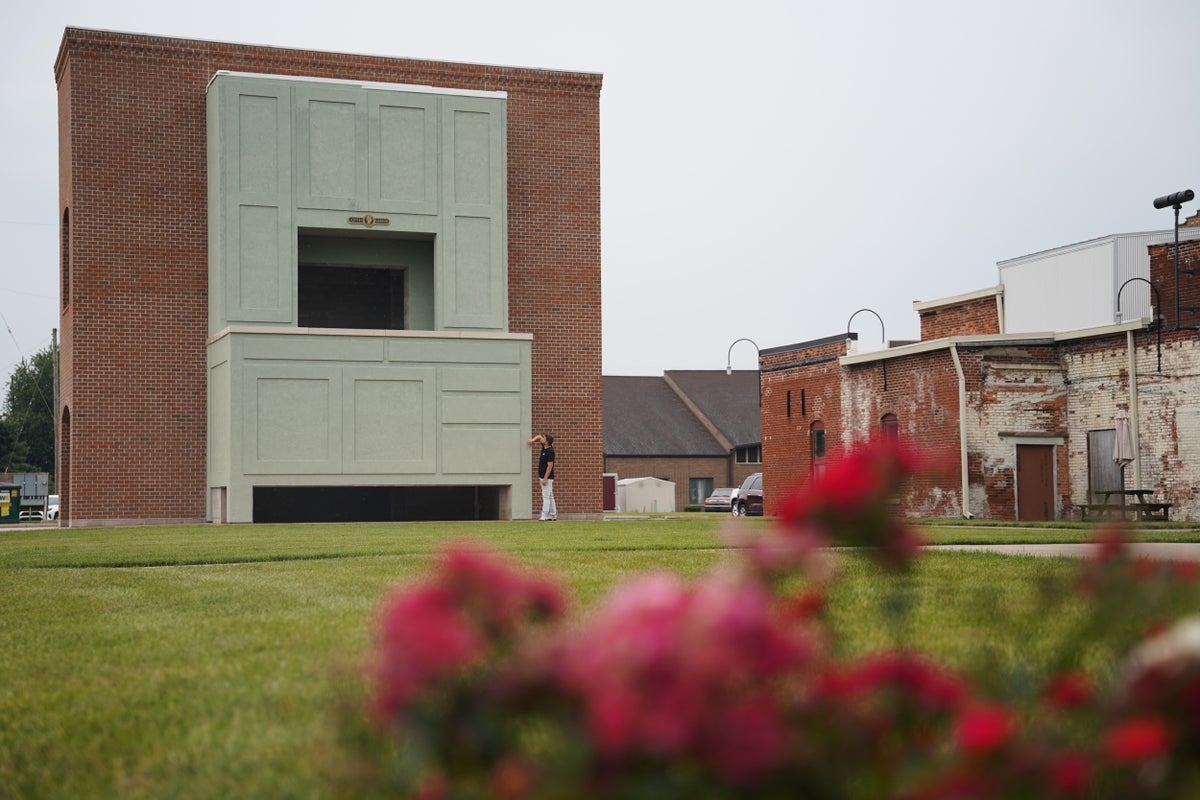
You’ve probably seen the headlines. A massive kitchen cabinet popped up in Indiana, and people are losing their minds over it. Honestly, most internet commentary misses the point entirely. They treat it like a quirky roadside attraction or a random marketing stunt. It’s not. It’s a deliberate tribute to a specific cultural staple that shaped how generations of Americans lived, cooked, and gathered.
If you grew up in the mid-twentieth century or spent time rummaging through your grandparents' farmhouse, you know what a Hoosier cabinet is. If you don't, you're missing a massive piece of domestic history. This giant installation isn't just about big wood and oversized hardware. It represents an era when furniture had a job to do. It was built to solve problems.
Let's break down why this monument exists, what a Hoosier cabinet actually did for the American home, and why you should care about a piece of vintage kitchen utility.
The Forgotten Workhorse of the American Kitchen
We take modular kitchens for granted today. You have soft-close drawers, pull-out pantry shelves, and dedicated nooks for your air fryer and blender. Back in the early 1900s, none of that existed. Kitchens were clunky. You had a table, a stove, and maybe a drafty pantry down the hall.
Enter the Hoosier Manufacturing Company out of Newcastle, Indiana. They didn't invent the kitchen cabinet, but they perfected it. They basically created the original command center for the home cook.
A classic Hoosier cabinet packed an entire pantry's worth of efficiency into a single piece of standalone furniture. You had built-in flour bins with sifter attachments right on the front. You had sugar jars, spice racks, a metal or enamel pull-out work surface, and specialized slots for cutting boards and cookie sheets.
Think about that for a second. You didn't have to walk back and forth across a massive kitchen to bake a pie. Everything lived in one box. That efficiency changed domestic labor forever.
Why Indiana Built a Giant One Now
So, why build a giant version of a vintage cabinet in Indiana today? It comes down to preservation and local pride. Indiana manufacturing history gets buried under tech hubs and modern logistics centers. But towns like Newcastle earned their keep through craftsmanship.
The oversized installation serves as a physical anchor for local heritage. Roadside Americana relies on scale to grab attention, but this project goes deeper than a giant ball of twine or a oversized rocking chair. It targets an artifact that defined Indiana's industrial footprint during the golden age of furniture making.
Local historical groups and artisans poured months into getting the details right. They didn't just slap together a giant wooden box. They scaled up the tiny flour bins, the latch handles, and the tambour doors. They wanted people to look at it and feel that strange mix of nostalgia and curiosity.
What Modern Kitchens Lost Along the Way
Look closely at your own kitchen. Is it efficient? Sure. Is it personal? Usually not. We traded utility for sleek minimalism. Everything is hidden behind flat panel doors and paneled refrigerators.
Vintage Hoosier cabinets were unapologetically functional. They showed off their contents. They were designed by people who understood cooking as a physical, tactile trade.
Here are a few things modern kitchens abandoned that these old cabinets mastered:
- Vertical zoning where every inch of vertical space handles a specific dry good.
- Integrated tools like flour sifters built directly into furniture instead of sitting loose in a drawer.
- Dedicated workspace right where the ingredients live, minimizing steps between prep and mixing.
When you stand next to a massive replica of this furniture, the scale forces you to look at how much stuff we keep tucked away out of sight. It makes you question our obsession with sprawling kitchen islands that often just collect clutter instead of improving workflow.
How to Find and Restore a Real One Today
Maybe seeing the headlines sparked an urge to find a piece of this history for yourself. Good luck, but don't expect it to be easy. Real Hoosier cabinets are hot commodities in the antique market.
People love converting them into coffee bars, extra pantry storage, or statement pieces in modern farmhouses. If you are hunting for one, watch out for common pitfalls.
First, check the tambour doors. Those wooden roll-up doors love to stick or break. Fixing them requires patience and actual woodworking skill. Second, verify the accessories. A lot of original cabinets lost their glass sugar jars and metal flour bins over the decades. Finding authentic replacement parts costs a fortune.
If you score one, don't paint over original oak or ash with cheap latex paint. Strip it down, treat the wood, and respect the craftsmanship that went into building something designed to last a century.
Stop scrolling past weird roadside monuments. Sometimes they are pointing you toward a real story about how we used to live. Go look at the craftsmanship of the past, then head into your kitchen and figure out how to make your own space work a little bit harder for you.