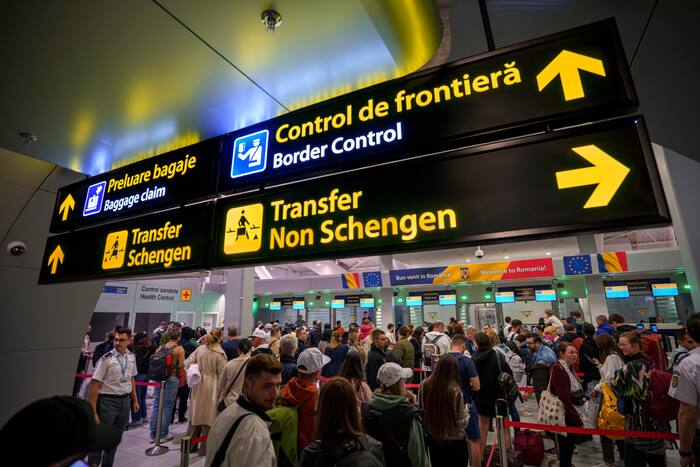
Silence.
That is the first thing you notice when a terminal goes dark. Not the alarms, not the shouting, not even the frantic clatter of rolling suitcases against polished terrazzo floors. It is the sudden, suffocating absence of the ordinary hum—the espresso machines hissing, the boarding announcements droning in three languages, the low murmur of a thousand strangers waiting to go home.
Consider a hypothetical traveler, let us call her Clara, standing at Gate B14 in Brussels on a damp Tuesday morning. She has a lukewarm coffee in her left hand and a boarding pass for a regional flight to Geneva in her right. Her daughter is having surgery at noon. Then, the screens flicker. The departure time vanishes, replaced by a stark, blinking red banner. Within four minutes, armed police are herding four hundred people toward the tarmac exits, leaving behind coats, laptops, and half-eaten pastries.
Three hundred miles away, in a glass-walled newsroom in Paris, an anchor is halfway through reading the morning headlines when the red tally light on his camera dies. A producer bursts through the heavy soundproof door, her face drained of color, waving everyone toward the fire stairs.
No bomb goes off in Brussels. No device is ever found beneath the broadcast desks in Paris. Yet by lunchtime, tens of thousands of lives have been derailed, millions of euros have evaporated into thin air, and a quiet, creeping exhaustion has settled over the continent.
Welcome to the new geometry of disruption. Across Europe, aviation hubs and major media broadcasters are being battered by a relentless, coordinated wave of false bomb threats—a digital ghost war waged not with high explosives, but with encrypted emails, spoofed phone numbers, and weaponized protocol.
The Architecture of a False Alarm
To understand why a single anonymous email can ground a fleet of Airbus jets, you have to understand the sacred, unforgiving math of modern safety.
In aviation and public broadcasting, there is no such thing as a casual threat. When an airport security desk receives a message claiming an explosive device is aboard a specific flight—or hidden somewhere inside a sprawling terminal—the system is legally and morally hardwired to assume the worst. You cannot gamble with two hundred lives on a hunch that a sender is bluffing.
Think of it like a smoke detector wired directly to the city’s main water supply. It does not matter whether the smoke comes from a raging electrical fire or a piece of burnt toast; the sprinklers engage, the building floods, and the damage is done before anyone even smells the char.
Over the past several years, European authorities from France and Belgium to Germany, Poland, and the Balkans have watched this exact mechanism get exploited at industrial scale. Waves of hoax threats have repeatedly targeted regional airports, major international hubs, and national television and radio networks. In France alone during previous surges, over a hundred separate evacuations hit airports within just a few weeks, forcing mass cancellations and costing airlines millions per day. Broadcasters in Serbia, Croatia, and across Western Europe have similarly been forced off the air mid-broadcast as bomb squads swept studios with sniffer dogs.
The perpetrators rarely leave a traditional footprint. Instead, they hide behind layers of virtual private networks, encrypted Swiss or offshore email providers, and automated bulk-messaging scripts. With three clicks and zero physical risk, an actor sitting in a bedroom thousands of miles away can trigger a multi-agency emergency response involving counter-terrorism police, explosive ordnance disposal teams, air traffic controllers, and municipal transit authorities.
The asymmetry is staggering. The cost to launch the attack is practically zero. The cost to absorb it is astronomical.
What Happens Inside the Machine
Most people assume an airport evacuation is a single, contained event. You walk outside, wait an hour, and walk back in.
Anyone who has actually stood on the freezing tarmac outside a European terminal knows better.
When a flight is flagged or a terminal is cleared, it sets off a domino effect that ripples across the entire continental airspace within twenty minutes. Aircraft that were supposed to land are diverted to secondary airports that lack the gate capacity or customs staff to handle them. Crews hit their legally mandated maximum flight hours while sitting idle on taxiways, meaning even after the bomb squads give the all-clear, there is nobody legally allowed to fly the plane.
Passengers miss long-haul connections. Perishable cargo—medical isotopes, fresh produce, critical manufacturing components—spoils in uncooled holds. Baggage systems jam, leaving mountains of unclaimed luggage that take days to untangle.
And inside the broadcast centers, the damage is subtler, yet just as corrosive.
A television or radio station is built on continuity. It is the civic pulse of a city or a nation. When a major broadcaster is forced to evacuate its newsroom, programming drops to emergency loops or dead air. Advertisers lose slots. Live investigative reporting grinds to a halt. Journalists—people whose entire professional identity is built around running toward breaking news—are forced to stand across the street behind police tape, watching their own building get searched floor by floor.
I remember speaking with a veteran broadcast engineer in Central Europe after his station was hit twice in a single month. What struck him was not the fear of an actual explosion—by the second time, everyone knew the phrasing of the email matched the same copy-pasted template used against three other stations that week. What haunted him was the friction. Every false alarm shaved off two hours of live production, frayed the nerves of young producers, and trained the public to treat emergency evacuations like a routine weather delay.
The Invisible Weaponization of Fatigue
This is the part that rarely makes the evening news, yet it is the most dangerous consequence of the entire phenomenon.
Security experts call it alert fatigue. In plain terms, it is the slow numbing of human instinct when the alarm bell rings too often.
Imagine a night watchman in a lighthouse who hears the foghorn blast every ten minutes on a crystal-clear afternoon because someone is short-circuiting the wiring. For the first three days, he runs to the window with binoculars, scanning the horizon for ships in distress. By the third week, he barely looks up from his tea.
That is precisely what these waves of bomb hoaxes are designed to do to European infrastructure.
Even when law enforcement agencies—from Europol down to local cybercrime units—successfully trace a batch of threats to a specific group of online agitators, hacktivist collectives, or extortion rings, the psychological residue lingers. Aviation workers grow cynical. Travelers become irritable and less compliant during routine screenings. Broadcast staff start treating evacuation drills with a weary eye-roll rather than sharp urgency.
And beneath that fatigue lies a deeper strategic goal. Many of these waves do not occur in a vacuum. Intelligence analysts have repeatedly noted how spikes in hoax threats coincide with moments of heightened geopolitical tension, major elections, or international summits across Europe. Whether driven by state-aligned troll farms looking to sow low-grade chaos, ideologically motivated extremists testing response times, or young cyber-criminals chasing notoriety on encrypted messaging channels, the objective is identical: erode trust in everyday institutions.
Make the trains feel unreliable. Make the airports feel chaotic. Make the newsrooms go silent. Remind ordinary citizens that the smooth, predictable comfort of modern European life is fragile.
Why Catching the Culprits Is So Maddeningly Hard
If these threats are almost always fake, why haven't police simply shut the pipeline down?
The honest answer is uncomfortable: the modern internet was built for speed and privacy, not for instant forensic attribution across borders.
When a threatening email lands in the inbox of an airport authority in Madrid or a broadcaster in Warsaw, investigators immediately begin tracing the digital headers. Often, the trail leads to a free encrypted email account registered using a disposable virtual phone number, accessed through a Tor exit node or a commercial VPN server located in a jurisdiction that does not cooperate quickly with European subpoenas.
By the time a cross-border legal request is drafted, translated, approved by a judge, and sent to an overseas server host, weeks or months have passed. Meanwhile, the perpetrators have already abandoned that account and spun up fifty new ones.
Worse still, the barrier to entry has collapsed. You no longer need to be a sophisticated coder to orchestrate a disruption campaign. Off-the-shelf automation tools, leaked credential databases, and anonymous payment rails mean that a handful of individuals can mimic the footprint of a massive terrorist organization.
Yet law enforcement is not standing still. Across the European Union, prosecutors have begun treating these hoaxes not as petty misdemeanors, but as severe acts of sabotage and public endangerment—carrying multi-year prison sentences and crushing financial restitution orders. Joint task forces now share threat signatures in real time, allowing security analysts to spot linguistic quirks, metadata patterns, and routing habits within minutes rather than days.
If an email uses the exact syntax, timestamp pattern, and server routing of forty previous hoaxes that turned out to be empty, security directors can sometimes conduct targeted, rolling sweeps rather than shutting down an entire international hub at peak hour. It is a delicate, nerve-wracking high-wire act: calibrating the response so that society refuses to be paralyzed, without ever lowering the shield when a threat might actually be real.
The Resilience You Never See
Return for a moment to Clara, our hypothetical traveler standing on the damp tarmac in Brussels.
By 10:30 AM, the bomb-sniffing dogs have cleared Gate B14. The red banners on the departure boards blink out, replaced by revised boarding times. Ground crews sprint across the concrete to reload luggage carts. Gate agents, running on adrenaline and stale coffee, rebook dozens of stranded passengers onto partner airlines with remarkable speed.
In Paris, the broadcast anchor walks back onto the studio floor. Within ninety seconds of sitting down, the red light above the camera flares back to life, and his voice carries smoothly across millions of radios and television screens as if nothing had ever happened.
That is the quiet truth these digital disruptors consistently miscalculate.
They mistake protocol for weakness. They assume that because an open society takes every threat seriously, it must be brittle. They watch the temporary chaos of an evacuation on a live news feed and declare victory, completely missing what happens twenty minutes after the cameras pan away.
Airports reopen. Planes take off. Broadcasts resume. Behind every delayed flight and interrupted transmission are thousands of ordinary people—baggage handlers, air traffic controllers, studio technicians, police officers, and tired travelers—who absorb the shock, reset the board, and keep the continent moving anyway.
The next time a terminal goes silent or a screen flickers to black, remember that the fear is manufactured, the disruption is temporary, and the voice eventually always comes back on the air.

