The coffee in the glass pitcher had turned that bitter, iridescent black of a meeting that had outlived its morning. On the seventeenth floor overlooking Manhattan, light slanted hard across a walnut conference table where three analysts stared at a Bloomberg terminal as if it were a flatline on a monitor.
Outside, delivery trucks were nudging through mid-morning traffic, their air brakes hissing in the October chill. Inside, the only sound was the rhythmic tapping of a fountain pen against a porcelain saucer. If you found value in this article, you might want to read: this related article.
For months, the collective anxiety of the global economy had been pinned to a single, imagined date on a autumn calendar: the moment the Federal Reserve would finally twitch its hand, lift the cost of money one more notch, and squeeze the air out of whatever room was left in the credit cycle.
Then, the data whispered. Or rather, the data stopped screaming. For another perspective on this story, check out the latest update from The Motley Fool.
And Wall Street, with its legendary capacity for instantaneous whiplash, dropped its bets.
Federal Reserve officials, speaking in clipped cadences across Washington podiums and regional bank summits, began to clear their throats and signal something radical. They were pausing. Not because the war on inflation was won—inflation is a stubborn ghost that rarely vanishes without leaving scorch marks on the wallpaper—but because the heavy machinery of the economy was finally beginning to groan under the weight of previous hikes.
Consider what happens when the price of waiting becomes higher than the price of moving. For two years, businesses large and small have lived in a state of suspended animation. Every corporate treasurer, from the CFO of a multinational logistics giant to the owner of a regional logistics warehouse in Ohio, has had to stare at borrowing costs that tripled almost overnight.
To understand why an October interest rate hike suddenly vanished from the horizon like morning mist, you have to look past the Federal Open Market Committee statements and into the ledger books of ordinary enterprises.
Imagine Sarah, who runs a mid-sized component manufacturer in Michigan. She employs eighty-four people. Her grandfather started the shop with two lathes and a handshake. Last year, Sarah needed a revolving line of credit to retool her assembly line with automated sensors. The bank quoted her a rate that made her wince, then sign anyway, because standing still in manufacturing is a slow form of suicide.
When the Fed hikes rates, Sarah doesn't read economic white papers. She reads her monthly interest expense statement. She watches it climb month by month, swallowing the margin she had set aside for employee health insurance subsidies. By late summer, Sarah was sleeping four hours a night, doing mental arithmetic about whether she would need to freeze hiring before the winter holidays.
Multiply Sarah by three million.
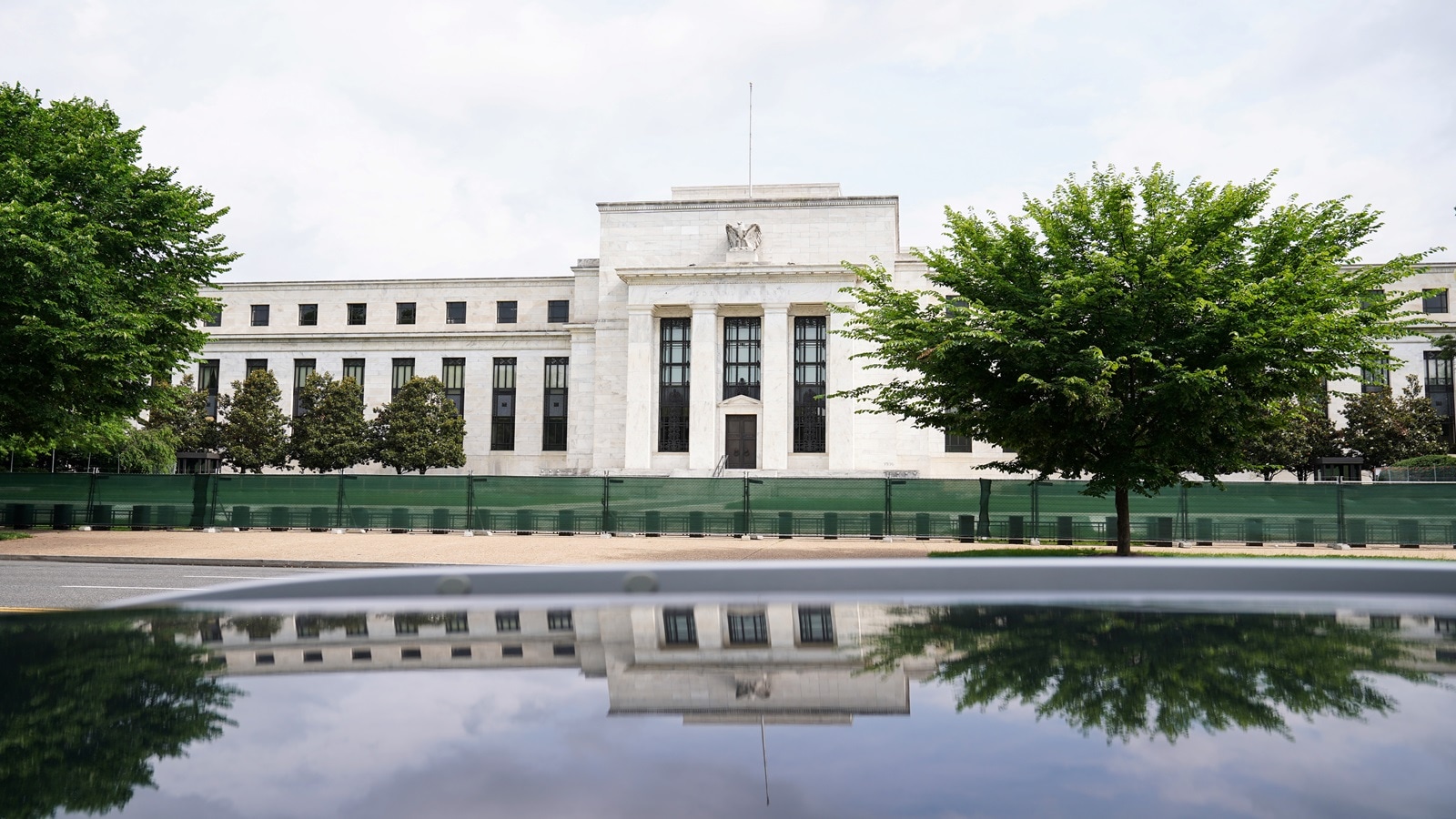
That is the American economy. It is not an abstract spreadsheet floating in the ether of the Eccles Building; it is a sprawling, creaking network of cash flows, payroll accounts, and inventory loans.
By October, the cumulative friction of those high rates began to show up in the employment figures and the retail spending indices. The labor market, which had roared like a blast furnace for thirty-six months, started to exhibit the kind of quiet cooling that central bankers pretend to want until they actually get it. When you chill a furnace too fast, the metal cracks.
The bond market saw the cracks first. Traders, whose livelihoods depend on smelling fear and pricing risk seconds before anyone else, began slashing their probabilities of an October rate increase down toward zero. The fed funds futures—those arcane financial gauges that read the collective psychic temperature of institutional investors—flashed a clear message. The tightening cycle was running out of road.
Why? Because monetary policy operates with what economists call long and variable lags. It is like turning the steering wheel of an oil tanker. You spin the giant brass wheel, and for minutes, nothing happens. The ship keeps plowing forward on its original trajectory. The captain gets impatient. He turns the wheel harder. Still nothing. So he spins it all the way to starboard.
Suddenly, the massive hull begins to swing. By the time the captain realizes he has turned too far, the reef is right in front of him.
The Fed has spent the past year staring at the bow wave of inflation, spinning the wheel of interest rates upward with deliberate force. But policy lags mean that the full, chilling impact of those past hikes is only now washing over the engine room. To hike again in October would have been the equivalent of flooring the brakes on a downhill icy slope because you still remember the heat of the summer sun.
Central bankers are human, despite the austere marble facades of their institutions. They are terrified of two ghosts: the ghost of Arthur Burns in the 1970s, who let up on inflation too early and allowed a wage-price spiral to devour the American middle class, and the ghost of an unnecessary recession, where millions of people lose their livelihoods because policymakers misread the speedometer.
When officials signaled that October was off the table, they were admitting something profound. They were conceding that the blunt instrument of higher borrowing costs had done its primary work. The economy was slowing down organically. The fever was breaking, even if the patient was still sweating.
Yet, the fading of an October hike does not mean a return to the cheap money playground of the past decade. That era is dead and buried, and pouring champagne over its grave will not resurrect it.
The structural cost of capital has normalized to historical norms. Money has a price again. Risk has a penalty again. For a generation of entrepreneurs and investors who grew up in an incubator of zero-percent interest rates, this new reality feels like walking naked through a snowdrift.
Watch what happens next in the commercial real estate sector. Watch the regional banks quietly restructuring loans that were written when money was practically free. Watch how corporate boards adjust their capital expenditure budgets when every dollar borrowed has to earn its keep through genuine productivity gains rather than financial engineering.
The shift away from an October hike is a reprieve, not a pardon. It is a moment for the financial system to catch its breath, to let the dust settle over the balance sheets, and to assess whether the bridge can hold the weight it has already been given.
Back on the seventeenth floor, the analysts finished their coffee. The Bloomberg screens flickered with green and red numbers, the eternal pulse of a market trying to price tomorrow before today has even finished. The October hike was gone from the models, replaced by a new consensus of watchful waiting.
Somewhere out in Michigan, Sarah turned off her office light, slipped her car keys into her pocket, and let out a long, slow breath that tasted faintly of hope, and uncertainty, and the quiet realization that the storm had not ended, but had merely changed its tune.