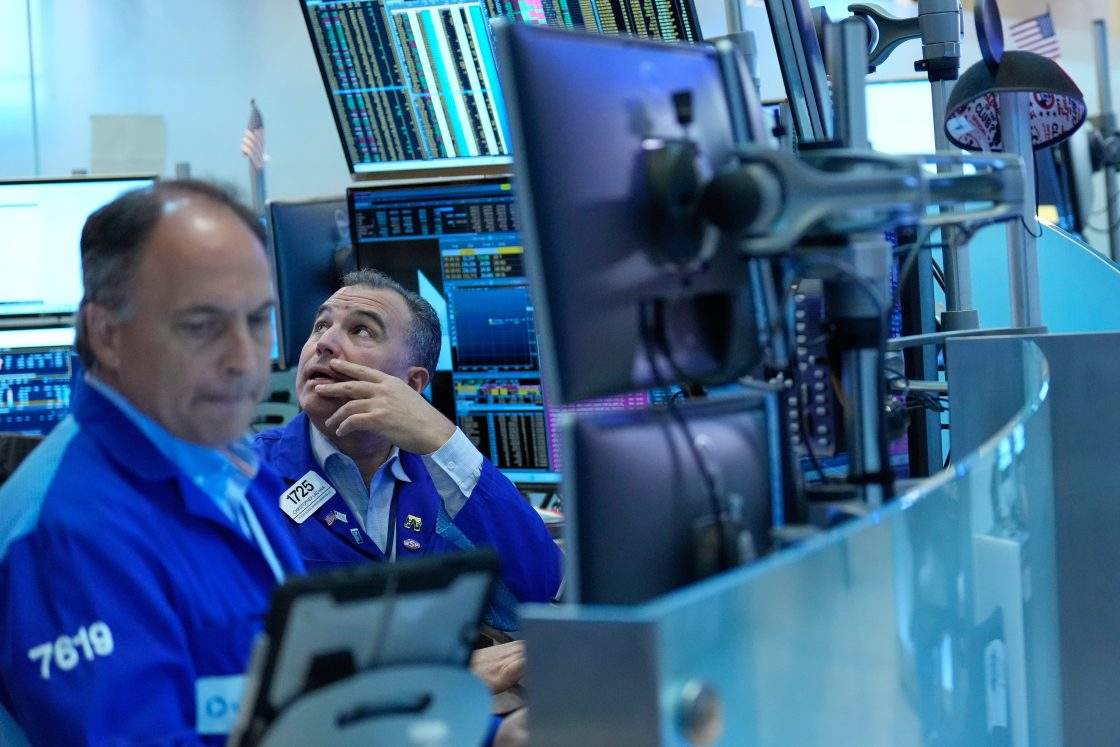
The coffee in the glass carafe has gone cold, sitting on a warming plate that was unplugged twenty minutes ago. Elena stares at the glowing amber ticker tape crawling across her second monitor. Outside her window, the gray morning over downtown Manhattan is spitting a cold, miserable sleet that turns windshields into smeared charcoal. But inside the trading room, nobody is looking at the weather. They are looking at numbers that shouldn’t make sense together.
Crude oil is climbing, inching upward on whispers of Middle Eastern supply bottlenecks and shipping reroutes. Bond yields are ticking higher, a steady, ominous pulse signaling that money is getting more expensive by the day. Traditional logic dictates a specific script for this moment: stocks retreat, risk assets bleed, and a cautious frost settles over Wall Street. Discover more on a similar issue: this related article.
Yet, the tech sector refuses to follow the script. Silicon Valley’s algorithmic prophets and enterprise giants are floating upward, sustained by an unshakeable, almost defiant belief in artificial intelligence.
It is a strange macroeconomic friction. On one side, the physical world is throwing heavy punches—energy costs are spiking, borrowing is punishing, and inflation is a persistent ghost. On the other side, an abstract technological thesis is acting like a buoyancy device, keeping valuations afloat in turbulent waters. Further analysis by CNET highlights similar perspectives on the subject.
To understand why tech stocks are currently defying gravity while oil and bonds pull in the opposite direction, we have to look past the spreadsheets. We have to look at the psychology of anticipation.
Markets are not rational calculators of current reality. They are discounting mechanisms of future hope.
The Cost of Everything
Let us trace the pressure points. When oil prices creep up, the immediate casualty is transport, manufacturing, and logistics. Every gallon of diesel burned to move cargo boxes across the interstate eats into corporate margins. When bond yields rise—driven by persistent Treasury issuance and stubborn central bank rates—the discount rate applied to future corporate earnings goes up. That means a dollar earned ten years from now is worth significantly less today. For high-growth technology companies, whose valuations are heavily dependent on projected profits far down the line, rising yields act as a gravitational anchor.
By all historical precedents, rising oil and high yields should spell a brutal correction for software and hardware developers alike.
And yet, capital is not fleeing. It is concentrating.
Why? Because institutional investors are playing a different game entirely. They are betting that artificial intelligence is not merely another software upgrade or a cyclical gadget cycle. They view it as a totalizing industrial revolution—a deflationary force so powerful it can offset rising energy costs and elevated borrowing expenses through sheer, automated efficiency.
Imagine a mid-sized logistics firm in Ohio. Two years ago, routing a fleet of fifty delivery trucks through a sudden snowstorm required a room full of dispatchers working the phones, burning extra fuel, and burning overtime wages. Today, a machine learning model optimizes those routes in three seconds, cutting idle time by twenty percent and shaving thousands of dollars off the fuel bill.
Multiply that across healthcare diagnostics, legal document review, code generation, and semiconductor design. The promise of artificial intelligence is the promise of margin expansion in a world where every other input cost is going up.
That is why the market is looking at $85 crude oil and shrugging. The prevailing thesis is simple: efficiency will outrun inflation.
The Anatomy of Belief
Confidence is a fragile commodity, but when it calcifies into a consensus, it becomes a physical force.
Consider a venture capital partner named Marcus, managing a three-hundred-million-dollar fund based out of San Francisco. Two weeks ago, Marcus sat across a polished oak table from the founders of an enterprise AI startup building automated cybersecurity defense agents. The founders didn't have a massive revenue stream yet. They had something more potent: a product that could replace twelve human security analysts with a single model running on a rented cloud cluster.
Marcus didn't ask about bond yields. He didn't ask about the Brent crude futures curve. He asked about compute capacity and enterprise adoption rates.
When macro uncertainty rises, human beings look for anchors. In the past, that anchor was cash-flowing utility stocks or defensive consumer staples. But in this cycle, the anchor has shifted. Investors view leading artificial intelligence platforms as the ultimate defensive growth assets—companies with such dominant moats and extraordinary pricing power that they can pass rising costs along to customers without blinking.
This creates a barbell market. On one end, traditional industries struggle with the heavy machinery of the physical economy—paying more for oil, paying more to service debt, squeezing pennies out of old business models. On the other end, the tech elite sip espresso in glass-walled offices, trading on the prospect of infinite, software-driven scalability.
The divergence is stark. It is the old world colliding with the new, mediated by a ticker tape that rewards the future and punishes the present.
The Hidden Vulnerability
There is a dark undercurrent to this optimism, of course. Markets built entirely on narrative are exceptionally vulnerable to sudden shifts in sentiment.
If artificial intelligence is the engine driving tech stocks through an economic headwind, what happens if the engine sputters? What happens if enterprise customers look at their software budgets six months from now and realize that the promised productivity gains are taking longer to materialize than the slide decks promised?
We have seen this movie before. The dot-com boom was built on a kernel of absolute, undeniable truth: the internet did change everything. E-commerce did transform retail. Cloud computing did rewrite enterprise IT. But the market got the timing wrong. It priced in 2010 reality in 1999, resulting in a brutal, multi-year reckoning when the infrastructure outpaced the monetization.
Today, the energy and bond markets are sounding a very real, very physical alarm. Oil is a physical commodity. It pumps out of the ground, gets refined in heavy industrial plants, and burns in engines. It does not care about large language models. It cares about supply, demand, geopolitics, and winter weather.
When bond yields rise, it reflects the hard math of government debt and borrowing costs. It is the cost of living in a world of high fiscal deficits.
To ignore these physical constraints entirely is dangerous. Yet, tech stock investors are making a calculated wager: that the deflationary shock of artificial intelligence will arrive fast enough, and hit hard enough, to neutralize the inflationary pressure of energy and debt.
It is a high-stakes race between macroeconomic gravity and technological escape velocity.
The View From the Floor
Back in the trading room, the clock ticks toward noon. The sleet outside has turned into a steady, freezing rain, drumming a frantic rhythm against the glass.
Elena watches a major semiconductor manufacturer tick up another point and a half, fueled by fresh announcements of next-generation inference chips. Down the row, a junior analyst mutters something about oil inventories climbing again. Nobody turns around.
The market has made its choice. For now, the fear of missing out on the AI transformation outweighs the fear of rising energy bills and tighter monetary policy. Investors are willing to pay a premium for growth because growth is the only currency that matters when the old rules of the economy begin to bend.
The carafes are empty. The monitors glow with endless streams of green and red. Outside, the world grows colder and more expensive, while inside, the machine keeps computing a different future.