The oak boards of the old floor remember boots that marched off toward Shiloh and never came back.
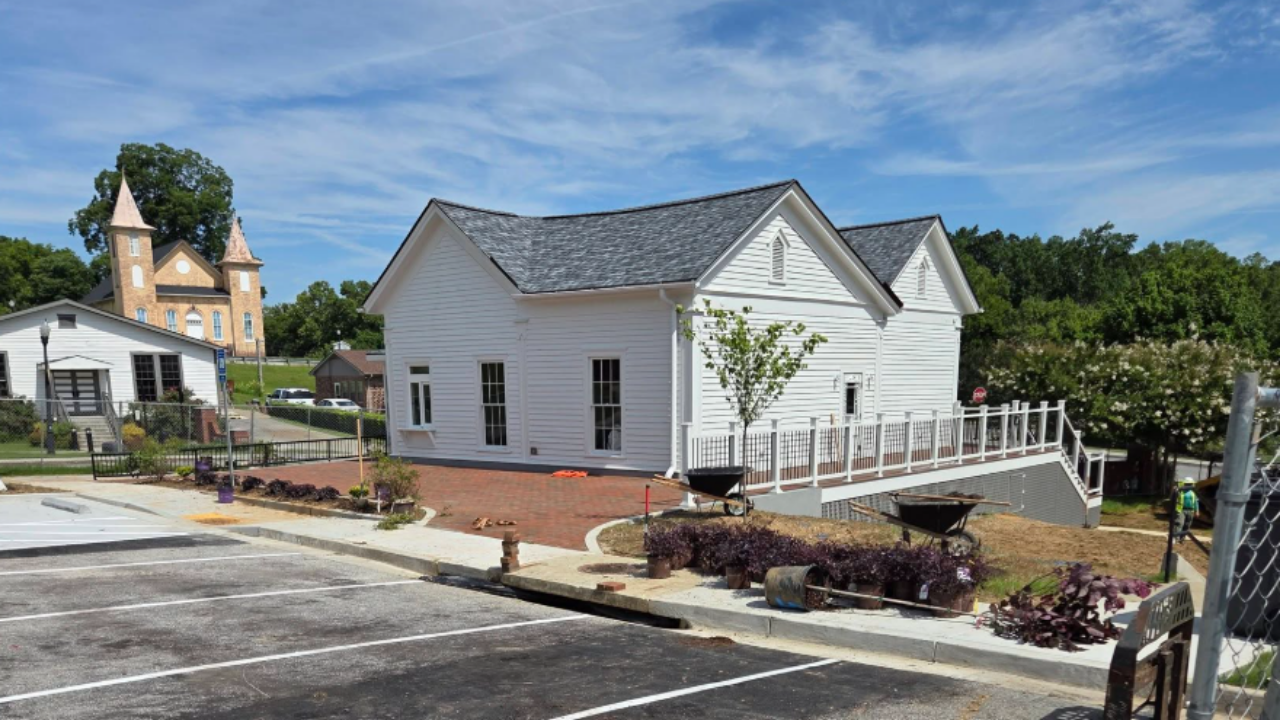
For nearly two centuries, a modest pre-Civil War house stood quietly in a Southern town, holding its breath against the encroaching tide of modern asphalt, parking lots, and strip malls. It was a witness to an era when a piece of timber had to be hand-hewn by a man with an adze and an afternoon to spare. Through summers that baked the pine siding and winters that froze the red clay to stone, the house stayed put. Until it didn't.
Progress has a way of arriving with the dull roar of heavy machinery and the sharp scent of diesel exhaust. In many American towns, when a historic structure stands in the path of municipal evolution, the script is grimly familiar. A chain-link fence goes up. An excavator arrives at dawn. By dusk, a century of local memory is reduced to a smoking heap of splintered lath and plaster, destined for the county landfill.
This house escaped that fate. But it required something extraordinary.
It required a half-million dollars, a flatbed trailer, and a stubborn refusal to let the past become a stranger.
Consider the logistics of moving a building that predates the telegraph. You do not simply hitch it to a Ford and pull. Every joint, every mortise and tenon, every square-headed iron nail is part of a fragile skeleton that has settled into a delicate, gravity-defying equilibrium over the course of generations. Lift it too fast, and the walls shear. Twist it by an inch, and the roofline buckles into a permanent, sorrowful slump.
Engineers and preservationists walked through the dusty rooms with flashlights, taping glass panes to keep them from shattering in transit, measuring clearances beneath power lines, calculating the exact weight-bearing tolerance of tired heart pine. They treated the structure less like real estate and more like an archaeological artifact recovered from a deep-sea trench.
When the house finally rolled down the Georgia asphalt, suspended over massive pneumatic tires like a ship navigating a narrow channel, people stopped in the middle of traffic. They stood on curbs with coffee cups in hand, watching a piece of their town's invisible heritage float past franchise signs and brick storefronts. It was a surreal procession. The past, making way for the present, being hauled across town to become the future.
The destination was not a museum behind velvet ropes where children are told not to touch. Museums are honorable crypts, but they are quiet places. They preserve the body while letting the spirit go cold.
Instead, the house was grafted onto a new foundation to begin a second life as a specialty coffee shop.
Think about what happens when you walk into a modern corporate cafe. The surfaces are slick, engineered quartz, polished chrome, ambient playlists curated by algorithms in California. You are meant to consume your oat milk latte quickly and vanish back into the digital slipstream. The room holds no memory. It has no texture of human error or survival.
Now step inside this restored pre-Civil War structure.
The scent of roasted Ethiopian beans mingles with the deep, unmistakable aroma of aged, sun-baked heart pine and lime plaster. The floorboards dip slightly near the original hearth—not because of poor construction, but because thousands of footsteps have worn a gentle trough into the wood over a hundred and sixty years. You sit at a table crafted from salvaged floor joists that were too tired to bear weight overhead.
When a barista hands you a ceramic mug here, you are participating in a quiet act of defiance against disposable culture. You are leaning your elbows against a sill where a terrified young mother might have watched soldiers march down a dirt road in 1864, wondering if tomorrow would bring news of a husband or a brother.
This transformation cost five hundred thousand dollars. In pure real estate terms, it is an inefficiency. A developer could have bulldozed the lot, poured a concrete slab, and erected a drive-thru box that would pay off its investment in half the time.
Yet value cannot always be measured on a balance sheet.
Communities die of amnesia. When every building looks like it was manufactured in the same parking lot in Ohio, towns lose their anchors. People stop caring about their neighbors because their surroundings tell them they live nowhere in particular. A place that looks like everywhere is a place that belongs to no one.
By sinking half a million dollars into saving a single, stubborn house, the town bought something priceless. They bought an identity. They bought a physical anchor in a shifting world.
The espresso machine hisses. Steam rises toward hand-lathed ceiling beams that were shaped before electric light. A college student types a thesis on a glowing laptop while sitting beneath a low-slung lintel hewn by an unknown carpenter who could never have imagined silicon chips or caffeinated bean juice from across the globe.
Outside, modern cars rush past on the highway. Inside, time folds in on itself. The past isn't dead; it's pouring the second cup of the morning.