Everyone in Berlin is obsessed with the wrong milestone.
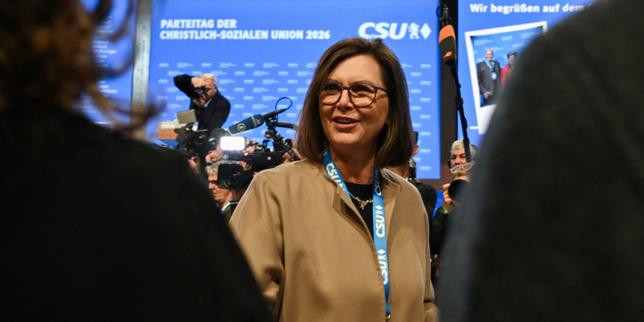
Look at the current political chatter surrounding the upcoming 2027 German presidential election. The media establishment is already writing the headlines: Ilse Aigner could become the first female Federal President of Germany. It is a clean, tidy narrative. A conservative Bavarian heavy-hitter, current President of the Bavarian Landtag, breaking the final glass ceiling at Bellevue Palace after Angela Merkel broke the Chancellery.
It makes for great television. It also completely misses the point of what Germany actually needs in 2027.
By reducing the Federal Presidency to a box-ticking exercise in historical representation, political commentators are ignoring the brutal structural reality of German coalition politics. The lazy consensus treats the Bundespräsident as a ceremonial ribbon-cutter whose primary qualification is demographic novelty. That thinking is not just shallow; it is dangerous in a fractured political era where the center is failing to hold.
The Myth of the Ceremonial Figurehead
If you listen to standard political commentary, you would think the German president spends five years hosting state dinners and signing bills without reading them. That is a fundamental misunderstanding of the Grundgesetz (Germany’s Basic Law).
Born out of the ashes of the Weimar Republic, the post-1949 presidency was intentionally stripped of the emergency decree powers that allowed Paul von Hindenburg to hand the keys of the state to Adolf Hitler. The founders wanted a counterweight, not a strongman. Yet, stripping away executive decree power did not make the office toothless. It turned the presidency into an instrument of moral authority and constitutional emergency braking.
Look at the actual mechanics of the office:
- The Constitutional Gatekeeper: Under Article 82 of the Basic Law, no federal law takes effect until the President signs it. While presidents rarely refuse, the threat of a veto forces lawmakers to respect constitutional boundaries. Horst Köhler and Frank-Walter Steinmeier both used this power to halt flawed legislation.
- The Coalition Broker: When coalition talks collapse—as they nearly did in 2017 after the federal election—it is the Federal President who steps into the vacuum. Frank-Walter Steinmeier practically dragged the Social Democrats back to the negotiating table to form a grand coalition when the country faced a paralyzing snap election.
- The National Conscience: Richard von Weizsäcker’s 1985 speech framing May 8, 1945, as a day of liberation rather than defeat single-handedly shifted West Germany’s historical consciousness. No chancellor could have delivered that line without triggering partisan warfare.
Reducing this role to a discussion about whether Ilse Aigner’s gender makes her the frontrunner insults both the office and Aigner herself. She is a veteran operator who survived the brutal knife-fights of the Christian Social Union (CSU), served as Federal Minister of Food, Agriculture and Consumer Protection, and navigated Bavaria’s economic ministry. Treating her candidacy primarily as a demographic milestone erases her actual political teeth.
Why the Bavaria Factor Is a Double-Edged Sword
Let’s look at the cold arithmetic of the Bundesversammlung (the Federal Convention), the bloated electoral college of Bundestag members and state delegates that actually picks the president.
The conventional wisdom says nominating Ilse Aigner is a masterstroke for Friedrich Merz and the Union parties (CDU/CSU). It appeases the Bavarian sister party, neutralizes potential friction with Bavarian Minister-President Markus Söder, and hands conservatives a historic "first" to neutralize left-leaning critics.
On paper, it looks effortless. In reality, it is a massive political gamble.
I have watched dozens of backroom coalition deals implode because party leaders mistook internal party pacification for broad national appeal. In Germany, the CSU is a regional powerhouse that regularly acts like an independent nation-state. While Aigner is widely respected across party lines for her pragmatic, non-confrontational style as parliamentary president in Munich—a stark contrast to Söder’s theatrical populism—she still carries the CSU brand.
To win in the Bundesversammlung, the Union cannot rely on its own votes alone. Depending on the parliamentary math, they will need buy-in from the SPD, the Greens, or the FDP. Asking progressive delegates from Hamburg or Berlin to vote for a conservative Bavarian—even one as moderate and institutional as Aigner—requires serious political capital.
Worse, if the nomination is seen purely as a consolation prize to keep Markus Söder quiet in Munich, the entire presidency begins under a cloud of partisan horse-trading. The German public loathes the smell of Postengeschacher (backroom job-swapping). Joachim Gauck succeeded in 2012 precisely because he was an independent outsider forced upon Angela Merkel, not a party loyalist rewarded for decades of service.
Answering the Questions Nobody Wants to Ask
When voters search for information about Germany’s next president, they are usually fed sanitized biographies. Let’s strip away the PR fluff and answer the real questions driving the debate.
Does the German President actually have any real power?
Yes, but it is entirely asymmetric. The President cannot set tax rates, deploy troops, or dictate foreign policy. However, under Article 63 and Article 68 of the Basic Law, if a Chancellor loses a vote of confidence or fails to secure a majority, the President holds the sole discretion to dissolve the Bundestag and call new elections. In an era where German party fragmentation is making three-party coalitions the messy norm—and where extremist parties on the fringes are blocking traditional majorities—that single power makes Bellevue Palace the ultimate safety valve of German democracy.
Is Ilse Aigner actually qualified for Bellevue Palace?
More than most names floating around Berlin, yes—but not for the reasons the headlines claim. Her qualification isn't that she is a woman. Her qualification is that she has presided over the Bavarian Landtag since 2018 with disciplined neutrality, managing sharp ideological clashes without losing control of the chamber. Running a parliament requires a completely different muscle than running a ministry. You have to stop being a partisan street fighter and start being the referee. Aigner has already proven she can make that transition.
Why hasn't Germany had a female president yet?
Because for decades, the presidency was treated as a retirement home for aging male party grandees, or a tactical dumping ground to remove political rivals from active duty. When Angela Merkel floated Ursula von der Leyen in 2010, it was widely viewed as an attempt to sideline a potential rival before Merkel pivoted to Christian Wulff. Women were routinely passed over not because of a lack of qualified candidates, but because the men running the parties needed the seat to solve their own internal power struggles.
The Trap of Symbolic Politics
There is a specific disease that infects modern European commentary: the belief that representation automatically equals reform.
When a country faces stagnant industrial growth, an aging demographic time bomb, bitter debates over migration, and an energy transition that has hammered its manufacturing base, putting a new face in Bellevue Palace solves exactly zero structural problems.
Imagine a scenario where the Union successfully installs Aigner in 2027. The press celebrates a historic breakthrough. Six months later, a fragile federal coalition fractures over budget deficits, and the far-right AfD surges in state elections. At that moment, nobody in Dresden or Düsseldorf will care about the gender of the person sitting in Bellevue Palace. They will care whether that person has the intellectual weight, independence, and steel spine to hold the constitutional order together and speak hard truths to a polarized electorate.
The downside to demanding a fierce, independent statesman—or stateswoman—over a safe party consensus candidate is obvious: unpredictability.
Chancellors hate strong presidents. Konrad Adenauer clashed bitterly with Theodor Heuss; Gerhard Schröder bristled under Roman Herzog; Angela Merkel famously struggled to contain Horst Köhler, who eventually resigned abruptly in 2010 after facing backlash over remarks linking German military deployments to economic trade interests. When you put someone with genuine conviction and independence in the presidency, they inevitably make life uncomfortable for the government in power.
That discomfort is a feature, not a bug.
What Berlin Should Actually Be Looking For
If Germany wants a president worthy of the late 2020s, party leaders need to stop looking at demographic checklists and start auditing candidates against three non-negotiable criteria:
- Zero Debt to Party Leadership: The next president cannot owe their seat to Friedrich Merz, Markus Söder, or any coalition broker. The moment a president feels indebted to the party boss who nominated them, their moral authority evaporates.
- Economic and Global Literacy: Germany’s export-driven economic model is under existential pressure from Chinese industrial competition and shifting American trade policies. The next head of state cannot just be a domestic constitutional lawyer or a regional parliamentarian; they must be a heavyweight ambassador capable of opening doors in Washington, Brussels, and Tokyo.
- The Courage to Alienate the Base: A great German president must be willing to anger their own political tribe. Roman Herzog did it in 1997 with his famous Ruck-Rede ("Jolt Speech"), telling a complacent nation that it had lost its economic dynamism and needed painful structural reform. If Ilse Aigner—or any other candidate—takes the job, their defining moment will come the first time they publicly rebuke the Union or the Bavarian establishment for short-sighted populism.
Stop Confusing History With Strategy
Ilse Aigner might very well walk into Bellevue Palace in 2027. If she does, it will be a milestone worth noting for about forty-eight hours.
After that, the confetti gets swept up, the cameras leave, and the real work begins. History does not grade presidents on the demographics of their inauguration day. It grades them on whether they had the nerve to stand up when the political center began to rot.
If Berlin picks a candidate just to break a glass ceiling, Germany will get a symbol. If it demands a leader willing to break partisan orthodoxy, it might actually get a president.