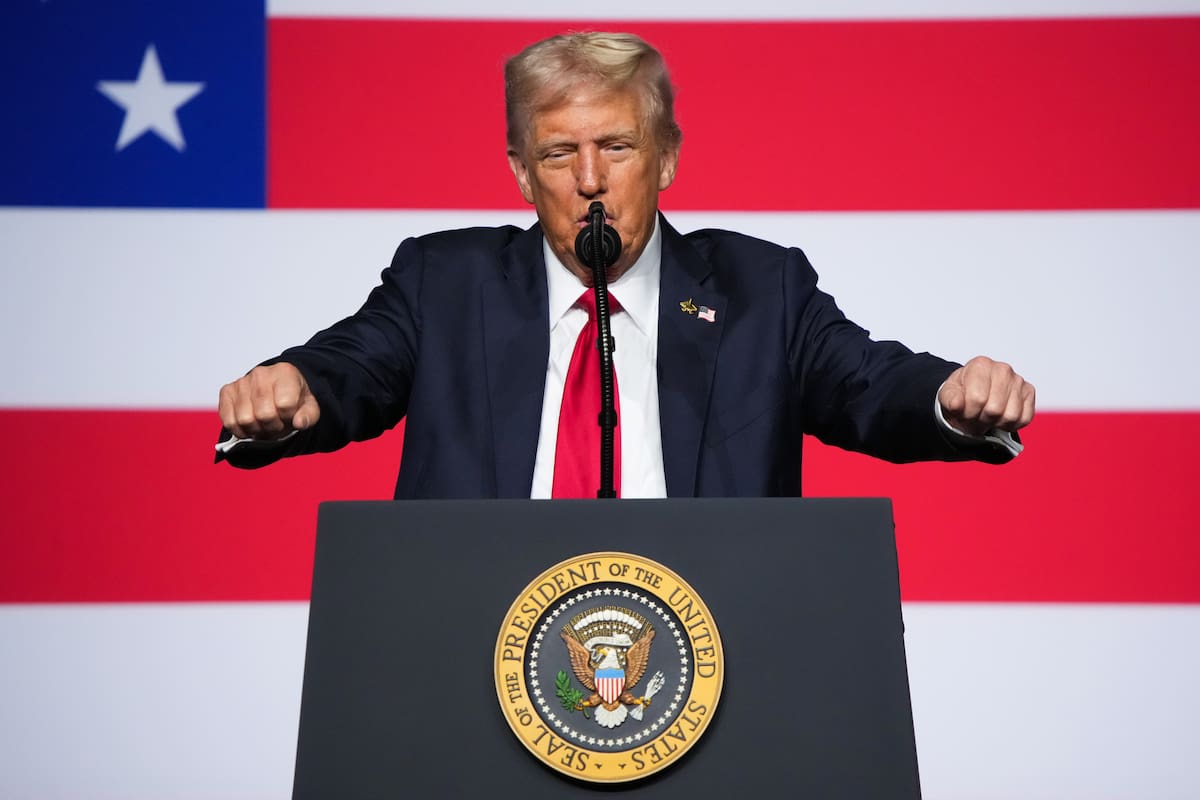
State visits between radical market reformers and the head of the Catholic Church represent a high-stakes negotiation over institutional legitimacy rather than mere ceremonial protocol. When President Javier Milei welcomes Pope Leo to Argentina, the encounter functions as a strategic stress test for two competing frameworks of social organization: anarcho-capitalist individualism and Catholic social teaching. Understanding this diplomatic event requires stripping away surface-level media narratives about personal chemistry and examining the underlying political incentives, domestic economic pressures, and Vatican foreign policy objectives driving both actors.
The primary limitation of standard coverage regarding papal visits is the tendency to treat them as static photo opportunities. In reality, a papal reception in Buenos Aires operates as an asymmetric exchange of political capital. The Argentine executive branch seeks moral insulation against the social friction caused by fiscal austerity, while the Holy See aims to preserve its institutional influence and protect vulnerable populations within a historically Catholic nation undergoing rapid structural adjustment.
The Three Pillars of Diplomatic Utility
To evaluate why this visit occurs now, one must categorize the strategic objectives into three distinct operational pillars. Each pillar represents a specific transaction between the Casa Rosada and the Vatican.
1. Domestic Political Stabilization
For the Milei administration, hosting the pontiff serves as a direct mechanism to lower domestic political resistance. Radical economic stabilization programs—characterized by severe spending cuts, currency devaluation, and the dismantling of state subsidies—inevitably generate acute short-term poverty spikes. In Argentina, where the Catholic Church maintains an extensive network of parishes, soup kitchens, and social organizations in low-income districts, ecclesiastical opposition can rapidly translate into organized street mobilization. By securing a formal state visit, the executive branch signals institutional détente, effectively neutralizing the Church as a potential rallying point for the political opposition.
2. International Credibility Signaling
Foreign direct investment and multilateral lending depend heavily on perceived governance stability. Global capital markets often view populist or radical libertarian administrations with caution, fearing that social unrest will force a policy reversal. A successful, friction-free reception of Pope Leo projects normalcy and institutional maturity to Washington, Brussels, and the International Monetary Fund. It demonstrates that the administration can manage complex, high-profile diplomatic engagements without ideological rigidity derailing statecraft.
3. The Vatican's Institutional Preservation
From the perspective of the Holy See, papal travel is never an endorsement of a host government's economic model. Instead, it is a pastoral and institutional deployment designed to reinforce the Church's relevance on the ground. Argentina represents a critical demographic and cultural anchor for Catholicism in Latin America, a region experiencing steady secularization and the growth of evangelical Protestantism. Pope Leo's presence allows the Vatican to speak directly to the Argentine public, reaffirming the doctrine of subsidiarity and the preferential option for the poor while bypassing partisan intermediaries.
Historical Friction and Ideological Divergence
The diplomatic complexity of this meeting stems from the stark philosophical gap between the two leaders' worldviews. During his rise to political prominence, Javier Milei frequently attacked the concept of social justice—a foundational tenet of modern Catholic social doctrine—labeling it an aberration that violates natural property rights and relies on state coercion. Conversely, the papacy consistently critiques unbridled market fundamentalism, arguing that economic systems must remain subordinate to human dignity and the common good.
When Pope Leo succeeded Pope Francis, observers closely watched how the Vatican would recalibrate its posture toward Latin America. While Pope Francis carried the immediate weight of Argentine domestic politics—having served as Archbishop of Buenos Aires—Pope Leo approaches the country with greater institutional distance. This shift alters the diplomatic calculus in two ways:
- Depersonalization of Conflict: Friction is no longer framed as a personal feud between two prominent Argentines, reducing the emotional volatility of the encounter.
- Doctrinal Clarity: Without the baggage of local Peronist or anti-Peronist alignments, the Vatican can articulate its critique of extreme austerity purely on universal moral grounds, making it harder for domestic pundits to dismiss papal statements as partisan interference.
Despite this shift, the structural tension remains unresolved. The Argentine government views the state as an inherently inefficient entity that must be minimized to unleash private sector growth. The Vatican views the state as an indispensable instrument for social solidarity when market mechanisms fail to provide basic subsistence.
The Mechanics of Ceremonial Diplomacy
In statecraft, protocol is substance. Every element of the papal itinerary in Argentina is engineered to balance competing narratives. If the schedule leans too heavily toward state banquets and presidential palaces, the Vatican risks appearing complicit in austerity policies that have strained working-class households. If the itinerary focuses exclusively on impoverished neighborhoods and social movements, the Argentine government risks international embarrassment and domestic delegitimization.
To manage this equilibrium, diplomatic planners rely on specific structural buffers:
- Bilateral Private Audiences: Closed-door meetings between the president and the pontiff allow for candid exchanges regarding inflation, poverty metrics, and social safety nets without forcing either leader into public confrontation.
- Ecclesiastical Intermediaries: The Argentine Episcopal Conference acts as the operational translator between Vatican directives and local realities. Prior to the visit, bishops coordinate messaging to ensure that papal homilies address structural poverty without naming specific administration officials.
- Symbolic Geography: Selecting venues that represent national unity—such as historic cathedrals or neutral civic monuments—anchors the visit in shared cultural heritage rather than contemporary partisan divides.
This choreography ensures that both parties extract value from the optics while retaining plausible deniability regarding their ideological disagreements.
Economic Realities Versus Moral Imperatives
The core friction point during the visit centers on the distributional consequences of Argentina's macroeconomic stabilization. The Milei administration operates under a strict fiscal constraint: eliminating the primary deficit to halt hyperinflation. From an orthodox economic perspective, inflation acts as a regressive tax that disproportionately destroys the purchasing power of the poor. Therefore, the administration argues that aggressive fiscal contraction is the only morally defensible path to long-term poverty reduction.
The Vatican's analytical framework operates on a different time horizon. Catholic social teaching evaluates economic policy primarily by its immediate impact on the most vulnerable segments of society. When subsidy removals cause immediate spikes in transportation, energy, and food costs, the Church demands robust, targeted social assistance to bridge the transition period.
This creates a fundamental policy bottleneck:
- The Fiscal Constraint: Increasing social transfers threatens the zero-deficit target, risking renewed monetary emission and currency instability.
- The Social Constraint: Maintaining severe cuts without adequate buffers accelerates social degradation, increasing the likelihood of civil unrest and institutional collapse.
During bilateral discussions, the Vatican inevitably presses for the protection of funding mechanisms routed through non-governmental and faith-based organizations, which historically manage food distribution in Argentina's urban peripheries. The administration, wary of corruption and political clientelism associated with traditional intermediary groups, prefers direct, digital transfers to individuals. Negotiating the operational control of these welfare channels represents the most tangible policy dispute beneath the ceremonial surface.
Limitations of Papal Soft Power
Analyzing this historic visit requires acknowledging the strict limits of Vatican influence. Soft power cannot alter macroeconomic fundamentals. Pope Leo cannot lower Argentina's country risk premium, restructure sovereign debt obligations, or generate foreign exchange reserves. Moral suasion may encourage the government to maintain minimum food assistance thresholds, yet it cannot resolve the underlying structural deficits that have plagued the Argentine economy for decades.
Furthermore, the domestic impact of a papal visit is subject to rapid diminishing returns. While public approval ratings and social cohesion often experience a temporary bounce during high-profile international events, economic reality quickly reasserts itself. Once the papal aircraft departs, Argentine households must still contend with real wage compression, and the administration must still navigate a fragmented Congress to pass structural labor and tax reforms.
Overestimating the transformative power of the visit is a common analytical error. The encounter does not represent a permanent ideological convergence between libertarianism and Catholicism; rather, it is a tactical truce dictated by mutual necessity.
The Post-Visit Strategic Trajectory
Following the conclusion of Pope Leo's itinerary, both the Casa Rosada and the Vatican will pivot to operationalizing the goodwill generated during the visit. The Argentine executive branch will utilize the optics of papal validation to project domestic stability as it negotiates subsequent tranches of multilateral financing and seeks to attract long-term capital into the energy and mining sectors. Simultaneously, the administration will likely maintain direct digital welfare subsidies while selectively preserving logistical partnerships with Catholic charities to prevent acute humanitarian bottlenecks in Greater Buenos Aires.
The Vatican will leverage the heightened visibility from the trip to reassert its institutional autonomy within Argentina, instructing local bishops to maintain a posture of constructive vigilance—supporting anti-corruption measures and monetary stability while aggressively auditing poverty indicators. Watch the upcoming budgetary allocations for the Ministry of Human Capital over the next two quarters; any quiet expansion of food security funding distributed through ecclesiastical networks will confirm that the diplomatic truce yielded concrete material concessions behind closed doors.


