The Strait of Hormuz serves as the world’s most sensitive economic valve, a maritime corridor where the friction between sovereign energy security and international sanctions regimes creates a permanent state of high-stakes brinkmanship. Iran’s reported offer to trade its "chokehold" over the Strait for a removal of U.S.-led economic blockades represents a shift from tactical harassment to strategic negotiation. This is not a gesture of de-escalation, but a cold calculation of the diminishing returns of maritime threats versus the compounding costs of domestic economic isolation.
The situation is governed by three distinct layers of pressure: the physical architecture of the Strait, the economic mechanics of oil-price elasticity, and the legal ambiguity of "innocent passage" under international maritime law.
The Physical Architecture of the Hormuz Chokehold
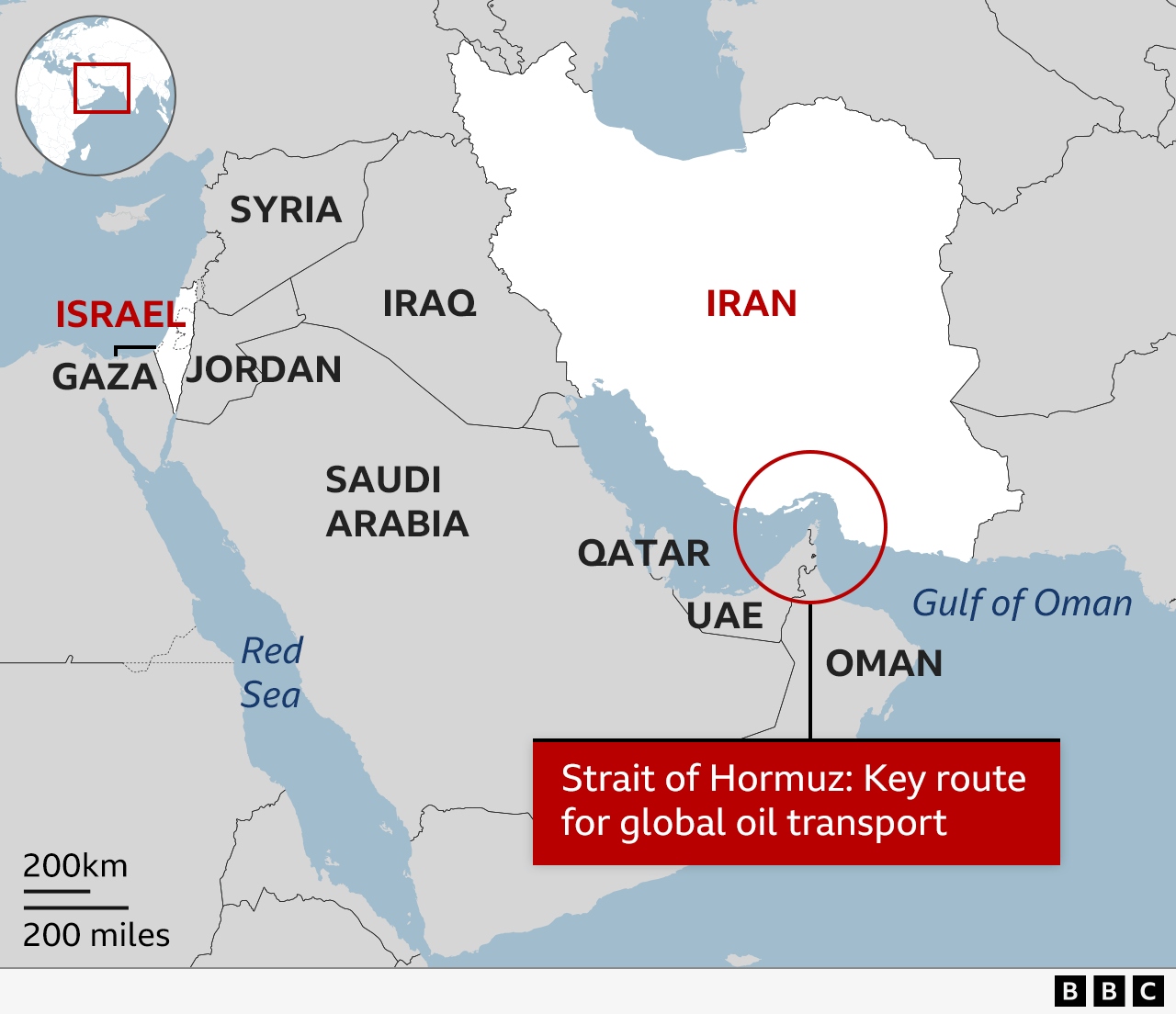
To understand the leverage Iran claims to possess, one must first deconstruct the geography of the Strait. It is approximately 21 miles wide at its narrowest point, but the shipping lanes—separated by a two-mile buffer zone—consist of only two-mile-wide channels for inbound and outbound traffic.
Iran’s tactical advantage is derived from the proximity of its coastline and several IRGC-fortified islands (Greater and Lesser Tunbs, and Abu Musa) to these lanes. The "chokehold" is executed through a layered defense-in-depth strategy:
- Asymmetric Naval Assets: High-speed, small-attack craft capable of swarming larger tankers or naval escorts.
- Anti-Ship Cruise Missiles (ASCMs): Land-based batteries that provide a persistent threat without requiring a naval presence.
- Smart Sea Mines: The most cost-effective method of closure, requiring specialized minesweeping capabilities that most commercial fleets and many regional navies lack.
A total closure of the Strait is technically difficult to maintain against a concentrated U.S. or multi-national naval response, but a "partial" or "threat-based" closure is sufficient to drive global insurance premiums to unsustainable levels. This creates a virtual blockade where ships are physically able to pass but are economically prohibited from doing so.
The Economic Mechanics of the Blockade Trade-Off
The U.S. "blockade" is not a physical naval ring around Iranian ports, but a financial and logistical embargo. This creates a specific cost function for the Iranian state. The proposal to trade the Hormuz threat for the removal of sanctions is an attempt to solve for the Liquidity-Security Paradox: as Iran increases its military posture to gain leverage, it triggers more stringent financial isolation, which in turn reduces the capital available to maintain that military posture.
The Capital Leakage Model
Iranian oil exports are currently sustained through a "grey market" infrastructure involving ship-to-ship transfers, AIS (Automatic Identification System) spoofing, and the use of non-Western financial intermediaries. This system imposes a "sanctions tax" estimated at 10% to 30% of total revenue.
- Discounted Pricing: Iran must sell its crude at a significant markdown relative to Brent or WTI to incentivize buyers to risk secondary sanctions.
- Transaction Costs: Utilizing non-SWIFT payment systems increases the friction and cost of repatriating currency.
- Logistical Inefficiency: The use of older "dark fleet" tankers increases operational risks and maintenance costs.
By offering to "end the chokehold," Iran is attempting to regain the 100% efficiency of its sovereign wealth generation. For the U.S., the trade-off involves weighing the immediate stabilization of global energy markets against the long-term risk of a well-funded regional adversary.
The Legal and Diplomatic Friction Points
The proposal exists in a grey zone of the United Nations Convention on the Law of the Sea (UNCLOS). While Iran has signed but not ratified UNCLOS, it claims rights under customary international law. The United States, also a non-party but an observer of the convention’s navigational provisions, insists on "transit passage."
The "chokehold" threat rests on Iran’s interpretation that it can regulate or prohibit the passage of foreign warships and tankers if they are deemed a threat to "peace, good order, or security." The U.S. position is that the Strait is an international waterway where transit passage cannot be suspended.
The Escalation Ladder of Maritime Interdiction
If Iran were to formally renounce its right to harass shipping, it would effectively be surrendering its primary tool of asymmetric deterrence. The escalation ladder consists of:
- Level 1: Harassment: Using drones or small boats to shadow tankers, forcing course corrections.
- Level 2: Boarding and Detention: Citing "regulatory violations" or "environmental concerns" to seize vessels, as seen in the cases of the Stena Impero or the Advantage Sweet.
- Level 3: Kinetic Strike: Using mines or missiles to disable vessels.
- Level 4: Full Blockade: Attempting to physically obstruct the 21-mile gap.
Each step up the ladder increases the probability of a conventional military conflict that Iran cannot win. Therefore, the "offer" to end the chokehold is a recognition that Level 1 and Level 2 actions have reached a point of diminishing returns. They have successfully signaled intent, but they cannot be sustained indefinitely without triggering a Level 3 response from the West.
The Energy Security Variable
Global markets currently price in a "Hormuz Premium." Approximately 20% of the world’s total petroleum consumption passes through this corridor. If the threat were truly neutralized, the immediate impact would be a reduction in Brent Crude prices by $5 to $10 per barrel, representing a massive deflationary gift to the global economy.
However, the "chokehold" is not a binary switch. Even if a diplomatic agreement is reached, the underlying military infrastructure remains. This creates a Verification Bottleneck. Unlike nuclear centrifuges, which can be monitored by the IAEA, the intent to use a land-based missile battery cannot be monitored. Any agreement would be built on a foundation of "distrust and verify," where the U.S. would likely demand the withdrawal of specific IRGC assets from the islands in exchange for phased sanctions relief.
The Strategic Recommendation for Market Participants
The offer from Iran should be viewed as a signal of internal fiscal stress rather than a shift in ideological goals. For energy analysts and strategic planners, the following logic applies:
- Hedge against the "Fake Pivot": Iran may utilize the negotiation period to replenish its cash reserves via eased enforcement of current sanctions while maintaining its tactical readiness in the Strait.
- Monitor the Dark Fleet: Any real de-escalation will be preceded by a shift in Iranian shipping patterns. A move toward more transparent, insured, and AIS-active shipping will be the first verifiable sign that a deal is being operationalized.
- Infrastructure Overhaul: The removal of the "blockade" would allow Iran to invest in its aging oil fields. The sudden influx of more efficient production could lead to an oversupply in the 18-to-24-month horizon, putting downward pressure on long-term futures.
The final strategic play for Western powers is to decouple the Hormuz issue from the broader nuclear program. Attempting to solve both simultaneously creates a "Grand Bargain" that is too complex to survive domestic political cycles in Washington or Tehran. Instead, a targeted "Maritime Stability for Financial Access" agreement offers a modular path forward. This prevents the Strait from being used as a hostage in every subsequent diplomatic dispute, isolating the world’s energy supply from the region’s localized ideological conflicts. Focus on the physical security of the lanes first; the broader geopolitical alignment remains a secondary, long-term objective.