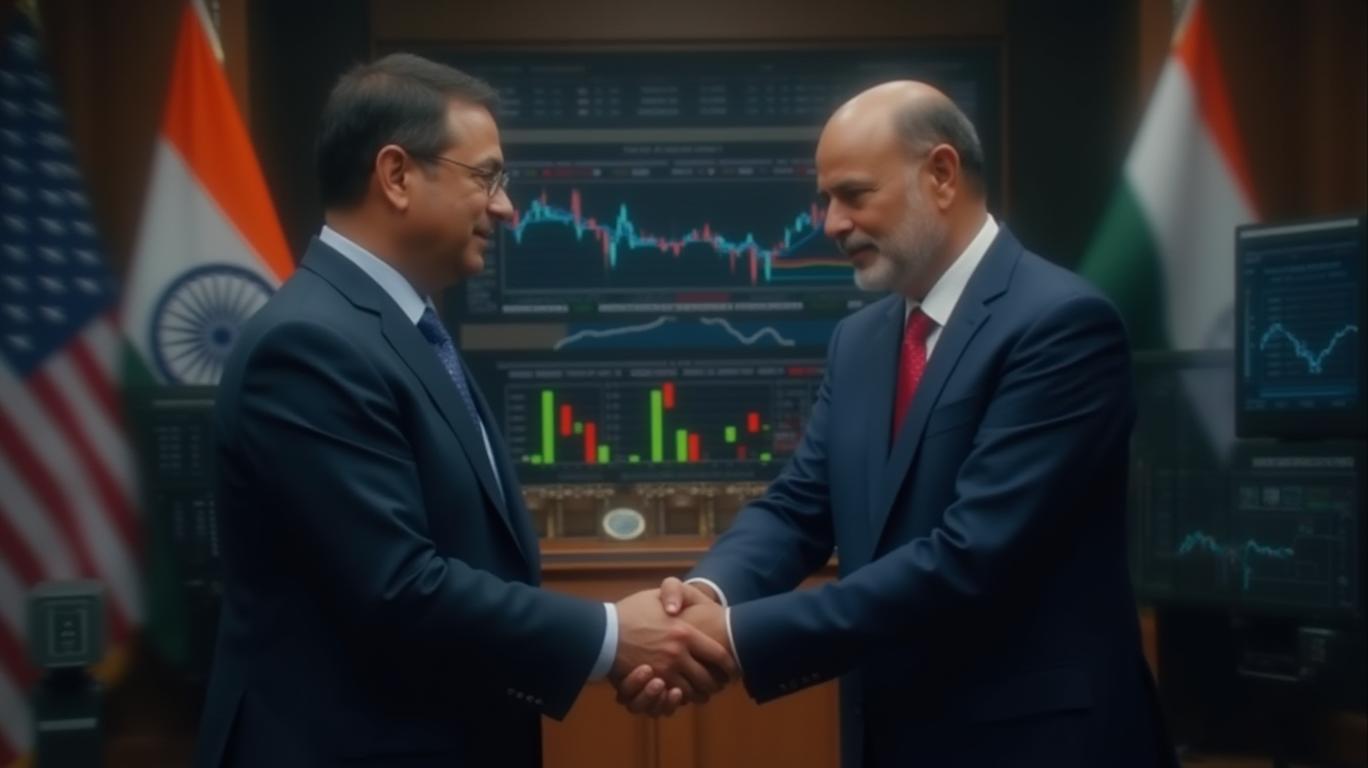
Diplomacy is often just high-stakes theater where the script is written in platitudes and the audience is expected to applaud the set design. When External Affairs Minister S. Jaishankar describes the India-Jamaica relationship as a "story of continuity and change," he isn't lying, but he is performing. The mainstream media laps up these narratives about cultural camaraderie and cricket diplomacy because they are easy to digest. They feel good. They evoke images of Shared Commonwealth heritage and the "Global South" rising together.
It is time to stop falling for the sentimentality.
The reality of India-Jamaica ties isn't a heart-warming tale of two long-lost cousins. It is a cold, calculated exercise in soft power that frequently ignores the actual economic friction and the logistical nightmares that prevent these "ties" from becoming anything more than a series of polite handshakes and symbolic cricket bats. If we want to talk about "change," let’s talk about how the traditional pillars of this relationship are crumbling under the weight of 21st-century irrelevance.
Cricket is Not a Diplomatic Strategy
The most exhausted trope in Indo-Caribbean relations is the "cricket bridge." Every time a high-ranking official visits Kingston, they mention the West Indies greats and the IPL. This is lazy. Relying on a sport to anchor a bilateral relationship is the geopolitical equivalent of trying to build a skyscraper on a foundation of cotton candy.
Cricket is a shared interest, not a strategic alignment. While Indian fans might cheer for Andre Russell in a Kolkata Knight Riders jersey, that doesn't translate to trade concessions, maritime security cooperation, or voting blocs in the UN. In fact, the professionalization of cricket via the IPL has actually decoupled the sport from national identity. Players are now global mercenaries. To suggest that a shared love for the game "fosters" (to use a word the bureaucrats love) diplomatic depth is to ignore that India’s real interests in the Caribbean are about outmaneuvering China, not discussing the merits of a leg-spinner.
The Healthcare Myth: Why Vaccines Aren't Enough
The competitor narrative leans heavily on India’s "Vaccine Maitri" and the provision of medical supplies. Yes, India sent 50,000 doses of AstraZeneca to Jamaica during the pandemic. It was a fine gesture. But calling it a "pivot" in the relationship is an overstatement.
Jamaica’s healthcare infrastructure is not looking for handouts; it needs systemic integration. India boasts about being the "pharmacy of the world," yet the regulatory hurdles for Indian generics to enter the Jamaican market remain stifling. We see a massive gap between "sending help" and "building markets." If India were serious about healthcare ties, we would see Indian hospital chains—the likes of Apollo or Fortis—setting up permanent hubs in Montego Bay or Kingston to tap into the medical tourism market from North America. Instead, we get symbolic shipments of medicine that provide a 24-hour news cycle of goodwill and zero years of structural economic impact.
The Diaspora Disconnect
We hear a lot about the 70,000-strong Indian diaspora in Jamaica. The narrative suggests they are a "living bridge." As someone who has watched how diaspora politics play out across the Commonwealth, I can tell you: the bridge is often one-way.
The Indo-Jamaican community is deeply integrated into the Jamaican national identity. They are Jamaicans first. To view them as a tool for New Delhi’s foreign policy is not only patronizing, it’s ineffective. The diaspora in Jamaica doesn't have the lobbying muscle of the Indian-American community in D.C. or the financial heft of the Gulf expats. Using them as a central pillar of "continuity" is a sign that the diplomats have run out of actual economic incentives to talk about.
The Elephant in the Room: China’s Belt and Road
While Indian ministers talk about "cultural ties," China is busy building the North-South Highway in Jamaica. While we talk about "shared values," Beijing is investing in the Jamaican port infrastructure.
India cannot compete with China’s checkbook diplomacy, and it shouldn't try. However, the "contrarian" path isn't to ignore this, but to offer something China cannot: institutional transparency and digital infrastructure. India’s UPI (Unified Payments Interface) and its digital public goods are the only real "game-changers" (if one must use the term) that could actually disrupt the Caribbean economy.
Imagine a scenario where Jamaica adopts an India-backed digital payment stack. That would do more for bilateral ties than a century of cricket matches. It would create a technical dependency that is far more durable than cultural affinity. Yet, the conversation remains stuck on IT training and small-scale grants. This is small-ball diplomacy when the stadium is being bought out by a competitor.
Dismantling the "Global South" Fallacy
The term "Global South" has become a shield for mediocrity in bilateral relations. By grouping India and Jamaica under this banner, diplomats pretend that their interests are naturally aligned. They aren't.
India is an aspiring superpower with a seat at the G20 and a desperate need for energy security and high-tech mineral access. Jamaica is a Small Island Developing State (SIDS) focused on climate resilience and debt restructuring. These are not the same goals.
True "nuance" requires admitting that India often uses Jamaica as a mouthpiece in international forums to bolster its own image as a leader of the developing world, while Jamaica looks to India for a counter-balance to Western and Chinese influence. It’s a marriage of convenience, not a "soulmate" connection.
The Trade Reality Check
Let’s look at the numbers, because the numbers don't care about "camaraderie." Bilateral trade between India and Jamaica is minuscule—hovering around $100 million. For a country with India's GDP, that is a rounding error.
- Logistics: The cost of shipping from Mumbai to Kingston is prohibitive compared to shipping from Miami or even Shanghai.
- Tariffs: Both nations remain protectionist in ways that stifle actual commercial growth.
- Products: Beyond textiles and some pharma, there isn't a natural "fit" for bulk trade.
If you want to disrupt this, you don't talk about "increasing trade." You talk about digital services. India should be looking at Jamaica as a near-shore hub for the US market—utilizing the English-speaking workforce to manage Indian-owned service centers. This shifts the focus from moving physical goods across oceans to moving data across fiber optics.
Education and the Brain Drain Trap
The "continuity" narrative praises the ITEC (Indian Technical and Economic Cooperation) program. I’ve seen these programs up close. They provide great experiences for a few dozen individuals, but they do nothing to address the systemic "brain drain" that both India and Jamaica face.
Instead of offering a few scholarships to study in Delhi, India should be co-founding technical universities in Kingston. Use the IIT (Indian Institute of Technology) model to create a regional hub for the Caribbean. That isn't "continuity." That is a disruption of the educational status quo that currently forces talented West Indians to look exclusively toward London or New York.
Stop Asking the Wrong Questions
People often ask: "How can India and Jamaica strengthen their historical bonds?"
That is the wrong question. The historical bonds are fine. They are stable. They are also static.
The right question is: "How can India make itself indispensable to Jamaica’s economic survival in an era of climate collapse and digital hegemony?"
The answer isn't "culture." It isn't "camaraderie." It’s utility.
India needs to stop treating the Caribbean as a nostalgic outpost of the Raj or a voting bloc for the UN Security Council. Jamaica needs to stop viewing India as just another donor or a distant sporting rival.
The Brutal Truth
The "story of continuity" is a euphemism for "we are doing the same things we did in 1970 and expecting different results."
Real change requires admitting that the Commonwealth identity is a ghost. It requires acknowledging that cricket is a hobby, not a policy. It requires realizing that if India doesn't offer a hard-tech alternative to Chinese infrastructure, it will remain a sentimental footnote in Jamaican history.
The diplomats will continue their speeches. They will swap jerseys and sign MoUs that lead to more meetings about future meetings. But until the focus shifts from "cultural camaraderie" to "hard-coded technical integration," the relationship will remain exactly what it is now: a pleasant, low-stakes distraction from the real geopolitical struggles of the century.
Stop romanticizing the history. Start capitalizing on the friction.