The coffee in the cup on the kitchen table had stopped rippling. That was usually the first sign. Not the sound—not yet—but a sudden, heavy stillness in the air, as if the atmosphere itself had caught its breath.
In modern military briefings thousands of miles away, the word is spoken with a clean, antiseptic reverence. Precision. It sounds surgical. It sounds like an artist carving marble with a fine-tipped chisel, removing only what is unwanted, leaving the rest untouched. The screens glow with high-contrast thermal imagery. Crosshairs settle on coordinates. A digital timer counts down to zero. The engineers who built the guidance systems sleep well at night, comforted by the mathematics of probability and circular error probable metrics. They are told that the margin of error has been reduced to inches.
They do not smell the dust of a collapsing ceiling.
Consider a hypothetical afternoon in a residential neighborhood of Isfahan or Karaj. Let us call him Reza, though his name could be anything. Reza is fifty-four, a retired mechanic with hands permanently stained by motor oil, sitting in a room where the afternoon sun cuts through the slats of a wooden window shutter. He is listening to the radio, perhaps the low murmur of traditional santur music, waiting for his granddaughter to return from school. He trusts the walls of his house. They are thick brick, built by his father to withstand the desert heat.
Then comes the geometry of silence.
A weapon guided by inertial navigation, assisted by satellite constellations, cuts through the stratosphere at supersonic speeds. It is an engineering marvel. It carries a warhead designed to minimize collateral damage through delayed fuses or focused fragmentation. But the algorithms do not know about the stray pigeon that alters a thermal draft by a fraction of a degree. They do not calculate the emotional weight of a child running late because her teacher kept the class after the bell.
When the strike arrives, it happens faster than the nervous system can process pain. There is no time for fear, only the abrupt transition from existence to absence.
Reports filtering out from recent military engagements involving newly deployed United States precision munitions in Iran reveal a grim dissonance. The hardware performs exactly as specified on the datasheet. The guidance package hits the designated latitude and longitude with terrifying accuracy. Yet, the human cost tells a different story. Civilian casualties mount not because the missiles missed their targets, but because the targets themselves exist inside densely populated human ecosystems.
This is the central illusion of modern warfare: the belief that technology can divorce violence from humanity.
We have been conditioned to view war through a video game lens. We watch grainy monochrome footage where a white crosshair centers on a rooftop, followed by a puff of gray smoke and the sudden erasure of a pixelated structure. We applaud the technology. We marvel at the capability. We talk about strategic deterrence and proportional response.
Language softens the blow. We say "neutralization." We say "kinetic event." We say "de-deconfliction." These words are shields designed to protect the conscience of the observer. They create a safe distance between the person pushing a button in an air-conditioned command center and the kitchen table covered in spilled tea.
To understand the reality on the ground, one must strip away the military nomenclature. A precision missile is still an explosion containing thousands of pounds of high-grade chemical explosives and heavy metal shrapnel. When it detonates inside a residential zone, the laws of physics do not care about political justifications. Blast waves travel through concrete, shatter windows miles away, and collapse roofs onto sleeping families. The shockwave ruptures internal organs without leaving a single mark on the skin.
I remember speaking to humanitarian workers who have walked through the aftermath of such strikes. They describe a specific kind of quiet that follows the smoke clearing. It is not peaceful. It is the quiet of shock. Neighbors clawing at concrete with bare hands, finding a school notebook, a child's sneaker, a photograph of a wedding half-buried in soot. These are not statistics. They are interruptions of ordinary lives that were never meant to be part of any geopolitical calculus.
The reports emerging from Iran are filled with these quiet tragedies. A father working late shifts to pay for his daughter's university fees. A grandmother tending to jasmine plants on a balcony that suddenly ceases to exist. According to human rights monitors and local documentation, the deployment of these advanced weapons systems has consistently failed to prevent civilian death tolls from rising, despite the marketing claims of zero-defect lethality.
Why does this happen?
Part of the answer lies in intelligence failures, but a larger part lies in the fundamental nature of urban geography. Modern cities are not military compounds. They are messy, overlapping tapestries of civilian and infrastructure life. Power grids, communications hubs, and logistical routes weave directly beneath apartment complexes, markets, and schools. When a military strategist targets a communications node to blind an adversary's command structure, they are often striking a building located fifty feet away from a nursery school or a crowded residential courtyard.
The software calculates the blast radius. The analysts determine that the acceptable threshold of collateral damage has not been breached according to internal doctrine. But doctrine is an abstraction. It does not bleed.
We must confront the uncomfortable truth behind our fascination with military technology. Every iteration of precision guidance makes war easier to wage. Because leaders can point to smaller warheads and smarter tracking systems, the political threshold for intervention lowers. It feels cleaner. It feels safer. There are no mass troop mobilizations to televise, no endless rows of body bags coming home in the night. There is just a quiet flash on a screen in the desert, reported as a successful operation on the evening news.
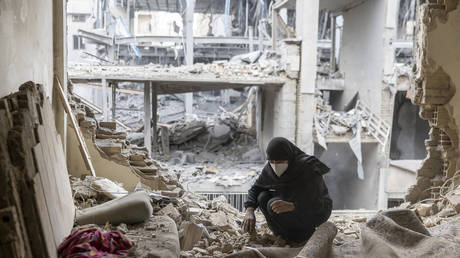
Meanwhile, thousands of miles away, the dust settles on a ruined living room.
The wind picks up outside. The coffee in Reza's cup remains still, forever. We live in an era that worships the god of efficiency, applying it even to the destruction of human lives, forgetting that when destruction is made precise, it only becomes more efficient at breaking hearts.

