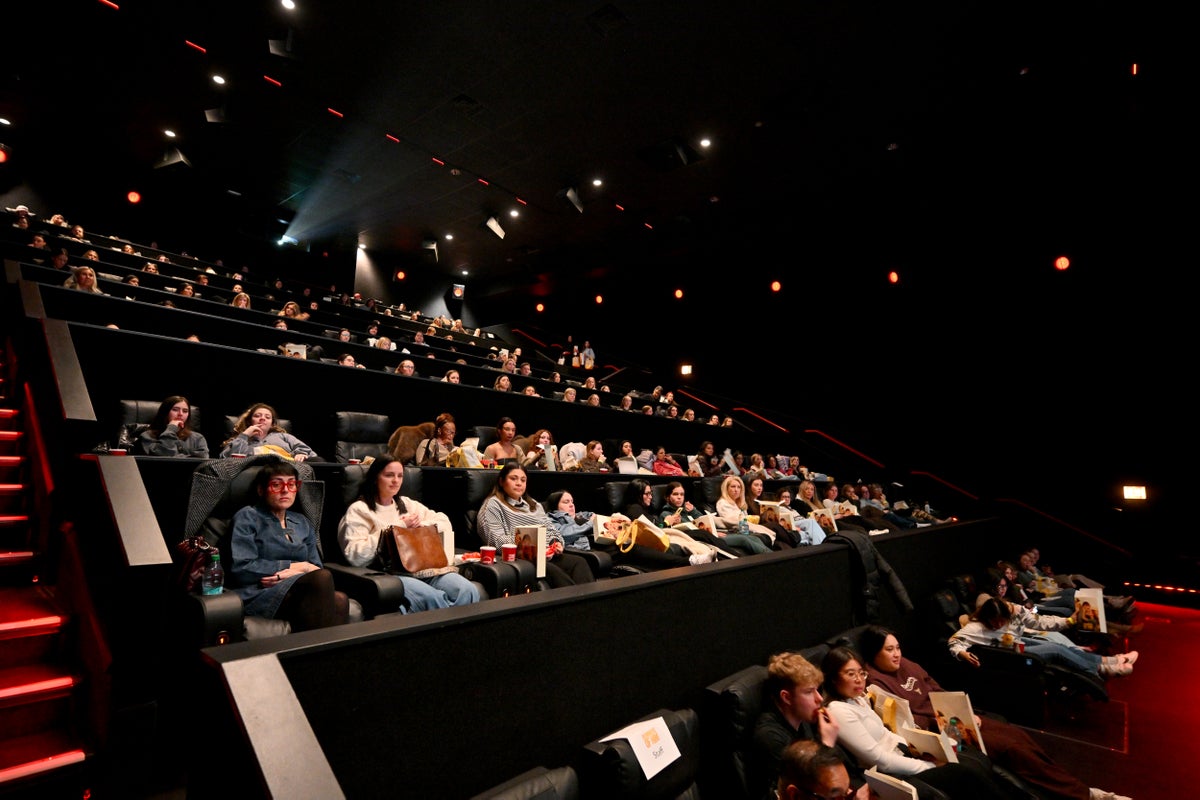
The entertainment press loves a good resurrection story. The latest narrative making the rounds argues that Gen Z is suddenly falling back in love with traditional movie theaters, transforming a dying legacy format into a trendy communal living room. Analysts are tripping over themselves to praise this "newest fad" as a brilliant cultural shift, pointing to young crowds buying tickets to watch episodic television or streaming events on a massive screen as proof that traditional exhibition is saved.
They are completely misreading the room.
What the industry is celebrating as a grand revival is actually a desperate, temporary coping mechanism. Gen Z isn't flocking to theaters because they suddenly value the magic of the big screen or the pristine acoustics of a commercial auditorium. They are running away from their phones. They are paying a premium for a physical sensory prison that forces them to disconnect from an algorithmic feedback loop that has exhausted them.
The industry is cheering for a symptom while completely ignoring the underlying disease.
The Myth of the Communal Viewing Experience
Mainstream media insists that young people crave the shared emotion of a live audience. They point to packed screenings of television finales or influencer-led streaming events in local multiplexes as evidence that community is back.
This is a fundamental misunderstanding of youth culture. Gen Z does not want community from strangers in a dark room; they want a physical barrier against distraction.
In a standard living room, the temptation of the second screen is undefeated. You start a show on your television, your hand drifts to your pocket, and suddenly you have spent forty minutes scrolling short-form video while the plot unfolds in the background. The modern home entertainment environment is a battleground of competing notifications.
The movie theater solves this not by being a superior sanctuary of art, but by acting as an enforcement mechanism. It is a high-friction environment. The lights go down, the social contract demands silence, and pulling out a glowing screen invites immediate social shaming. Young consumers are paying fifteen dollars a ticket to outsource their own self-control.
I have spent over a decade analyzing consumer distribution models and audience metrics. When you look at the actual engagement data, the retention isn't driven by film appreciation. It is driven by the desire for an enforced digital detox. The moment an app figures out a way to lock a teenager's phone with the same efficacy as a dark room full of judgmental strangers, the multiplex trend evaporates.
The Operational Nightmare of Episodic Exhibition
Theater chains are leaning heavily into this trend, desperate to fill empty auditoriums on Tuesday nights. They are striking deals with streaming networks to broadcast live sports, reality TV finales, and prestige drama premieres.
On paper, it looks like a win-win. In practice, it is an operational disaster that erodes the core value proposition of commercial exhibition.
The Content Dilemma
Commercial theaters are built for high-margin, long-tail asset exploitation. A blockbuster movie runs for weeks, amortizing the cost of distribution and marketing across thousands of screenings. Episodic television is disposable. A finale happens once. The urgency is gone twelve hours later.
When chains convert screens into temporary television lounges, they face immediate structural bottlenecks:
- Terrible Margin Splits: Streaming platforms hold all the leverage. They do not need theater box office revenue to survive; they use these screenings as loss-leaders for marketing. The theater takes all the operational risk for a fraction of the traditional concession pull.
- Technical Instability: Pumping a live digital stream or compressed broadcast signal onto a commercial laser projector looks noticeably worse than a native DCP (Digital Cinema Package). Audiences notice the artifacting, the compressed audio, and the latency. You are charging premium prices for an inferior technical output.
- Scheduling Chaos: Television schedules do not adhere to the rigid clockwork of theatrical showtimes. A live sports event goes into overtime, or a streaming premiere suffers a server outage, and your entire multiplex schedule for the night collapses.
The Economics of the Living Room
Let’s dismantle the premise that this is a sustainable business model using a simple comparative analysis of consumer cost versus utility.
| Metric | The Home Streaming Setup | The Multiplex TV Fad |
|---|---|---|
| Average Cost per Instance | $0.50 (amortized monthly subscription) | $15.00 - $22.00 (single ticket) |
| Attention Retention | Low (High risk of second-screen scrolling) | High (Enforced by social friction) |
| Content Longevity | Permanent on-demand access | Ephemeral, single-night event |
| Concession Margin | Negligible (Grocery store pricing) | Massive markup (Theater survival line) |
The table highlights the fragility of the trend. The theater's only true advantage is attention retention. That is an incredibly weak foundation upon which to build the future of a multi-billion-dollar exhibition industry.
Dismantling the Consensus: The Wrong Questions
The industry press keeps asking: How do we get more streaming content into theaters to capitalize on this youth movement?
This is entirely the wrong question. By treating television on the big screen as a savior, exhibitors are accelerating their own devaluation. They are teaching a generation that the movie theater is just a giant, shared television monitor. Once that distinction is erased, the premium nature of cinema dies with it.
If you look at the historical data, the theater industry survived the rise of home television in the 1950s not by screening TV shows, but by doing exactly the opposite. They introduced widescreen formats, stereo sound, and epic spectacles that a tiny living room box couldn't possibly replicate.
The current strategy is a retreat. It is a confession that movies alone are no longer enough to pull an audience, so exhibitors are turning to the very medium that cannibalized them in the first place.
The Counter-Intuitive Reality of Digital Fatigue
The downside of pointing out this reality is obvious: it offers no easy comfort to theater executives. It is much easier to print press releases about how "Gen Z loves the multiplex" than it is to fix the underlying structural problems of modern theatrical exhibition.
The truth is that this youth trend has an expiration date. Gen Z is the most fluid, trend-fickle demographic in consumer history. They flock to a behavior because it feels novel and subversive relative to their hyper-connected daily lives. The moment the theater experience becomes commoditized—the moment every local AMC is screening weekly episodes of standard streaming procedurals—the novelty dies. The friction of leaving the house, paying for parking, and buying marked-up popcorn will once again outweigh the benefit of the enforced digital detox.
Stop pretending this is a cultural shift toward cinema appreciation. It is a temporary pause button on a digital existence that is constantly running at double speed. If exhibitors want to survive the next decade, they need to stop trying to be giant living rooms. They need to make movies essential again, rather than acting as a glorified internet cafe for a generation that just wants an excuse to put their phones in their pockets for two hours.