The recent surge in talk regarding local elections in the Gaza Strip isn’t a sign of democratic revival. It is a desperate pressure valve. After years of administrative stagnation and a stifling blockade, the whisper of a vote serves as a calculated political maneuver rather than a genuine shift toward representative governance. While some observers see a glimmer of hope for Palestinian unity, the structural rot within the fragmented political system ensures that any ballot cast today remains a symbolic gesture in a theater of survival.
To understand why these local polls are surfacing now, one must look past the idealistic rhetoric of "giving the people a voice." Gaza has not seen a general election since 2006. That vote led to a violent schism, leaving Hamas in control of the coastal enclave and the Fatah-led Palestinian Authority (PA) entrenched in the West Bank. For nearly two decades, the two factions have ruled their respective fiefdoms through executive fiat, suppressed dissent, and a mutual refusal to share a common treasury or security apparatus.
The Illusion of Choice Under Occupation and Autocracy
The mechanics of a "rare election" in this environment are fundamentally broken. Local municipal elections are often presented as "apolitical" contests focused on trash collection, water infrastructure, and road repairs. This is a convenient fiction. In Gaza, every municipal decision is filtered through the security lens of Hamas. In the West Bank, the PA manages local councils like patronage networks.
When a local vote is proposed, it isn't because the leadership suddenly values the will of the shopkeeper in Khan Younis or the student in Gaza City. It happens because the current administrators are facing a legitimacy crisis that even their security forces can no longer contain. Inflation, unemployment, and the physical decay of the Strip have reached a breaking point. By floating the idea of elections, the authorities offer a temporary distraction—a hope that the "people" can choose their own local fixers—without actually relinquishing an ounce of central control.
Why Unity Is a Ghost in the Machine
The primary obstacle to any meaningful election isn't just the lack of ballot boxes; it is the fundamental incompatibility of the two governing visions. Fatah relies on international recognition and security coordination with Israel to maintain its status. Hamas maintains its identity through armed resistance and an ideological refusal to accept the Oslo Accords. These are not two political parties competing in a democracy; they are two distinct quasi-states with their own armies, tax codes, and foreign policies.
Any move toward a unified election requires a "bridge" that neither side actually wants to cross. If Hamas wins a free vote, the international community—led by the United States and the European Union—threatens to pull the funding that keeps the Palestinian economy on life support. If Fatah wins, Hamas has no intention of surrendering its weapons or its grip on the Gaza security tunnels. This creates a permanent stalemate where "unity talks" are a recurring diplomatic performance held in luxury hotels in Cairo or Doha, designed to appease donors rather than empower citizens.
The Youth Quake That Never Happens
More than half of the population in Gaza is under the age of 18. This means a massive portion of the citizenry has never held a ballot. They have grown up in a closed system where political participation is synonymous with loyalty to a specific faction. For this generation, the talk of elections feels like a cruel joke. They see a leadership that is aging, out of touch, and fundamentally preoccupied with its own institutional survival.
When outsiders speak of "hope" being on the ballot, they ignore the profound cynicism of the Palestinian youth. These young men and women aren't looking for a slightly more efficient municipal council to manage the sewage. They are looking for a future that isn't defined by 20-hour blackouts and a 50% unemployment rate. A local election cannot fix a collapsed macro-economy or end a military blockade. It is like rearranging the deck chairs on a ship that has been underwater for twenty years.
The Role of External Shifters
Israel and the regional powers also play a quiet, decisive role in whether these elections ever move from talk to reality. Israel has a complicated relationship with Palestinian democracy. On one hand, a unified Palestinian front is a nightmare for the current Israeli security doctrine, which benefits from the "divide and rule" dynamic between Gaza and the West Bank. On the other hand, the total collapse of governance in Gaza leads to chaos that spills over the border.
The Arab neighbors, particularly Egypt and Jordan, view Palestinian elections through the lens of their own national security. Egypt wants a stable Gaza to prevent the spread of extremist ideology into the Sinai. Jordan fears that a total collapse of the PA in the West Bank would lead to a mass exodus or civil unrest that could destabilize the Hashemite Kingdom. These external pressures often force the hands of Palestinian leaders, pushing them toward "unity" gestures that they have no intention of fulfilling.
The Funding Trap
The financial reality of Gaza is perhaps the most honest metric of power. The Strip is an aid-dependent economy. Every bag of flour, every liter of fuel, and every paycheck for civil servants is tied to a complex web of international transfers, Israeli permits, and Qatari grants.
If a local election were to result in a landslide for an "unacceptable" faction, the financial conduits would freeze instantly. We saw this in 2006, and the scars of that economic collapse define the caution of today. The Palestinian voter knows that their choice is not free; it is hedged by the threat of starvation. This turns the act of voting into a strategic calculation of which leader can best navigate the blockade, rather than which leader has the best vision for the future.
The Security Dilemma of the Ballot Box
Even if the political will existed, the logistics of a fair election in Gaza are a nightmare. Who monitors the polls? In a territory where the police force is an arm of the ruling party, "neutral" observation is an impossibility. Dissenting voices are frequently detained or intimidated. Human rights organizations have documented a consistent pattern of arrests targeting journalists and activists who criticize the status quo.
Under these conditions, a "free election" is a contradiction in terms. Candidates who are not aligned with the dominant faction often find their permits denied, their campaign events disrupted, or their families pressured. The atmosphere of fear is a silent voter that always favors the incumbent. Until there is a separation between the security apparatus and the political parties, the ballot box will remain a tool of the powerful rather than a weapon of the people.
The Myth of the Technical Solution
There is a tendency among international NGOs and diplomats to treat the Palestinian crisis as a technical problem that can be solved with better "capacity building" and "electoral reform." This is a fundamental misunderstanding of the conflict. The lack of elections is not a result of poor logistics or a lack of voting booths. It is a deliberate choice by a leadership class that prefers the stability of the status quo over the risk of being voted out of power.
The obsession with the "process" of elections often obscures the "purpose" of governance. If an election doesn't lead to a change in policy, a change in leadership, or a change in the quality of life, it is a failed exercise. In Gaza, the structural constraints are so severe that even the most well-meaning municipal council would be powerless to enact meaningful change. They are administrators of a crisis, not architects of a state.
The Breaking Point of Patience
The current talk of elections is a reaction to a growing sense of unrest. In recent years, Gaza has seen small but significant protests under the banner of "We Want to Live." These movements were not driven by high-level geopolitical concerns; they were driven by the price of bread and the lack of jobs. The authorities responded with force, but the underlying resentment remains.
By dangling the prospect of local elections, the leadership is trying to channel this energy into a controlled process. It is a way to say, "If you are unhappy, vote for a new neighborhood representative," while keeping the high-level commanders and ministers in their positions. It is a pressure-relief valve designed to prevent a full-scale uprising.
The Hard Truth of Palestinian Sovereignty
Ultimately, the talk of Palestinian unity and rare elections in Gaza must be measured against the reality of the ground. Sovereignty is not found in a ballot box if the person holding the ballot cannot travel five miles without a permit from a foreign military. Unity is not found in a signed document if the two signatories maintain separate armies and separate intelligence agencies.
The "definitive" piece of this puzzle is not the election itself, but the power vacuum it attempts to hide. The Palestinian political project is at its lowest point in decades. The leadership is fragmented, the international community is distracted, and the people are exhausted. In this context, an election is not a beginning; it is a stalling tactic used by a political class that has run out of ideas.
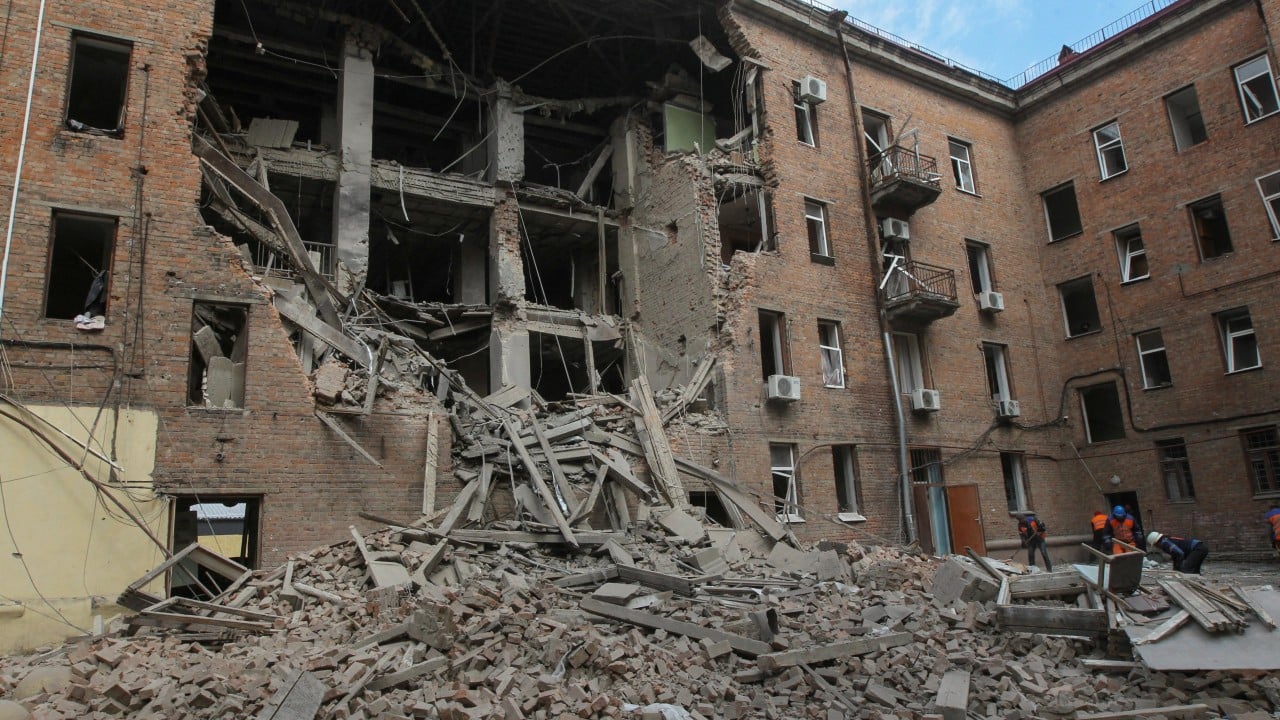
Real change in Gaza will not come from a localized poll managed by the very people who have presided over the current disaster. It will require a wholesale reimagining of the Palestinian national movement, one that moves beyond the Fatah-Hamas binary and addresses the reality of a generation that has been discarded by its own leaders. Until that happens, the talk of elections will remain just that—talk, echoing through the rubble of a city that deserves a much better future than the one currently on the menu.
The international observers who rush to praise the "democratic spirit" of these potential polls are doing a disservice to the reality of the situation. They are validating a process that lacks the basic foundations of freedom. When you hold an election in a cage, you aren't choosing a leader; you are choosing a warden. The focus should not be on whether the Palestinians can vote, but on whether that vote has the power to change the walls that surround them.
Stop looking at the ballot box and start looking at the structures that hold it in place.
Concrete Realities of the Current System
| Issue | Gaza Administrative Reality | West Bank Administrative Reality |
|---|---|---|
| Primary Revenue | Indirect taxes, Qatari grants, Tunnel fees | Clearance revenues (taxes collected by Israel), Foreign aid |
| Security Control | Internal Security (Hamas-aligned) | Palestinian Security Forces (trained by US/EU) |
| Legal Framework | Combination of Civil, Sharia, and Military decrees | Combination of Jordanian law, PA decrees, and Israeli military orders |
| External Borders | Controlled by Israel and Egypt | Controlled by Israel |
The divide is not merely political; it is institutional, financial, and physical. Until the internal security forces of both factions are integrated into a single, non-partisan entity, any election is a cosmetic exercise. The people of Gaza know this better than anyone. They see the posters, they hear the speeches, and then they go home to the same darkness they have lived in for eighteen years.
The most dangerous thing in Gaza right now isn't the lack of a vote. It is the lack of a reason to believe that a vote matters. The "hope" mentioned by competitors is a commodity in short supply, and it won't be replenished by a municipal ballot. It requires a fundamental dismantling of the patronage systems that have turned the Palestinian cause into a series of competing bureaucracies. Only then will the ballot box represent a choice rather than a chore.
The next time you hear about a "rare election" in the Strip, ask yourself who benefits from the headline. Usually, it’s the people who have the most to lose from a real one.