Getting the presidential mandate to build Israel's next government is the easy part. Keeping it from collapsing before the ink dries is where Israeli politicians actually earn their paychecks.
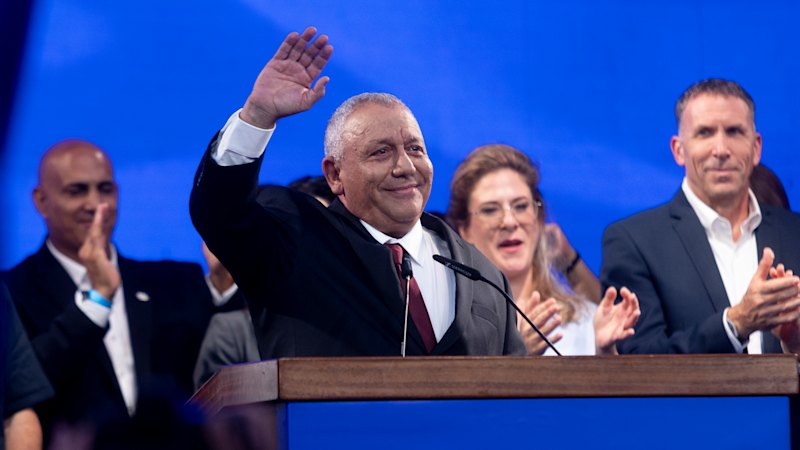
On November 8, 2026, Israeli President Isaac Herzog officially tasked Gadi Eisenkot—a former military chief and leader of the centrist Yashar party—with forming a new coalition. The move puts Eisenkot in the driver's seat to unseat longtime Prime Minister Benjamin Netanyahu following the deadlocked October 27 Knesset election. You might also find this similar article interesting: Houston’s New Sanctuary Rhetoric Is A Legal Illusion That Will Cost Taxpayers Millions.
Most news coverage treats this like a simple changing of the guard. It isn't. If you look closely at the Knesset math, Herzog didn't hand Eisenkot a victory lap—he handed him a ticking clock and an ideological minefield.
Why Herzog Picked Eisenkot Over Netanyahu
In Israel's parliamentary system, winning the most seats doesn't automatically make you prime minister. You need 61 seats out of 120 in the Knesset to govern. As discussed in latest coverage by Associated Press, the implications are notable.
After the October 27 vote, nobody had the numbers. Netanyahu's ruling coalition collapsed from its previous peak of 68 seats down to just 53. Even though Likud remained the single largest faction in parliament, Netanyahu couldn't cobble together a majority.
Eisenkot's opposition bloc didn't hit 61 on its own either, landing at 48 seats.
So why did Herzog give the first shot to the guy with fewer bloc seats? Because of the remaining 19 seats held by Arab-led parties. Both the United Arab List (Ra'am
What the Gadi Eisenkot Coalition Mandate Actually Means for Israeli Politics
news
When Israel's president taps a rival of Benjamin Netanyahu to assemble a ruling coalition, headlines instantly scream about the end of an era. Don't buy the hype just yet. Receiving the presidential mandate to form a government is less like winning a championship and more like being handed a ticking time bomb while walking across a tightrope.
If you've followed Knesset politics for more than five minutes, you know the math in Jerusalem rarely adds up cleanly. President Isaac Herzog's decision to hand Gadi Eisenkot the first shot at building a coalition shifts the spotlight onto a former IDF Chief of Staff who spent decades avoiding political labels. Now, he's dead center in the most fractured parliamentary arena in the Middle East.
To understand what happens next, you have to ignore the dramatic cable news panels and look at the cold, hard mechanics of the Knesset floor.
Why Gadi Eisenkot Got the Nod
Israel doesn't have a winner-take-all presidential system. Voters cast ballots for party lists, and no single party has ever won an outright majority of 61 seats in the 120-member Knesset. Following an election—or the collapse of an existing coalition—the president consults with every party leader that crossed the 3.25% electoral threshold.
Each faction recommends who they think has the best shot at corralling 61 lawmakers. The president isn't legally forced to pick the leader of the largest party, though that's usually how it goes. Instead, Basic Law: The Government instructs the president to select the Knesset member with the highest realistic probability of forming a stable coalition.
Eisenkot's appeal isn't rooted in flashy ideological purity. It's rooted in trust and security credentials. As the 21st Chief of the General Staff of the Israel Defense Forces from 2015 to 2019, he built a reputation for blunt, non-partisan pragmatism. Voters tired of endless election cycles and ideological trench warfare see him as an adult in the room.
When opposition factions needed a consensus figure who wouldn't immediately alienate moderate right-wingers or center-left voters, Eisenkot became the obvious bridge. He doesn't carry the polarizing personal baggage that has stalled other anti-Netanyahu figures in past cycles. That makes him palatable to factions that normally refuse to sit in the same room.
The Brutal Math of 61 Seats
Getting the mandate is easy. Keeping it is brutal.
Under Israeli law, Eisenkot has a strict 28-day window to present a cabinet to the Knesset and win a vote of confidence. If he hits a wall, the president can grant a single 14-day extension. Forty-two days sounds like plenty of time until you actually try to get six or seven rival party leaders to agree on who gets the Finance Ministry.
Here's the problem most outside observers miss when looking at Israeli coalition building. An "anti-Netanyahu" bloc isn't a unified political movement. It's a temporary alliance of convenience.
To reach that magic number of 61, Eisenkot has to stitch together groups with fundamentally opposing worldviews on religion, state, judicial authority, and Palestinian diplomacy. Think about what that looks like in practice:
- Secular centrist and left-wing parties demand civil marriage reforms, public transportation on Shabbat, and strict limits on religious funding.
- Right-wing nationalist defectors oppose territorial concessions and want aggressive settlement policies.
- Ultra-Orthodox (Haredi) factions, if courted to break away from Netanyahu's orbit, demand ironclad military draft exemptions for yeshiva students and massive budgets for their school networks.
- Arab-Israeli parties look for municipal funding, anti-crime initiatives, and major shifts in policy toward the West Bank and Gaza.
You can't give everyone what they want. Give the secular left a win on religious affairs, and the right-wing flank walks out. Hand a conservative hawk the Defense or Finance portfolio, and the center-left base revolts. Eisenkot isn't negotiating a single deal. He's juggling five incompatible contracts simultaneously while Netanyahu works the phones to peel off his weakest links.
What Most People Get Wrong About Benjamin Netanyahu's Position
Whenever a challenger receives the mandate, pundits love writing political obituaries for Benjamin Netanyahu. That's a rookie mistake.
Netanyahu is arguably the most resilient tactical operator in modern parliamentary history. Even when sitting in the opposition or watching a rival take center stage at the President's Residence, he holds massive structural advantages.
First, Likud remains a disciplined, deeply loyal voting bloc when facing an external threat. Unlike fragmented opposition alliances, Netanyahu's core base shares a unified goal: blocking any alternative government from taking root.
Second, Netanyahu doesn't need to build a coalition right now. He just needs to prevent Eisenkot from reaching 61. Playing defense in the Knesset is vastly easier than playing offense. All Netanyahu has to do is convince two or three ideological purists on the fringes of Eisenkot's prospective coalition that joining the government equals political suicide. He can offer them future ministerial posts, promise them a better deal if the mandate fails, or simply wait for their internal contradictions to blow up the talks.
Honestly, failure by the first candidate often strengthens the second. If Eisenkot burns through his 28 days and comes up short at 58 or 59 seats, the narrative shifts immediately toward opposition dysfunction. That gives Netanyahu momentum if the president hands him the next turn, or if the country spirals toward yet another snap election.
How Coalition Negotiations Actually Play Out Behind Closed Doors
Publicly, Israeli politicians talk about national unity, security challenges, and economic recovery. Privately, coalition talks are bare-knuckle horse-trading over budgets, committee chairmanships, and ministerial authority.
If you want to track whether Eisenkot is actually making progress over the next few weeks, ignore the press conferences. Watch three specific indicators instead:
- The Finance Committee Chairmanship: Whoever controls the Knesset Finance Committee controls the flow of money to local municipalities, religious institutions, and special interest groups. When a party leader starts leaking demands for this specific seat, serious bargaining has begun.
- Ministerial Split Deals: Watch for reports that major ministries are being carved up. When a negotiator can't give one party the full Ministry of Education or Justice, they invent a new ministry—like "Regional Cooperation" or "Heritage"—to satisfy an ego. It's wasteful, it bloats the cabinet, and it's the surest sign a deal is close.
- The Rotation Agreement: If Eisenkot can't get a major rival to swallow second place, look for a rotation deal where two leaders split the four-year term as Prime Minister. Israel tried this with Naftali Bennett and Yair Lapid in 2021, and before that with Netanyahu and Benny Gantz in 2020. Both collapsed early, yet politicians keep reaching for the same tool because it solves immediate ego clashes.
The Security Factor Driving Eisenkot's Leverage
Eisenkot isn't operating in a political vacuum. Israel's security environment dictates how much patience the public—and Knesset members—have for partisan games.
Having served as a combat brigade commander, head of the Operations Directorate, and chief of the Northern Command before leading the entire military, Eisenkot speaks a language that resonates across the Israeli political spectrum. Even harsh critics of his political views rarely question his personal integrity or his grasp of regional threats.
That background gives him a unique card to play at the negotiating table. He can argue, credibly, that prolonged political paralysis damages national deterrence. When the United States, European allies, or regional Arab partners look at Jerusalem, they want to know who actually picks up the phone in a crisis. Eisenkot can pitch himself to hesitant lawmakers as a steady hand who can stabilize the security cabinet immediately while putting explosive domestic culture wars on ice for two years.
Whether that pitch works depends entirely on whether smaller party leaders care more about national stability or their own primary voters. History suggests primary voters usually win.
What Happens If Eisenkot Fails
The clock is ruthless. If Eisenkot hits day 28—or day 42 with an extension—without 61 signatures, the mandate returns to President Herzog.
At that point, the president has two main options. He can hand the mandate to another Knesset member—most likely Netanyahu, assuming Netanyahu can show a plausible path to 61—for a fresh 28-day window. Or, if the president concludes that no single lawmaker has a shot, he can immediately trigger a 21-day period during which any member of the Knesset can try to gather 61 signatures backing their candidacy.
If that 21-day free-for-all ends without a winner, the Knesset dissolves automatically. The country is then legally locked into a new general election roughly 90 days later.
Keep your eyes on the concrete milestones rather than the daily rumor mill. Track which party leaders formally enter joint negotiating rooms, watch whether the Haredi factions keep their doors open or slam them shut, and pay close attention to whether Eisenkot demands a strict "status quo" freeze on religious and judicial issues. If those pieces lock into place before week three, Israel will have a new prime minister; if they don't, start preparing for another campaign season.