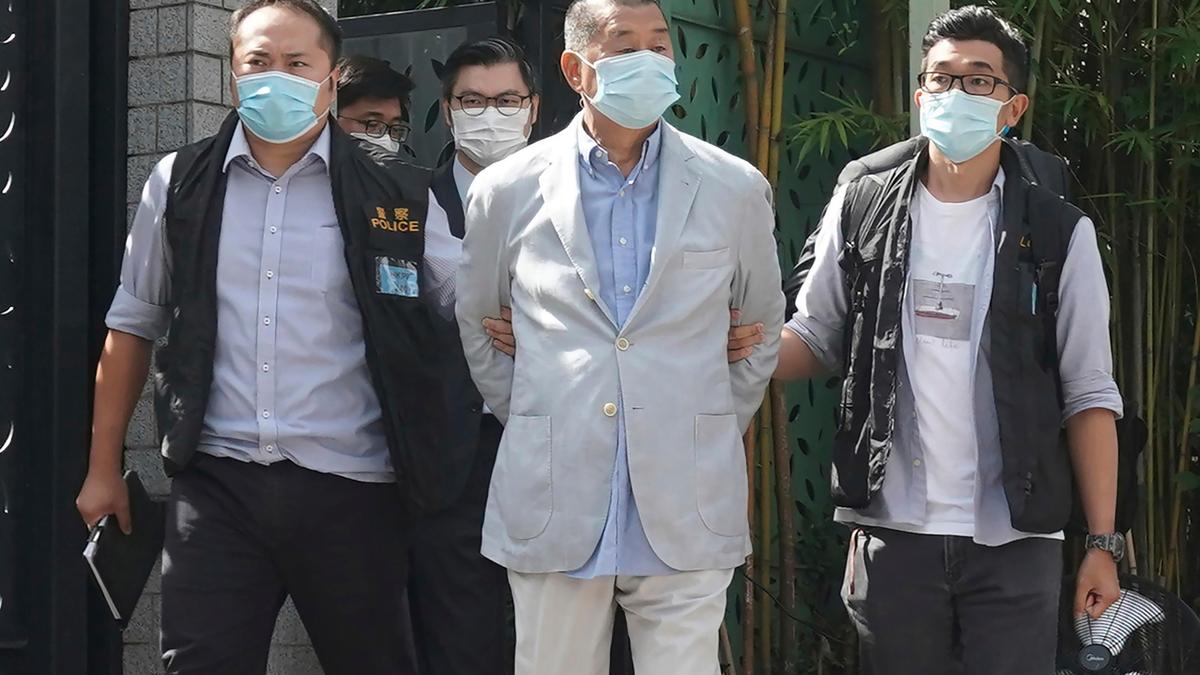
Donald Trump just left China with a partial win and a heavy dose of reality. Flying back to the United States on Air Force One, he revealed exactly how his closed-door negotiations with Chinese President Xi Jinping went down. The summary? Beijing is willing to cut deals on trade, and they might even release a high-profile detained pastor. But when it comes to Hong Kong pro-democracy icon Jimmy Lai, Xi Jinping isn't budging easily.
"He told me that would be a tough one," Trump told reporters, detailing Xi's blunt response.
This isn't just about a single 78-year-old billionaire sitting in a prison cell. The fate of Jimmy Lai represents the messy, high-stakes collision between American deal-making and Beijing's absolute refusal to look weak on national security. If you want to understand how international diplomacy actually works when the cameras are turned off, look no further than these two specific cases Trump brought to Xi's table.
The Tale of Two Prisoners
To understand why one man might go free while the other stays behind bars, you have to look at what they represent to the Chinese Communist Party.
Trump pressed Xi on two major figures. The first is Ezra Jin Mingri, the prominent pastor of Zion Church, one of China’s largest unregistered underground house churches. Jin was swept up in November along with nearly 30 other pastors and staff during a massive crackdown on unauthorized online preaching and religious activities.
The second is Jimmy Lai, the media tycoon and founder of the now-defunct Apple Daily newspaper, who was sentenced in February to 20 years in prison under Hong Kong's draconian 2020 National Security Law. Lai was convicted of conspiracy to collude with foreign forces and publishing seditious materials.
Xi Jinping is giving very serious consideration to releasing the pastor. Why? Because freeing a religious leader allows Beijing to show a calculated gesture of goodwill without compromising its core political control. An underground pastor threatens local social order in the eyes of the state, but he doesn't threaten the regime's sovereignty.
Jimmy Lai is a completely different story. To Beijing, Lai is the alleged mastermind behind the massive 2019 anti-government protests that rocked Hong Kong. The Chinese foreign ministry has repeatedly labeled him a key planner of activities aimed at destabilizing the region. Releasing Lai looks like a surrender to Western pressure. In Xi's political playbook, domestic strength always trumps international praise.
What Happened Behind Closed Doors
Trump didn't sugarcoat his conversation with Xi when speaking to Fox News Channel's Special Report. He openly admitted that the initial response to his plea for Lai was far from positive.
"He went through a whole thing and I said, 'Well, we'd appreciate if you would release him. He's gotten old, and he's probably not feeling too well. It would be nice.' And I did not feel optimistic. I have to be honest with you about that one," Trump said.
This direct, transactional approach is classic Trump. He appeals to a mix of personal courtesy and practical terms. However, human rights groups and seasoned diplomats know that dealing with political prisoners under Xi Jinping has become fundamentally harder than it was under his predecessors like Hu Jintao.
Years ago, Beijing cared more about its international reputation and economic integration, meaning they would occasionally trade dissidents for diplomatic favor. Today, Xi's administration enforces strict sovereignty. They view public demands from foreign governments as illegal interference in internal affairs.
We saw this play out tragically in 2017 when Chinese Nobel laureate Liu Xiaobo died of cancer in custody, despite intense pressure from Western leaders who wanted him released for treatment abroad. When Beijing decides someone is a threat to the state, they are willing to absorb the international blowback.
The High Cost of the National Security Law
The reality on the ground in Hong Kong has shifted permanently. The 2020 National Security Law essentially silenced dissent in what used to be a vibrant financial hub. Lai’s 20-year sentence is a clear message to anyone else thinking of challenging Beijing’s authority.
The Hong Kong government maintains that Lai received a fair and open trial that had absolutely nothing to do with press freedom. But observers see it as the final nail in the coffin for the "one country, two systems" framework that Britain and China agreed to when the colony was handed back in 1997.
Lai’s family is living in constant fear that the elderly activist will die in prison. His son, Claire Lai, expressed gratitude that the US administration brought up the case, noting that a prison death would turn his father into a martyr—a lose-lose scenario for everyone involved. The family believes this moment offers China an opportunity to make a gesture of goodwill to the world, but the political reality makes that incredibly unlikely unless the US offers something massive in return.
How Washington Tries to Force a Deal
The US isn't without leverage, but the clock is ticking. Before the summit, a bipartisan group of more than 100 US lawmakers sent a letter urging the administration to prioritize Lai's freedom. U.S. Treasury Secretary Scott Bessent also raised the issue during trade talks.
Diplomatic horse-trading does occasionally work. We saw it when American pastor David Lin was freed after spending nearly two decades in a Chinese prison, part of a quiet prisoner swap. But Lin wasn't a political symbol the way Lai is.
Thomas Kellogg, executive director of the Georgetown Center for Asian Law, points out that both sides technically have incentives to find a middle ground. For China, letting Lai go could signal that they are ready to move past the tumultuous post-2019 era and rebuild broken business ties with the West. For the US, securing his release would be a massive bipartisan victory.
But the price tag for Jimmy Lai’s freedom will be steep. Beijing won't give him up for a simple thank-you. It would likely require major American concessions on tariffs, tech export bans, or geopolitical positioning around Taiwan.
The next steps for the administration will require shifting away from public rhetoric and moving into quiet, transactional diplomacy. If the US wants Jimmy Lai out, they must decide exactly what they are willing to trade for him, because Beijing has made it clear that nice words and appeals to health won't be enough to open that prison door.