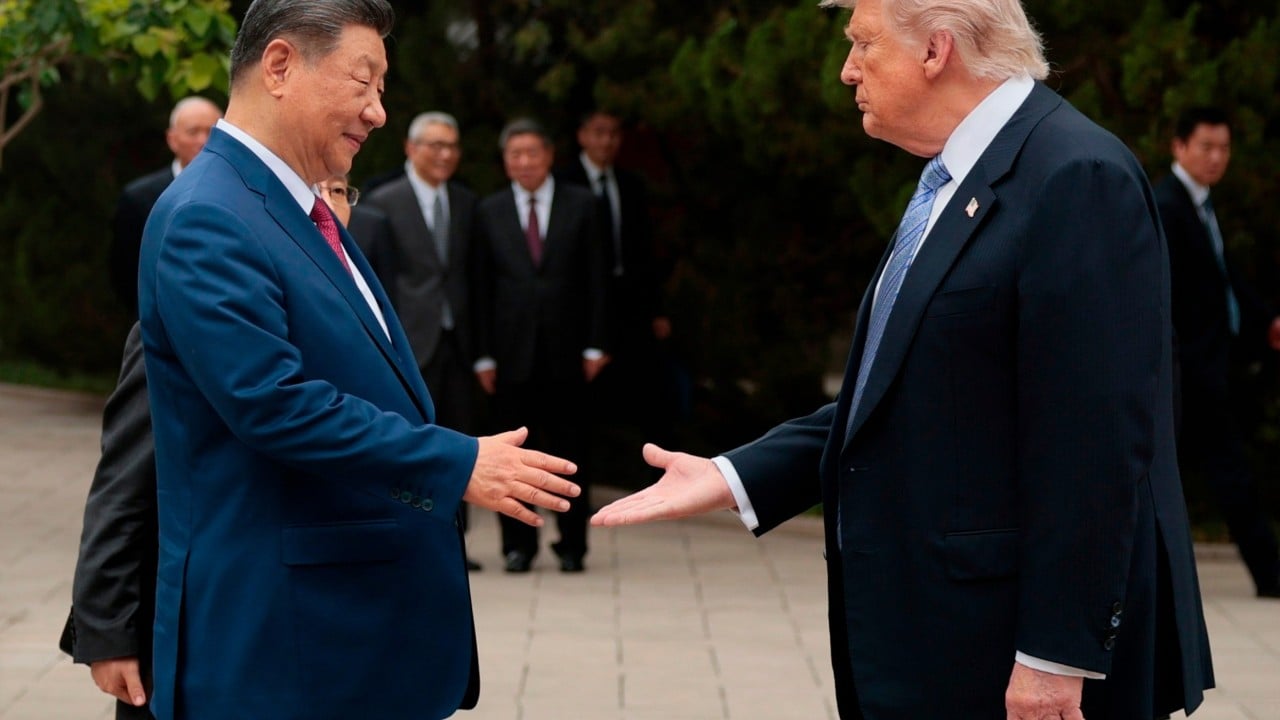
Relying on leader-to-leader personal chemistry as the primary stabilizing mechanism for United States-China relations introduces a high-variance structural vulnerability into global politics. While personalized summits are frequently marketed as breakthrough events, analyzing them through the lens of institutional design reveals that a lack of deep, bureaucratic integration transforms personal rapport from an asset into a critical point of failure. When working-level diplomatic channels shrink, the entire weight of bilateral stability rests on individual interactions, creating severe tail risks for market stability and security policy.
The Institutional Atrophy Framework
Bilateral stability operates as a function of institutional density—the number, frequency, and depth of structured, recurring meetings between state departments, ministries, and military commands. In a dense institutional environment, minor provocations or tactical shifts are absorbed by bureaucratic routines. Lower-level officials resolve friction points before they escalate to executive decision-makers.
The current structural architecture of United States-China diplomacy exhibits acute institutional atrophy. Highly structured, comprehensive dialogue mechanisms have been systematically dismantled or reduced to superficial engagements. The absence of these middle-tier bureaucratic shock absorbers creates a direct transmission mechanism between executive caprice and structural escalation.
This operational decay can be categorized into three specific vectors:
- The Loss of Technical Working Groups: Regular technical exchanges regarding financial stability, maritime safety, and export controls have transitioned from permanent, predictable fixtures to ad-hoc, conditional events.
- The Compression of Direct Communication Windows: Without ongoing, lower-level verification mechanisms, communication becomes highly reactive, occurring primarily after a crisis has manifested rather than during its developmental phase.
- The Disalignment of Bureaucratic Intent: When intermediate agencies lack authorization to negotiate binding frameworks, they default to defensive postures, reinforcing worst-case assumptions within their respective intelligence structures.
The reduction of these channels concentrates all diplomatic agency at the apex of the state apparatus. This structural centralization introduces severe cognitive bottlenecks, as complex macroeconomic and strategic calculations must be processed and decided by two individuals rather than thoroughly vetted by institutional apparatuses.
The Variance Function of Personalist Bilateralism
Personalized diplomacy assumes that mutual respect or transactional alignment between leaders can override structural geopolitical competition. This hypothesis miscalculates the systemic incentives governing great power behavior. Geopolitical friction is driven by structural imperatives: structural trade imbalances, technological competition in semiconductors, and maritime posturing in the South China Sea.
Relying on leader-level personal chemistry to govern these systemic forces introduces a massive variance function. The stability of the relationship becomes directly tied to the internal political incentives, emotional consistency, and domestic survival strategies of both executives.
Structural Geopolitical Imperatives -> Bureaucratic Friction -> Executive Decision-Making
VS.
Executive Caprice -> Direct Transmission to Macro-Policy (High Variance)
The first structural limitation of this approach is the asymmetry in decision-making architectures. The American executive operates within a highly polarized domestic environment where signaling toughness on trade and national security provides immediate electoral utility. Policy shifts can occur rapidly, driven by tariff threats or sudden export bans designed for domestic consumption. Conversely, the Chinese executive operates within a deeply institutionalized, highly centralized party apparatus that values predictability, long-term strategic planning, and structural reciprocity.
This asymmetry creates a fundamental behavioral mismatch. A tactical maneuver or rhetorical threat by the American executive to gain negotiating leverage may be interpreted by the Chinese apparatus not as a transactional gambit, but as a deliberate structural challenge to state stability. The absence of an active diplomatic buffer zone prevents both sides from accurately reading these signals, significantly increasing the probability of miscalculation.
The Cost Function of Transactional Deals
When diplomacy is reduced to personal transactions between leaders, long-term strategic predictability is sacrificed for short-term, easily quantifiable concessions. This transactional framework creates structural instability by incentivizing bad-faith compliance and cyclical escalation.
Consider the mechanics of tariff enforcement and market access concessions. In a standard institutionalized negotiation, agreement terms are tied to verifiable benchmarks, legal reforms, and dispute-resolution mechanisms managed by trade authorities. Under a personalist framework, agreements are frequently structured around explicit purchasing targets or symbolic pauses in tariff implementation.
This creates a bottleneck. Purchasing agreements are inherently subject to market fluctuations, supply chain realities, and shifting domestic demand curves. When these arbitrary targets are missed due to macroeconomic forces, the failure is interpreted at the leadership level as a personal breach of contract. Because there are no robust intermediate arbitration bodies left to manage the technical discrepancy, the default response is immediate, retaliatory escalation via executive order.
The second limitation of transactional bilateralism is the erosion of deterrence clarity. Allies and partners within the Indo-Pacific region depend on consistent, predictable policy signals from Washington to calibrate their own security postures. When US policy oscillates based on the perceived state of the executive relationship, regional security frameworks fracture. Allies are forced to hedge against American volatility, which can inadvertently embolden assertive behavior in contested maritime corridors, creating a more dangerous regional environment.
Strategic Forecast and Re-Institutionalization
The current trajectory indicates that the US-China relationship will remain highly volatile, characterized by sharp swings between performative diplomatic breakthroughs and abrupt economic retaliation. To mitigate the severe tail risks inherent in this personalist model, a deliberate restructuring of the bilateral architecture is required.
Stabilizing the relationship cannot depend on altering the personal dispositions of the leaders involved; it requires the systematic rebuilding of a resilient institutional floor. This operational shift must be executed through specific, functional steps:
- De-couple Technical Channels from High-Level Politics: Establish permanent, non-negotiable communication channels at the undersecretary and ministerial levels tasked explicitly with managing financial contagion risks and maritime incident avoidance. These channels must function independently of political rhetoric or executive summits.
- Establish Clear Red Lines Through Institutional Signaling: Shift away from erratic public tariff threats toward predictable, clearly defined enforcement mechanisms. If export controls or investment restrictions are tied to objective, verifiable national security criteria rather than transactional leverage, the opposing state can calibrate its responses rationally.
- Institutionalize Crisis Communication: Upgrade military-to-military communication protocols to ensure real-time data sharing and operational clarity during close-proximity encounters in international airspace and waters, bypassing the need for executive intervention during the critical early hours of a tactical friction point.
Failing to rebuild these institutional guardrails ensures that the global economy and international security architecture remain dangerously exposed to the personal relationship between two individual executives. True diplomatic resilience is built on the mundane, repetitive feedback loops of mid-level bureaucracy, not the fleeting theater of high-stakes summits.


