A quiet room in Islamabad can hold the weight of an entire region.
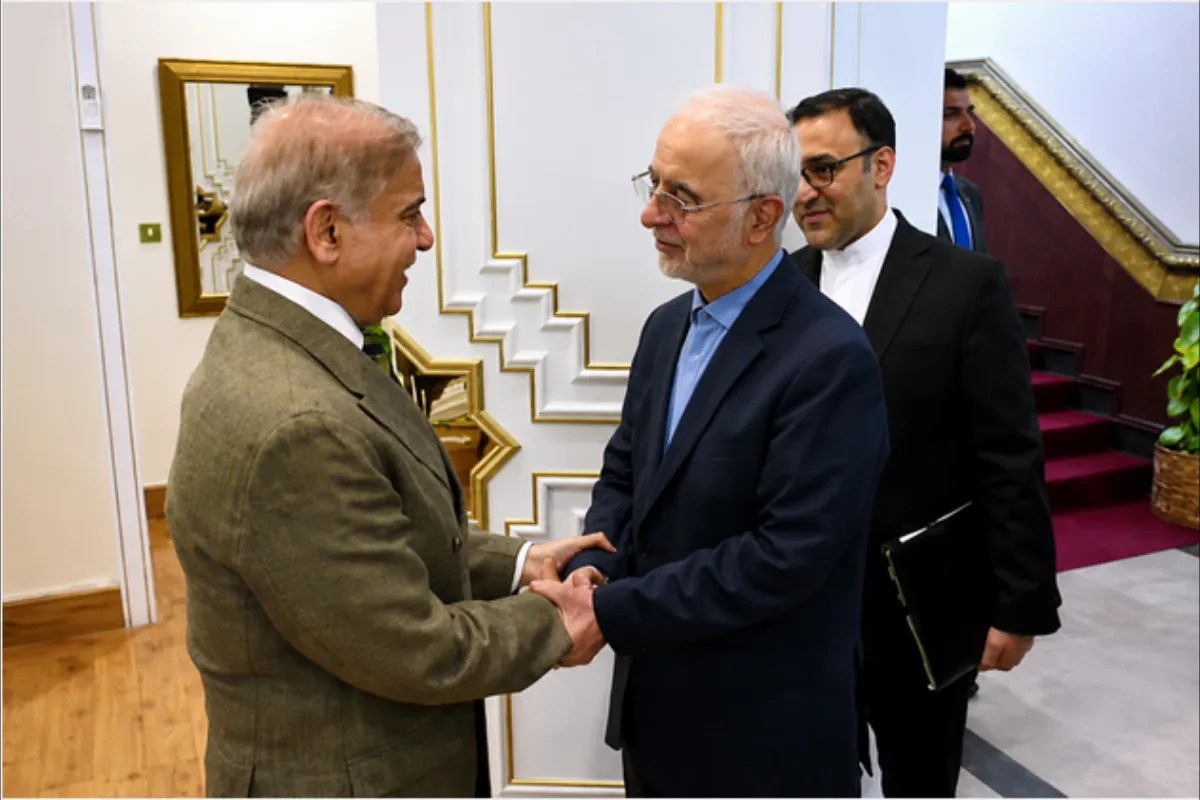
Outside, the late afternoon air carries the hum of traffic, the distant cry of street vendors, and the mundane rhythms of millions who simply want to wake up tomorrow to a stable world. Inside, two men sit across from each other. On one side sits Pakistani Prime Minister Shehbaz Sharif. On the other, Iranian Interior Minister Eskandar Momeni. They are not meeting for tea or routine political posturing. They are sitting together because the borders they oversee are fraying, and the surrounding sky is growing heavy with the threat of wider conflict.
When regional tensions rise, official press releases tend to speak in cold, sterilized vocabulary. They mention bilateral cooperation, mutual interest, and protocol. But take away the polished mahogany tables and the flashbulbs of state media photographers, and a raw truth remains. Peace is not an abstract policy. Peace is a shield that keeps ordinary families safe in their homes.
The Human Weight of Shared Borders
Consider a family living along the rugged border that stretches between Pakistan and Iran.
They do not read diplomatic cables. They do not care about geopolitical posturing. What they notice is whether the local market opens on time, whether trade trucks move safely across the crossing, and whether the night sky remains silent. For communities scattered along thousands of kilometers of shared frontier, a single lapse in border security or an uncalculated military escalation is not an academic debate. It is a sudden, terrifying disruption to daily survival.
This human reality hung visibly over the meeting between Sharif and Momeni. Iran has faced severe security challenges, internal strains, and escalating regional hostilities. Pakistan, navigating its own complex economic pressures and security dilemmas, shares more than just a geographic line with its western neighbor. It shares history, trade, and an unpredictable perimeter where militant groups often attempt to exploit any visible gap in governance.
When Minister Momeni arrived in Islamabad, the underlying objective was straightforward: ensure that the common border does not become another active flashpoint in an already volatile region.
Security in these borderlands is deceptively fragile. It relies on daily coordination between border guards, intelligence sharing on cross-border insurgencies, and an unspoken agreement that both nations will keep tempers cool even when regional winds blow hot. One mistake by a patrol commander or one opportunistic raid by an armed group can spark a diplomatic crisis within hours.
A Urgency Born of Escalation
The conversation in Islamabad did not happen in a vacuum. Across the broader Middle East, conflict has metastasized. A single spark in one corridor quickly threatens to light fires three countries away.
During their dialogue, Prime Minister Sharif issued a direct call that went beyond standard diplomatic courtesy. He urged all parties involved in the regional turmoil to exercise maximum restraint.
Restraint.
It is a word frequently deployed by diplomats, yet its true meaning requires courage. Restraint means resisting the political urge to match action with immediate counteraction. It means recognizing that an endless cycle of retaliation eventually consumes everyone involved.
For Pakistan, urging calm across the region is not merely a moral stance; it is a necessity for self-preservation. A broader regional fire directly threatens energy supplies, trade routes, and refugee stability across South and Central Asia. Islamabad knows that if the region falls into deeper chaos, no border fence will be tall enough to keep the shockwaves out.
During the meeting, the Iranian Interior Minister highlighted Tehran's interest in strengthening practical cooperation. Talk is cheap when tensions surge, but institutional mechanics matter. Security protocols, intelligence pipelines, and joint border commissions are the invisible gears that prevent localized misunderstandings from turning into full-scale confrontations.
Beyond Official Communiqués
Look closer at what happens when ministers sit down to negotiate security.
They speak through interpreters or in shared secondary languages, analyzing maps marked with patrol routes, smuggling paths, and vulnerable checkpoints. They review intelligence dossiers detailing armed groups that operate in the shadow of mountain ranges where state presence is thin.
The task facing both leaders is notoriously tricky. On one hand, each government must appear strong and unyielding to its domestic audience. On the other hand, both realize that open conflict or unchecked border infiltration benefits nobody except rogue actors looking to exploit the chaos.
This balancing act demands extreme precision. When Sharif stressed the need for de-escalation, he was sending a message to multiple audiences simultaneously. To Tehran, it was a gesture of solidarity paired with a gentle reminder that stability requires cool heads. To international partners, it was an assertion that Pakistan intends to act as a stabilizing influence rather than an accelerator of conflict. And to the citizens living along the border, it was an assurance that their security remains a priority.
What Real Peace Requires
Diplomatic handshakes make for effective news photos, but they do not automatically secure a border. Real stability is forged in the grueling work that follows after the delegation leaves the airport.
It requires routine communication between low-level commanders on the ground. It requires actual economic investment in marginalized border regions so that local populations are not driven toward illicit trade or insurgent recruitment out of sheer economic desperation. It requires a willingness to address grievances directly before they spill over into violent clashes.
The meeting between Shehbaz Sharif and Eskandar Momeni served as a reminder that diplomacy is fundamentally about risk management. In a world increasingly defined by hasty decisions and chest-thumping rhetoric, sitting down in a quiet room to plead for restraint is an act of necessity.
The meeting ended, the official photos were published, and the cars rolled away from the prime minister's residence into the Islamabad evening. Yet the core question remains unanswered in the mountains along the border, where guards keep watch in the cold dark, listening for any sound that might signal trouble.
Whether those guards experience a quiet night or a catastrophic one depends entirely on whether the call for restraint made inside that quiet room holds up when the next crisis arrives.


(mh=HkpxP1ZELs5Z_ZVM)16.jpg)