When a country's top diplomat spent over a decade aggressively opening the doors for a foreign industrial powerhouse, you might expect them to retire quietly or write a memoir. You probably don't expect them to immediately walk through those exact same doors as a corporate executive. Yet that is precisely what happened in Budapest. A former Hungarian foreign minister resigned from parliament for a job with a Chinese automaker, a move that laid bare the cozy relationships between European politicians and Beijing's industrial giants.
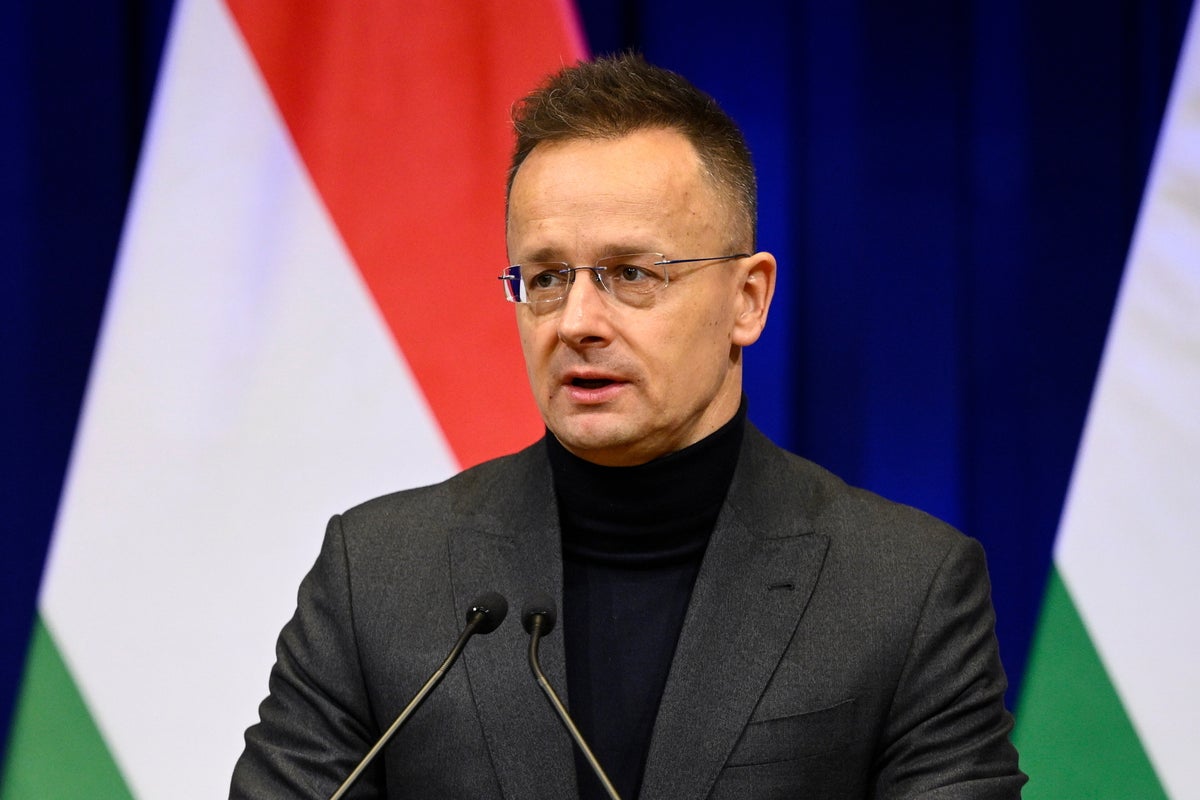
Péter Szijjártó, the man who served as Hungary's foreign minister for nearly twelve years, announced his departure from politics on social media. He didn't just step down from his parliamentary seat; he transitioned straight into an executive role at BYD, the Chinese electric vehicle behemoth.
For close observers of European politics, the career pivot felt less like a surprise and more like the natural conclusion of a long-term business strategy. Szijjártó spent years laying the groundwork for Chinese investments in Hungary. Now, he is on the payroll of the very company he helped bring to Europe.
The Sudden Exit of Hungary's Top Diplomat
For over twenty years, Szijjártó was a fixture in Hungarian politics. He entered parliament in 2002 as a young, energetic member of Viktor Orbán's Fidesz party. By 2014, he had risen to become the Minister of Foreign Affairs and Trade. He was the fierce, often polarizing public face of Orbán’s "Eastern Opening" foreign policy, a strategy designed to reduce dependency on the West by cultivating deep ties with Russia and China.
But the political wind in Hungary changed direction. In April 2026, Orbán's Fidesz party suffered a historic landslide defeat. The pro-European Tisza party, led by Péter Magyar, swept into power. Suddenly out of government, Szijjártó became a quiet opposition lawmaker, rarely showing up to parliamentary votes or speaking in public.
The wait ended on a Wednesday in July 2026. Szijjártó used Facebook to deliver the news. He had resigned his seat. He wrote about a "highly prestigious offer" from one of the world's leading companies to handle external relations and new business lines.
That company is BYD.
The irony is hard to ignore. As a minister, Szijjártó repeatedly argued that Hungary's sovereign interests were his only guide. Yet, his final move as a politician was to accept a corporate job representing a foreign company whose presence in Hungary he personally helped secure.
How Szijjártó Cleared the Path for BYD in Europe
To understand why BYD wanted Szijjártó, you have to look at the massive factory currently rising from the ground in Szeged, a city in southern Hungary.
In 2023, BYD announced it would build its first European passenger car assembly plant in Szeged. This was a massive win for Beijing and a major coup for the Orbán government. The factory wasn't just a manufacturing plant. It was a strategic bridgehead. By manufacturing electric vehicles inside Hungary, BYD could bypass the steep import tariffs the European Union placed on Chinese-made electric vehicles to protect local carmakers.
Szijjártó didn't just sign the final paperwork for this deal. He lived it.
He proudly revealed that the agreement came after 224 separate rounds of negotiations between the Hungarian government and BYD executives. He called it one of the largest investments in the nation's economic history. To seal the deal, the Hungarian government poured massive taxpayer-funded financial incentives into BYD's lap.
Now, the man who spent tax money to attract BYD is taking a salary from them.
This classic revolving door raises serious ethical questions. In Western democracies, cooling-off periods usually prevent ministers from immediately joining companies they regulated or heavily subsidized while in office. Hungary's laws, however, offered no such barriers.
The Corporate Shield of Beijing
For Chinese multinationals like BYD, hiring a former European foreign minister is an incredibly smart play. The European Union has grown increasingly hostile toward Chinese state-subsidized industries. Brussels has launched anti-subsidy investigations, slapped tariffs on imports, and openly warned about security risks linked to Chinese technology.
BYD needs a heavy hitter to navigate this minefield. They need someone who knows the back channels of European power. They need someone who can pick up the phone and talk to prime ministers, commissioners, and trade negotiators.
Szijjártó has those phone numbers.
During his twelve years in office, he became highly skilled at playing European factions against each other. He knows exactly where the regulatory friction points are. His job is no longer to defend Hungarian sovereignty; it is to protect and expand BYD's market share in a continent that is actively trying to keep Chinese electric vehicles out.
It is a brilliant corporate hire, but it looks terrible for the integrity of public office.
A Career Defined by Controversy
You cannot separate Szijjártó's new job from his highly controversial political track record. He was never a conventional Western diplomat.
While the rest of the European Union tried to isolate Russia after the invasion of Ukraine in 2022, Szijjártó did the opposite. He made regular trips to Moscow to secure oil and gas deals, loudly calling Russian Foreign Minister Sergey Lavrov his "friend". In 2021, Vladimir Putin even awarded him the Russian Order of Friendship.
Later, things got worse. Leaked phone calls in early 2026 reportedly showed Szijjártó actively consulting with Lavrov about European Union agendas. When investigative journalists tried to probe those communications, Orbán's government responded by throwing espionage charges at them. Those charges were only dropped when the new, pro-European Tisza government took over in the spring of 2026.
With his political capital depleted in Europe and his party out of power, Szijjártó had very few options in the West. US and Western European institutions were not going to offer comfortable post-politics roles to a man who proudly wore a medal from Putin.
China, however, does not care about European Union politics or Russian sanctions. Beijing values loyalty and results. Szijjártó delivered both during his time in government, and his new corporate executive role is the ultimate reward.
What Lies Ahead for the European EV Market
Szijjártó's transition to BYD highlights a bigger trend. The line between Chinese state-backed industrial policy and European domestic politics is practically gone. Hungary became a Trojan horse for Chinese manufacturing inside the European Union tariff wall.
As BYD prepares to spin up production at its Szeged plant, other Chinese automotive and battery giants are following the same path. They are building factories, buying local supply chains, and now, hiring the very politicians who welcomed them.
If you are tracking the future of the automotive industry or the geopolitical clash between Brussels and Beijing, keep a close eye on Hungary. The Szeged factory will go online soon, and Péter Szijjártó will be the executive pulling the strings from behind the scenes.
To understand how deep China's corporate influence runs in Europe, look at how the regulators of yesterday are becoming the corporate advocates of today. You don't need a degree in international relations to see where this is heading. Just follow the money.