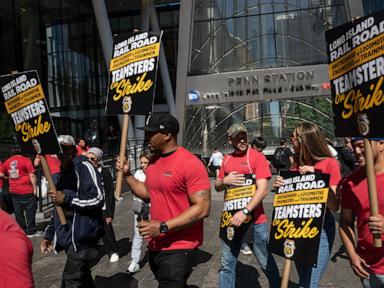
The standard media playbook for a transit strike is as predictable as a delayed morning train. On day one, local news channels rush to Penn Station to interview visibly sweating commuters. On day two, editorial boards publish frantic op-eds about a crippled regional economy. By day three, politicians demand the federal government step in under the Railway Labor Act to force the union back to work.
The lazy consensus dominating the conversation around the Long Island Rail Road (LIRR) strike follows this exact script. The narrative is simple: greedy public sector unions are holding the economic lifeblood of New York hostage over unreasonable wage hikes and antiquated pension plans, and the state must crush the walkout to save the commuter.
This view is completely wrong. It misdiagnoses the financial reality of the Metropolitan Transportation Authority (MTA), fundamentally misunderstands transit labor economics, and suggests a "fix" that will actively accelerate the long-term collapse of regional transit.
The uncomfortable reality is that the LIRR workers aren't the ones bankrupting the system. The real rot lies in the capital construction pipeline and political cowardice. Forcing these workers back to work through government intervention will only mask a systemic crisis that needs to burn itself out so it can finally be rebuilt.
The Myth of the Overpaid Rail Worker
Look at any mainstream coverage of an LIRR labor dispute, and you will see a fixation on six-figure salaries and overtime tracking. Critics point to senior conductors making $120,000 or track workers pulling in massive overtime blocks as proof of systemic union bloat.
Let us fix the premise. In a hyper-inflationary economy centered around one of the most expensive metropolitan areas on earth, a $100,000 salary is not luxury wealth. It is the baseline cost of middle-class survival within commuting distance of Manhattan.
When you look at the macro-level numbers, labor cost growth at the MTA isn't even the primary driver of the agency’s perpetual fiscal cliff. According to independent reviews by the Citizens Budget Commission, the true existential threat to the MTA’s balance sheet is its crippling debt service. Decades of Albany politicians using the MTA as a political piggy bank have forced the agency to issue billions in bonds just to fund basic capital maintenance.
MTA Budget Allocation Breakdown (Approximate)
┌───────────────────────────┬─────────┐
│ Debt Service & Capital    │   23%   │
├───────────────────────────┼─────────┤
│ Pension & Benefits        │   20%   │
├───────────────────────────┼─────────┤
│ Active Payroll            │   38%   │
├───────────────────────────┼─────────┤
│ Materials & Power         │   19%   │
└───────────────────────────┴─────────┘
More than twenty cents of every single dollar collected from fares and tolls goes directly to Wall Street bondholders to service past debt, not to the workers running the trains. Yet, you never see a frantic news segment demanding that institutional investors take a haircut on their municipal bond yields to keep the trains moving. The media attacks the conductor because they can see them on the platform, while the institutional forces bleeding the system dry remain invisible.
The Cost of the Railway Labor Act Opium Den
Whenever a rail strike looms, the immediate reaction from the business elite is to pray for the invocation of the Railway Labor Act (RLA) or a direct legislative back-to-work order. Under federal law, the President or Congress can impose a cooling-off period, establish an Emergency Board, and ultimately force a contract down the throats of the union.
This is a drug that kills the patient while dulling the pain.
When you remove the right to strike, you remove the only mechanism that forces true collective bargaining. I have watched transit agencies waste millions of dollars in legal fees and consulting hours spinning their wheels in endless arbitration because both sides know the government will eventually step in and prevent a real-world consequence.
When you strip workers of their leverage, you don't magically create a satisfied workforce. You get malicious compliance. You get a sudden spike in unscheduled sick leave. You get an epidemic of "equipment defects" found during pre-trip inspections that delay trains just as effectively as a picket line, except without the public accountability.
If you force LIRR workers back to work without addressing their underlying structural grievances regarding tier-six pension reforms and real wage stagnation, you will trigger an unprecedented operational slowdown. The workers will follow the rulebook to the exact letter. And if you have ever spent a day in a rail yard, you know that if a crew follows every single safety and operational rule to the absolute letter, the entire system grinds to a halt.
Dismantling the Commuter Hostage Premise
The most pervasive question found in every search engine trend during a transit crisis is some variation of: How can LIRR workers strike when it hurts innocent commuters?
The question itself is flawed. It assumes that the relationship between a public utility and its users is a charity ecosystem. It is not. It is a transactional labor marketplace.
Imagine a scenario where a private tech company decides to cut engineer salaries by 15% during a period of massive inflation. The engineers would walk out the door and take jobs at competing firms. Nobody would accuse them of "holding users hostage" if an app went down. They would simply say the company failed to pay market rate for labor.
Because the MTA holds a monopoly on regional rail, the public expects its workforce to operate under a different set of capitalist rules. The LIRR is currently competing for skilled electrical workers, diesel mechanics, and structural engineers against private sector firms that do not require twenty years of civil service seniority to unlock a decent retirement package.
If the state uses legislative force to suppress LIRR wages below the true market rate of the New York metro area, talent will leave. The older, highly experienced mechanics who know how to patch up forty-year-old switches will retire early. The younger talent won't apply. You will end up with a compliant workforce that is fundamentally unqualified to maintain a complex, decaying industrial network. You think a two-week strike is bad for your commute? Try a ten-year talent drought that results in daily derailments and systemic infrastructure failures.
The Dark Reality of the Contrarian Position
To be blunt, letting a strike play out has severe consequences. Businesses will lose revenue in the short term. Midtown restaurants will see foot traffic drop. Commuters will face miserable, multi-hour gridlock on the Long Island Expressway as they try to cram into cars and buses.
It is a brutal option. But the alternative is worse.
The alternative is the continuation of the MTA’s slow-motion death spiral. For decades, the agency has survived on temporary fixes, emergency bailouts, and forced labor agreements. This constant patching of the system has created a culture of institutional rot where true capital efficiency is impossible.
The LIRR needs this crisis. The city needs this crisis. A sustained walkout strips away the comforting illusion that transit is a passive background utility that runs on magic. It forces a stark, immediate re-evaluation of what public infrastructure is actually worth.
If the public wants a world-class commuter rail network that runs 24 hours a day, it has to pay the actual market cost of the human labor required to operate it. If the state cannot afford to pay that market rate because it is buried under billions of dollars of debt from mismanaged megaprojects like the East Side Access, then the state needs to restructure its debt, not starve its frontline workforce.
Shift Your Strategy Immediately
If you are a business owner or an executive waiting around for the governor or the federal government to pass a law to force the trains to run again, you are playing a losing game. Even if they do, the systemic damage to workforce morale will poison service reliability for the next thirty months.
Stop checking the news for updates on negotiations. Assume the trains are not coming back to normal operational capacity anytime soon, and restructure your operations around that reality permanently.
- Decentralize your workforce: If your business relies on thousands of commuters traveling from Nassau and Suffolk county into Manhattan every day, stop forcing them into a centralized office. The strike has proved that the single-point-of-failure commuter model is obsolete.
- Redirect capital to regional hubs: Establish satellite workspaces on Long Island itself. The talent is already there; they are just tired of wasting three hours a day on a system that is structurally broken.
- Stop subsidizing transit silence: Stop lobbying politicians to crush strikes. Start lobbying for total transparency in the MTA’s capital construction bidding process, where the real money is being stolen from the public purse.
The era of cheap, reliable, uninterrupted transit run by an underpaid, legally constrained workforce is over. The strike isn't a temporary disruption to the system. The strike is the system finally telling you its true price. Pay it, or start driving.