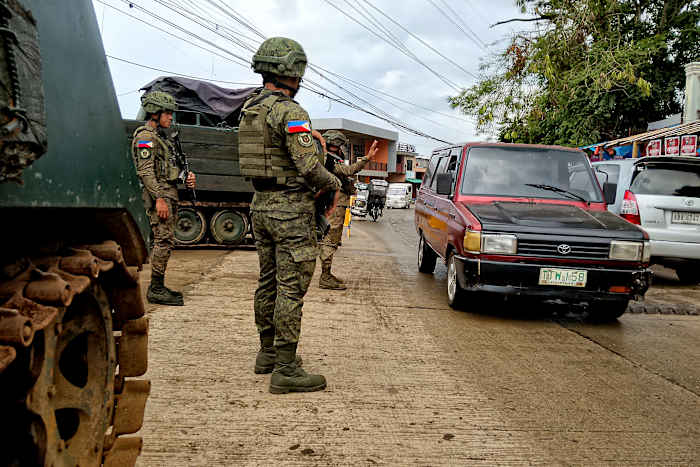
For decades, the southern Philippines meant one thing in the global news cycle: conflict, insurgency, and an elusive search for peace. That narrative shifted fundamentally when the Bangsamoro Autonomous Region in Muslim Mindanao (BARMM) finally held its first-ever regular parliamentary elections. After years of legal delays, political bickering, and repeated postponements, roughly 2.4 million registered voters across five provinces, three cities, and 63 specialized villages stepped up to shape their own governance.
If you want to understand modern nation-building in Southeast Asia, watching how this region transitions from revolutionary battlefields to ballot boxes is essential. Let's look at what actually happened during these historic polls, why they matter so much, and what challenges lie ahead for the newly minted parliament.
Breaking Down the Historic Bangsamoro Vote
The road to the September 2026 elections was rocky, to put it mildly. Conceived under the landmark Bangsamoro Organic Law—which came out of decades of peace negotiations between the Philippine government and the Moro Islamic Liberation Front (MILF)—the autonomous region was initially run by an interim transition authority. Elections were pushed back multiple times, leading many critics to wonder if local political elites would ever relinquish appointed power for elected accountability.
When polls finally opened, voter turnout blew past expectations, hitting well over 80 percent in many districts. People lined up outside schools in places like Lanao del Sur and Cotabato City, holding ballot papers that featured a unique parallel voting system. Voters cast separate ballots for district representatives, regional political parties, and sectoral organizations.
The results shattered any illusion of a single dominant faction sweeping the board. The Bangsamoro Federalist Party (BFP) and the United Bangsamoro Justice Party (UBJP)—political wing of the MILF—carved up the lion's share of the 80 parliamentary seats, but neither secured an outright majority. Instead, smaller groups like the Bangsamoro Grand Coalition grabbed critical blocks, forcing political rivals into immediate coalition-building just to elect a chief minister and a speaker.
What Most People Get Wrong About BARMM Politics
Outsiders often assume that regional elections in post-conflict zones are purely tribal or religious clashes. That's a lazy shortcut. The reality on the ground in the southern Philippines is much more complex.
- It is not a monolith: The Bangsamoro region spans diverse ethno-linguistic groups—including Maranao, Maguindanaon, Tausug, and Bajau communities—each with distinct political priorities.
- Parties matter now: Unlike traditional Philippine politics, which often relies heavily on individual patronage and family dynasties, the BARMM parliamentary system forces politicians to build organized regional political parties with grassroots chapters.
- The transition from gun to ballot is messy: Many former combatants had to pivot overnight from guerrilla commanders or political organizers into legislative negotiators.
Voters I've followed across the region expressed a mix of fierce pride and deep skepticism. They didn't just want peace; they wanted basic public services, better roads, reliable electricity, and transparent economic development. Winning an election is easy compared to delivering clean water to remote island municipalities.
The Immediate Hurdles Facing the New Parliament
With the newly elected 80-member parliament officially convening in Cotabato City, the real stress test begins.
First, the geography itself poses administrative nightmares. Spanning island provinces like Tawi-Tawi all the way to mainland basin areas, governing cohesively requires logistical feats that the regional bureaucracy is still learning to manage. Second, the lingering legal disputes—such as the late exclusion and shifting boundaries involving Sulu—mean that legislative district allocations are still settling into place.
Coalition politics will dictate every move. Because no single party holds a comfortable majority, passing regional codes on taxation, local governance, and economic investment requires delicate horse-trading. If lawmakers spend all their energy fighting over cabinet portfolios, ordinary citizens who stood in the tropical sun to cast their ballots will quickly lose patience.
The success of this autonomous experiment doesn't just impact Mindanao. It serves as a global template for how central governments can resolve bloody separatist movements through genuine political devolution rather than endless military campaigns.
Keep an eye on how these regional coalitions handle local revenue generation and infrastructure spending over the next fiscal cycle. That will tell you whether this democratic milestone translates into lasting prosperity or merely shifts who holds the administrative keys.
For a closer look at the legislative proceedings, you can watch this video from the inaugural parliament session.
This video captures the official opening session of the newly elected Bangsamoro Parliament in Cotabato City, highlighting the historic transition of power.