The envelopes arrived in May carrying numbers that were supposed to measure a lifetime.
For the families of Wang Fuk Court in Tai Po, an official letter from the government did not look like a bureaucratic notice. It looked like an ultimatum wrapped in a checkbook. The figures offered ranged from eight thousand to ten thousand five hundred dollars per square foot, a mathematical translation of years spent paying down mortgages, hanging laundry on narrow balconies, and watching children grow against a backdrop of concrete towers.
August arrived with the heavy, humid weight of a closed door.
Across the territory, millions watched as the clock ticked down toward the August 31 deadline. By the final stretch, over ninety-six percent of the households had surrendered their keys and signed the dotted lines. They chose the state acquisition. They chose the special sales exercise, trading the ghosts of a fire-scarred past for a lottery ticket on a future somewhere else.
Yet a small, stubborn fraction remained.
Imagine standing in a bare hallway with seventy families who refuse to blink.
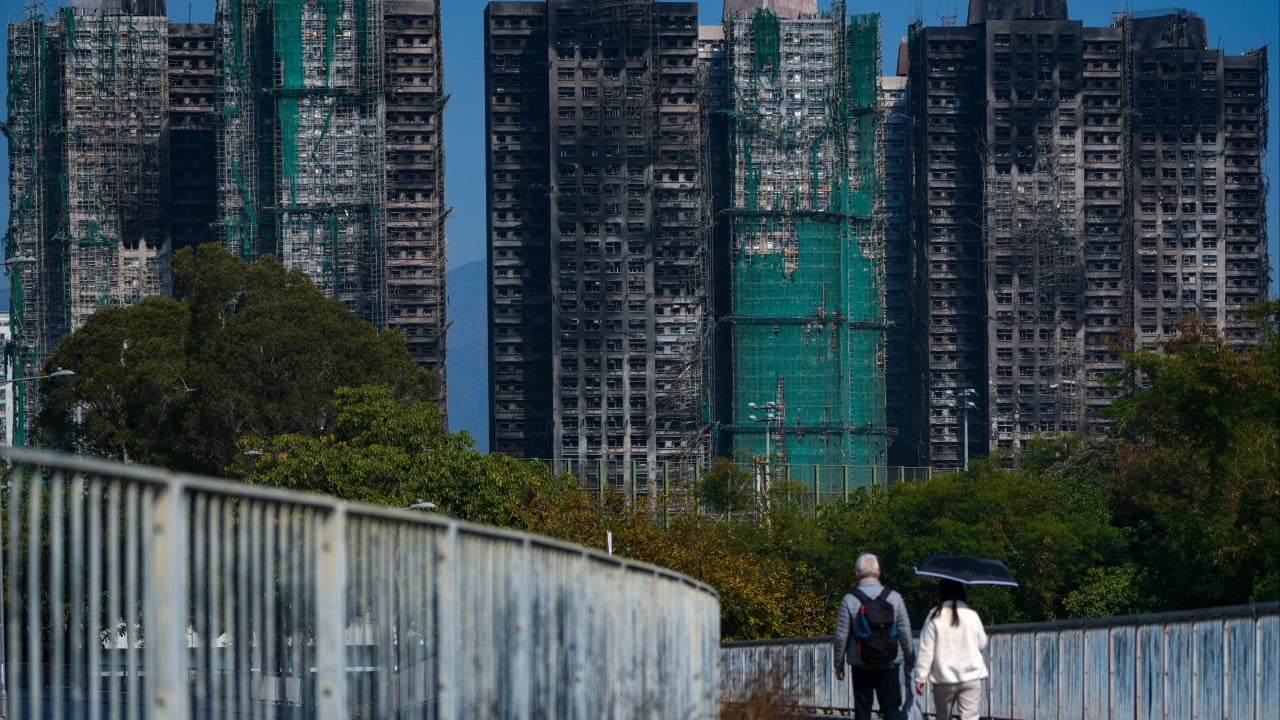
To understand why a handful of owners held out until the final hours while the deadline loomed, you have to look past the spreadsheets of the Housing Bureau and step into the psychology of displacement. This was never a simple real estate transaction. It was an extraction. Following the devastating fire that tore through the estate and claimed hundreds of lives, Wang Fuk Court ceased to be a neighborhood. It became a crime scene, an inquiry dossier, and a profound emotional wound all at once.
The government drew a hard line. Officials announced early on that no extensions would be granted. The machinery of the state required a clean break, proposing to clear the hollowed-out blocks and turn the ground into a park or public facility. For most, the payout offered an escape hatch from an unbearable limbo.
But consider the dilemma facing the holdouts, represented by voices like a resident of Wang Chi House who spoke candidly at summer meetings. By accepting the government buyout before the independent inquiry completed its work, owners were forced to transfer their property titles—and crucially, their rights to any attached structural insurance claims—blind. The structural fire insurance policy stood at a massive two billion dollars, yet how those funds would ultimately be parsed out remained trapped behind a wall of uninvestigated liability.
Sign the paper, and you hand over your claim to the state. Refuse to sign, and you risk missing the lifeboat of public housing arrangements entirely, left to navigate a ruined asset on a desolate market.
It is a terrible choice between two forms of surrender.
Logic dictated compliance. The government promised that all post-acquisition legal and insurance complications would be absorbed by the authorities, and that the land would never be sold to private developers for profit. For the vast majority, this assurance was enough. They packed their grief into cardboard boxes and joined the rolls of the upcoming September ballot.
Yet grief does not always follow a calendar.
For the last remaining holdouts cutting it close to the five o'clock cutoff, the hesitation was an act of defiance against a narrative they could not yet verify. They wanted answers about liability before they signed away their ground. They wanted accountability to precede relocation. In a city defined by frantic vertical living, holding onto a deed for a few days longer was the only way left to retain a voice in a tragedy that had already stripped them of everything else.
The drop-off boxes at the offices closed. The bureaucratic gears began to grind toward the autumn flat selections.
A neighborhood vanishes not when the walls are torn down, but when the last person stops arguing about what it was worth.