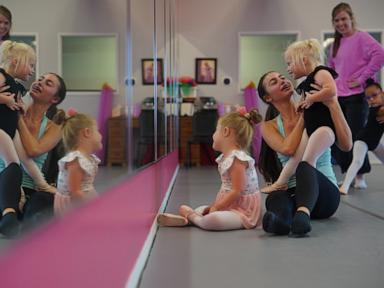
Every local news outlet runs the exact same story twice a year. A group of smiling individuals with Down syndrome or cerebral palsy spin around a studio, holding hands, while a well-meaning instructor beams at the camera. The headline talks about finding rhythm, discovering joy, and breaking barriers. The comments section overflows with heart emojis and tearful praise.
It makes everyone feel warm inside. It is also a masterclass in soft bigotry.
For decades, society has treated the arts and physical movement for disabled populations not as a rigorous discipline, but as a therapeutic petting zoo. We wrap special needs dance programs in the comforting language of charity and emotional validation. We celebrate participation trophies disguised as choreography. We look at a dancer with an extra chromosome executing a wobbly turn and praise the effort rather than evaluating the art.
That is not inclusion. That is segregation with better lighting.
When you grade an artist or a mover on a curve dictated by their diagnosis, you strip them of their agency. You are telling them that their work does not need to withstand critical scrutiny because they are just here for the journey, the vibes, and the therapeutic benefits. Real artists do not want your pity claps. They want honesty, technical rigor, and a seat at the table where the stakes are actually real.
Let us look at the foundational premise of these localized feel-good programs. The standard narrative claims that specialized, isolated dance classes provide a safe space for people with developmental disabilities to build motor skills and socialization. This sounds reasonable on the surface. But look closer at the mechanics.
By keeping these dancers in a quarantined ecosystem, we insulate them from the reality of professional performance. We create a parallel track: the mainstream elite on the main stage, and the heartwarming community outreach program in the basement studio. We pat ourselves on the back for building a ramp while locking the stage door.
I have spent years behind the scenes in performing arts organizations, and I have watched corporations and studios launch these outreach initiatives as PR insulation. They funnel grant money into segregated classes, check the diversity box on their annual reports, and never once invite a disabled dancer to audition for a primary commercial company or a mainstream contemporary ensemble. It is corporate virtue signaling wrapped in a ballet slipper.
If dance is truly universal, then the training must be demanding. True physical discipline does not care about medical charts or diagnostic labels. Rhythm is mechanical. Spatial awareness is anatomical. Muscle memory is neurological. None of these parameters check your medical history before responding to kinetic stimuli.
When we lower expectations under the banner of accommodation, we commit a grave error. We assume that individuals with developmental differences cannot handle constructive criticism, rigorous conditioning, or the brutal reality of artistic failure. That assumption is rooted in paternalism. Anyone who has spent time training serious athletes or dancers with intellectual disabilities knows they possess a capacity for intense focus and physical endurance that puts many mainstream performers to shame. They do not need your patronizing smiles. They need a coach who yells at them to fix their posture because they messed up the timing.
Adopting a rigorous, unyielding approach carries risks. Setting uncompromising technical standards means some people will struggle. It means some routines will fail. It means dancers will face rejection, redirection, and the cold reality of artistic critique. Critics of this view will argue that this creates unnecessary pressure in a world that is already hostile to disabled bodies.
They are wrong. Protectionism is a sophisticated form of exile. Shielding people from high standards ensures they remain second-class citizens in the cultural sphere. True dignity is found in the right to be judged by the quality of your work, not by the purity of your intentions or the severity of your challenges.
If we want to fix how dance and movement intersect with disability, we have to burn down the charity model.
First, stop funding segregated programs that exist solely to make able-bodied benefactors feel charitable on a Tuesday afternoon. Redirect those resources into integrated training pipelines. Put disabled performers in standard auditions. Force casting directors to look past the wheelchair, the walker, or the facial markers and judge the line, the musicality, and the execution.
Second, dismantle the language of inspiration porn. When a performer nails a complex phrase, do not gush about how brave they are for doing it despite their condition. Gush about their phrasing, their timing, and their emotional delivery. Treat them like professionals because anything less is an insult to their capability.
The Indiana dance program praised in countless local articles is likely filled with good intentions. Instructors pour genuine care into their students. But good intentions are a garbage substitute for high standards. We do not need more heartwarming human-interest stories about people finding rhythm in a segregated bubble. We need a market that respects talent enough to demand excellence.
Stop patronizing the dancers. Start pushing them.